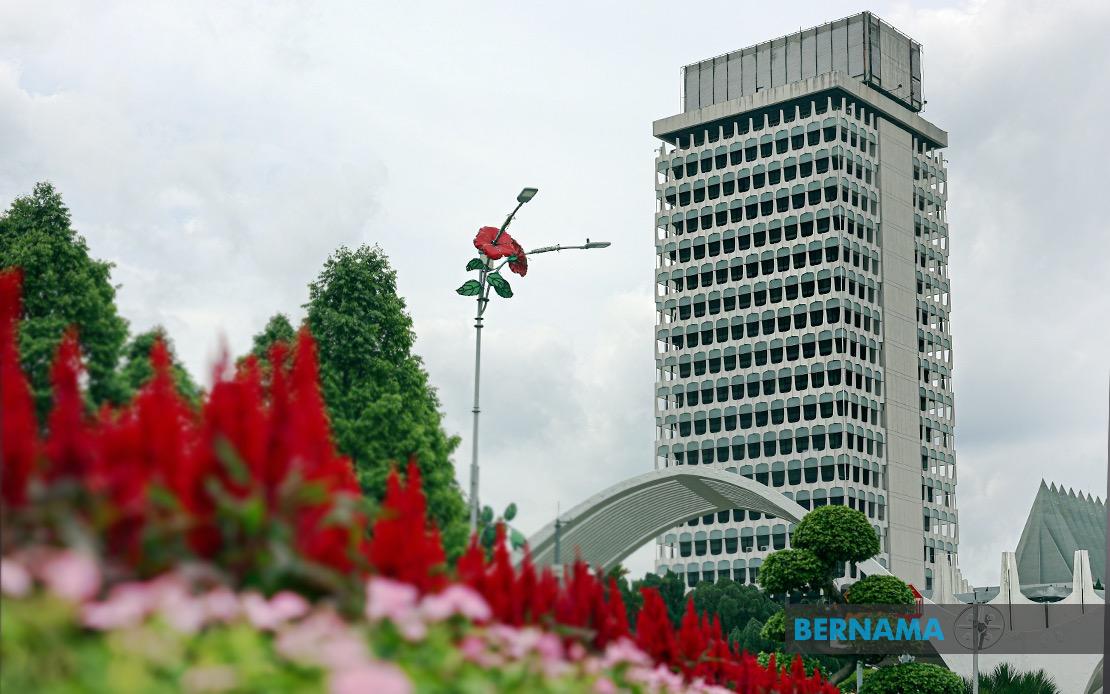
Parliamentarians are set to examine two pivotal issues affecting Malaysia's economic prospects and strategic interests when the Dewan Rakyat reconvenes for questioning of ministers. The Malaysia-Thailand Border Economic Zone and the evolving security situation in the Strait of Hormuz will feature prominently in exchanges between government representatives and members of the lower house, reflecting growing legislative interest in how these developments translate into tangible benefits and safeguards for Malaysian citizens.
The border economic initiative between Malaysia and Thailand has emerged as a key regional development project with substantial implications for trade, investment, and cross-border commerce. Datuk Adnan Abu Hassan, representing the Kuala Pilah constituency under the Barisan Nasional banner, will press the Prime Minister for clarity on the anticipated economic gains flowing from this collaborative framework. His inquiry extends beyond headline figures to encompass the distribution mechanisms that will ensure smaller enterprises and residents in frontier communities—often marginalised in larger economic transformations—receive meaningful participation and returns from the zone's expansion.
This line of questioning addresses a persistent concern in Malaysian regional development: that infrastructure projects and economic zones frequently concentrate benefits among established corporations while peripheral areas struggle to capture opportunity. The border communities, which have historically served as cultural and commercial bridges between nations, stand at the intersection of tremendous potential and vulnerability to displacement if development processes lack inclusive safeguards. Lawmakers representing these constituencies increasingly demand concrete details about how governments will operationalise equitable distribution rather than relying on assumption that prosperity will automatically spread outward.
Parallel to these commercial considerations, national security preoccupations surface through inquiry into the Strait of Hormuz situation. Datuk Rosol Wahid from Hulu Terengganu under the Perikatan Nasional opposition will seek the government's formal assessment of how the prolonged regional crisis impacts Malaysia's political and economic equilibrium. The Strait of Hormuz remains one of the world's most critical maritime passages, with roughly one-third of globally traded petroleum transiting through its waters. For Malaysia, a nation heavily dependent on imported energy and deeply integrated into global supply chains, disruptions in this corridor reverberate across multiple sectors simultaneously.
The government's response will be scrutinised not merely for its content but for its candour regarding vulnerabilities. Energy security, shipping insurance costs, industrial competitiveness, and currency stability all interconnect with Middle Eastern geopolitical tensions. Malaysian policymakers must balance transparency about genuine risks against avoiding unnecessary alarm that could trigger capital flight or investor hesitation. The parliamentary questioning creates space for examining whether existing contingency measures and international diplomatic efforts sufficiently shield Malaysia's economy, or whether additional protective mechanisms warrant consideration.
A third parliamentary focus will address public safety concerns arising from illegal street racing. Datuk Yusuf Abd Wahab representing Tanjong Manis under the GPS party will question the Transport Minister about nationwide enforcement strategies following a high-profile racing incident in Simpang Renggam, Johor, during June. This inquiry reflects persistent frustration with street racing activities that periodically capture media attention and trigger public outcry before fading from official priority. The parliamentary question provides opportunity to assess whether responses remain episodic or whether systematic long-term solutions are being implemented.
Beyond these interrogative exchanges, parliament will advance significant legislative business. Two bills will undergo first reading: the Statistics Bill 2026 brought by the Economy Minister and the National Trust Fund Bill 2026 introduced by the Finance Minister. The statistics legislation carries particular contemporary relevance given increasing global debate over data governance, privacy protection, and the responsible use of information for policymaking. For Malaysia, robust statistical frameworks are essential for evidence-based governance and international economic credibility.
The most politically significant parliamentary item involves the Attorney General and Public Prosecutor separation initiative. Minister Datuk Seri Azalina Othman Said, representing the Prime Minister's Department (Law and Institutional Reform), will table the Parliamentary Special Select Committee's report on constitutional amendments designed to untangle these historically combined offices. The committee's seven meetings culminated in refinements addressing independence, integrity, and institutional accountability. This reform carries weight beyond Malaysia's legal technicalities; it signals commitment—or at least parliamentary assertion—toward strengthening judicial independence and professional prosecutorial standards.
The structural separation of prosecutorial and attorney general functions reflects global best practice aimed at preventing concentrations of power over criminal justice processes. When these roles merge, potential emerges for political influence over prosecution decisions, potentially undermining rule of law perceptions. The seven key improvements referenced suggest the committee addressed criticisms that previous iterations inadequately safeguarded against such risks. How comprehensively the amendments achieve this objective will likely generate ongoing debate beyond the current parliamentary session.
The current parliamentary sitting, extending across 16 days from late June through early July, provides sustained opportunity for detailed scrutiny of executive performance. Unlike short sessions, extended parliamentary calendars permit deeper probing of complex issues affecting national interests. The combination of questions about border economics, regional security, domestic safety, and constitutional reform demonstrates parliament's breadth of concern spanning commerce, geopolitics, governance, and citizen protection.
For Malaysian observers, these parliamentary deliberations matter because they create formal channels for accountability and generate public record of government positions on consequential matters. The questions raised signal to executive branches that parliament remains attentive to both widely-publicised challenges and more technical governance improvements. The responses provided—or deflected—become measurable against later outcomes, creating political stakes for ministerial performance.
The Malaysia-Thailand collaboration, Hormuz contingencies, street safety protocols, statistical governance, and prosecutorial independence collectively paint a parliament grappling with issues spanning immediate domestic concerns through regional economic integration to fundamental constitutional architecture. How seriously government takes these parliamentary exchanges, and whether commitments translate into concrete implementation, will substantially influence Malaysia's trajectory across these overlapping policy domains.

