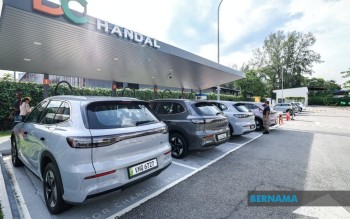
Malaysia's approach to regulating electric vehicle charging infrastructure reflects a deliberate policy choice to prioritise market forces over government intervention. The Ministry of Investment, Trade and Industry has confirmed that it imposes no price control mechanism on public EV charging services, instead allowing charging station operators to determine their own rates based on commercial considerations. This strategy, revealed in a parliamentary response to Senator Robert Lau Hui Yew, represents a commitment to fostering private sector competition rather than implementing the regulatory frameworks that some neighbouring countries have adopted.
The decision carries significant implications for Malaysia's broader transition to electric mobility. By avoiding price controls, the government aims to create an attractive investment environment that will accelerate the expansion of charging infrastructure across the country. MITI's position is that competitive market dynamics, rather than government-imposed tariffs, will drive both the proliferation of charging stations and the innovation in service quality. This approach assumes that as more private operators enter the market, pricing pressure and competition will naturally lead to more reasonable consumer costs than centrally-managed pricing might achieve.
As of May 31, 2026, Malaysia had deployed 6,416 public EV chargers nationwide, a figure that underscores the infrastructure challenge facing the country's electrification agenda. Of these chargers, 2,143 units, representing 33.4 per cent, are direct current fast chargers capable of rapid charging, while 4,273 units, or 66.6 per cent, are alternating current chargers that provide slower but more widely-compatible charging. The distribution reflects a growing but still nascent charging network that must expand considerably to support Malaysia's electric vehicle adoption targets and consumer confidence in EV ownership.
Geographical disparities in charging infrastructure remain pronounced. Peninsular Malaysia dominates the rollout, with 6,176 units accounting for 96 per cent of all public chargers, while Sarawak has only 208 units and Sabah 32 units. This concentration in the peninsula reflects both population density and higher EV market penetration in urbanised western Malaysia, but creates a significant infrastructure gap for East Malaysian drivers. The disparity raises questions about equitable access to EV charging across the nation and whether market-driven investment alone will adequately serve less densely populated regions.
Despite eschewing price regulation, the government has not abdicated oversight entirely. MITI emphasised that although charging rates remain uncontrolled, the development and operation of EV charging facilities must still comply with technical standards, safety requirements, and regulatory frameworks established by relevant agencies. The Energy Commission and local authorities maintain jurisdiction over various aspects of charging station development, ensuring that commercial operators cannot operate outside established safety and technical parameters. This arrangement reflects a middle path—regulatory oversight of operations without direct control of consumer pricing.
Coordination across government has become essential for managing Malaysia's EV ecosystem. Two key mechanisms have been established: the National EV Task Force Meeting chaired by MITI and the National EV Steering Committee Meeting chaired by the deputy prime minister in his capacity as Minister of Energy Transition and Water Transformation. These bodies aim to address cross-ministerial challenges ranging from regulatory coherence and safety standards to infrastructure development and industry growth. The multilayered governance structure indicates recognition that EV adoption cannot be managed through a single ministry but requires integrated action across energy, transport, investment, and local government sectors.
The government's stated commitment to developing a regulatory approach for EV charging fees in collaboration with the Energy Commission and Tenaga Nasional Bhd suggests that the current light-touch approach may evolve. Even as officials affirm their preference for market competition, preliminary discussions about fee regulation with TNB, Malaysia's largest electricity utility, hint at future possible interventions should pricing become a significant consumer grievance or market failure develops. For now, the position remains one of monitored flexibility—allowing private operators commercial freedom while maintaining government capacity to intervene should market conditions warrant.
Malaysia's market-driven stance differs from regulatory approaches adopted by some regional peers. Singapore, for instance, has implemented stricter oversight of charging infrastructure and pricing through its energy regulator, while Thailand has explored subsidies and pricing frameworks to accelerate EV adoption. The choice to rely on competition reflects Malaysia's broader economic philosophy and confidence that private capital will flow toward EV charging investments. However, it also places considerable responsibility on private operators to ensure equitable access and reasonable pricing without direct government enforcement.
The expansion of fast-charging infrastructure will be critical to the policy's success. The current ratio of DC fast chargers to AC chargers—roughly one fast charger for every two standard chargers—may constrain long-distance EV travel and deter potential adopters concerned about charging convenience. Private operators' investment decisions will determine how quickly this ratio improves. If competition incentivises operators to prioritise fast-charging deployment along major highways and urban centres, the approach may accelerate adoption. If operators cluster chargers only in high-revenue areas, infrastructure gaps could undermine consumer confidence.
For Malaysian consumers and EV buyers, the absence of price regulation creates both opportunities and uncertainties. Competition may eventually deliver competitive pricing and improved service quality, but in the near term, charging costs will depend on operator strategies and market consolidation patterns. Early movers in the charging market may establish pricing precedents that later entrants must either match or undercut, or they may exploit limited competition in certain regions. The government's reliance on eventual market discipline to address pricing concerns assumes sufficient operators will enter the market and that barriers to entry remain low.
The policy framework also reflects assumptions about the pace of EV adoption. If Malaysian EV sales accelerate significantly, demand for charging may outstrip supply in many areas, potentially allowing operators to command premium pricing temporarily. Conversely, if EV adoption remains slower than projected, operators may struggle to achieve profitability and could exit the market, reducing charging availability. The government's coordination mechanisms across agencies and stakeholders provide some capacity to monitor these dynamics, but the emphasis on private sector leadership means market signals rather than government planning will primarily drive infrastructure allocation.
Looking ahead, Malaysia's EV charging strategy will likely face periodic pressure to impose price controls if consumers perceive charging costs as unreasonably high or if geographic disparities persist. The government has preserved its ability to introduce regulatory oversight through its collaboration with the Energy Commission and TNB, but for now maintains that competition and private investment represent the optimal path to ubiquitous, affordable charging infrastructure. The success of this approach will ultimately depend on whether enough private operators view Malaysia's EV market as sufficiently attractive to justify substantial capital investment in charging networks across the peninsula and extending into East Malaysia.

