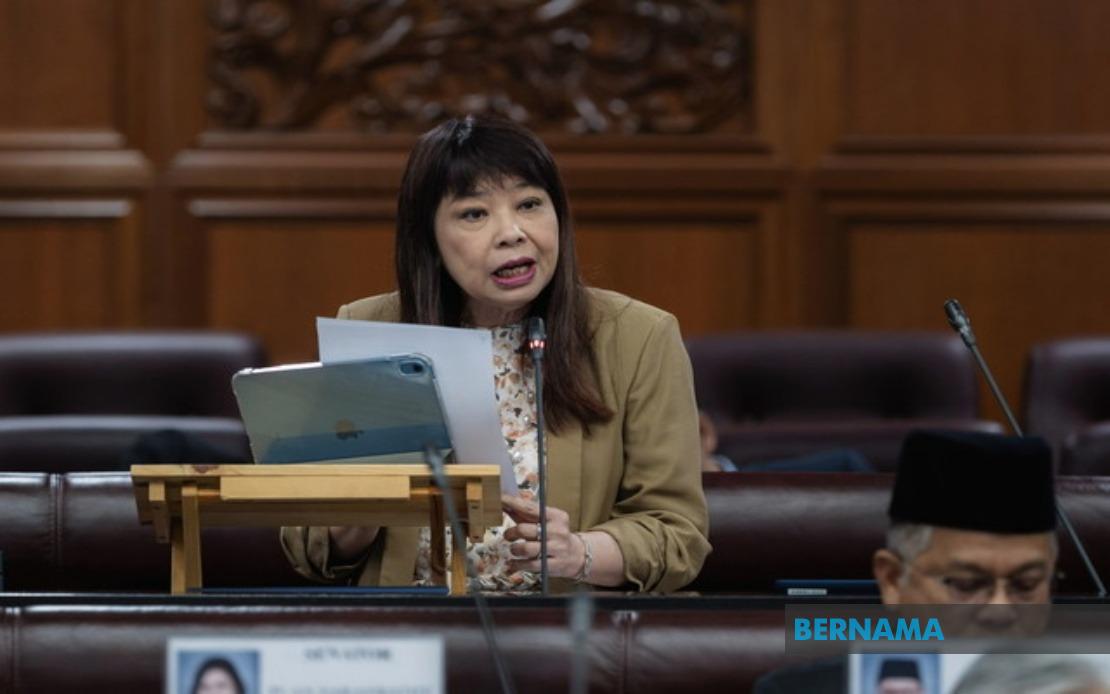
The Malaysian government is examining a proposal to establish a registry specifically designed to track and monitor individuals who have repeatedly committed domestic violence offences, according to Deputy Women, Family and Community Development Minister Lim Hui Ying. The initiative reflects growing recognition that systemic data collection on repeat offenders remains insufficient, leaving gaps in victim protection mechanisms and enabling abusers to evade scrutiny across different jurisdictions or victim-reporting channels.
The three principal government bodies collaborating on this study are the Women, Family and Community Development Ministry (KPWKM), the Royal Malaysia Police (PDRM), and Malaysia's judiciary. Their joint examination aims to design an appropriate framework capable of recording repeat offenders either through existing criminal records databases or through a dedicated registry system. Lim acknowledged during Senate proceedings that the country currently lacks comprehensive, accurate data on domestic violence recidivism, a critical gap that hampers both prevention efforts and the ability to provide targeted protection to survivors of repeat abuse.
The proposal addresses a persistent challenge in family violence intervention: many perpetrators cycle through multiple victims and complaint cycles without facing coordinated law enforcement or judicial responses. A centralised registry would theoretically enable protective order applications, police assessments, and court decisions to factor in an offender's prior history. This interconnected approach reflects international best practices seen in jurisdictions such as Australia and parts of Europe, where domestic violence offence registries have demonstrated effectiveness in reducing reoffence rates when coupled with monitoring provisions.
Beyond the registry initiative, Malaysia's government has demonstrated concrete financial commitment to bolstering victim infrastructure. The Ministry has allocated RM2.1 million during the current financial year specifically for upgrading more than twenty government-operated shelters across the country. These facilities serve as crucial safe havens for domestic violence survivors seeking immediate refuge and protection from ongoing threats. The upgrades prioritise functional safety improvements, ensuring shelters maintain secure physical environments while remaining equipped to deliver appropriate care and temporary accommodation.
Current shelter capacity reflects both government and civil society contributions. According to Social Welfare Department records as of July 2026, forty-three shelters have received approval under the Domestic Violence Act 1994 (Act 521). This includes thirty-nine facilities managed directly by government agencies and four operated by non-governmental organisations. The diversity of operational models—combining state resources with NGO expertise and community involvement—represents a pragmatic approach recognising that effective victim support requires multisectoral participation.
The protective order system represents another operational layer through which victims access legal safeguards. The Social Welfare Department administers Emergency Protection Orders (EPOs) capable of issuance within two hours when circumstances demand immediate intervention. These orders provide rapid legal barriers against perpetrator contact or proximity, serving as frontline protection before formal court proceedings commence. The two-hour response timeframe reflects procedural streamlining designed specifically for situations where delays could prove dangerous.
Complimenting emergency measures, the department also facilitates access to Interim Protection Orders (IPOs) and standard Protection Orders (POs) through court channels. IPOs typically bridge the gap between emergency protection and permanent orders, maintaining legal safeguards during court hearing processes. This tiered protective order framework creates graduated response options, allowing case-by-case calibration of intervention intensity to circumstances and risk levels presented by individual cases. Such sophistication in protective mechanisms recognises that domestic violence situations vary considerably and demand flexible, responsive legal tools.
The government's comprehensive approach integrates shelter provision, protective legal mechanisms, and offender monitoring into a coordinated whole-of-government strategy. Lim emphasised KPWKM's commitment to pursuing domestic violence prevention through integrated coordination spanning government agencies and broader societal actors. This framing acknowledges that effective intervention cannot rest solely on police, courts, or social services operating independently; rather, sustained progress demands institutional alignment and shared accountability across multiple sectors.
For Malaysian and Southeast Asian contexts specifically, the registry proposal addresses regional gaps in victim protection infrastructure. Neighbouring countries including Indonesia and Thailand face similar challenges with domestic violence recidivism and inconsistent offender data management across jurisdictions. Should Malaysia successfully implement such a registry, the model could influence regional approaches to standardising offender records and coordinating cross-border victim protection. Regional cooperation frameworks like ASEAN could eventually incorporate domestic violence offender information-sharing protocols, though such developments remain distant given current sovereignty and privacy considerations.
The initiative also reflects evolving judicial and policy recognition that domestic violence constitutes structural systemic abuse rather than isolated incidents. Reframing repeat offenders as presenting identifiable patterns amenable to tracking and intervention shifts cultural narratives positioning domestic violence as private family matters beyond state responsibility. This conceptual evolution, while progressing gradually across Malaysian society and institutions, represents essential groundwork for registries and coordinated interventions to gain legitimacy and operational effectiveness.
Implementation timelines and specific registry design remain undetermined pending the interagency study's completion. Questions regarding data privacy protections, access limitations, and integration with existing police criminal record systems will require careful policy calibration. Malaysian courts will need to clarify whether registry designation influences sentencing severity or protective order permanence, potentially motivating prosecutorial prioritisation of domestic violence cases. These operational details ultimately determine whether the registry becomes transformative victim protection infrastructure or merely symbolic governance.

