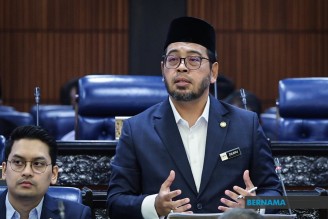
The Malaysian government is moving decisively to overhaul governance at Lembaga Tabung Haji following months of deliberation over a damaging financial crisis that nearly pushed the institution into insolvency. At a marathon 10-hour parliamentary sitting in Kuala Lumpur, senior ministers outlined a comprehensive remedial framework designed to restore confidence in the pilgrimage savings scheme and prevent future mismanagement of the funds entrusted to it by millions of Malaysian Muslims.
The regulatory redesign represents a fundamental restructuring of how Tabung Haji operates and where authority lies. Under amendments being prepared to the Tabung Haji Act 1955, the Securities Commission will assume direct oversight of all investment activities, while religious and pilgrimage matters remain under the Minister in the Prime Minister's Department (Religious Affairs). This separation of powers, officials argued, eliminates the institutional conflicts that previously allowed problematic investment decisions to proceed unchecked. Critically, the reforms will also legally prohibit serving politicians from sitting on the board of directors, closing a backdoor through which political patronage previously influenced capital allocation.
The depth of Tabung Haji's troubles became starkly apparent during the parliamentary debate. Losses had accumulated to nearly RM13 billion—a sum that would have devastated the institution irreversibly had panic withdrawals spiralled beyond what occurred. More alarming still was the government's grim assessment that had large-scale depositor runs materialised in 2018, taxpayers would have faced potential liabilities exceeding RM74.5 billion to salvage the scheme. This counterfactual underscores just how catastrophic the mismanagement had become and why sweeping systemic change is essential to protect the government's balance sheet.
A task force headed by Tabung Haji chairman Tan Sri Abdul Rashid Hussain and including Bank Negara Governor Datuk Seri Abdul Rasheed Ghaffour and Securities Commission chairman Datuk Mohammad Faiz Azmi is now examining the 25 recommendations from the Royal Commission of Inquiry (RCI) report released in late July. The RCI spent over a year investigating institutional weaknesses spanning 2014 to 2020, during which poor governance and imprudent investment decisions accumulated. Notably, three-quarters of its recommendations have already been adopted by Tabung Haji management, signalling willingness to embrace reform, though legal amendments remain necessary to entrench safeguards.
The fourteen problematic investments that triggered the crisis are themselves instructive of the institution's naïveté. Seven of these investments suffered total losses, wiping out capital entirely. Most notoriously, Tabung Haji became inadvertently ensnared in 1Malaysia Development Bhd (1MDB) through its stake in Putrajaya Perdana Bhd, demonstrating how poor due diligence and inadequate governance permitted exposure to subsequently infamous schemes. Finance Minister II Datuk Seri Amir Hamzah Azizan made explicit that the government would pursue accountability without favour, with investigations proceeding comprehensively and harsh consequences awaiting those found culpable.
Profit distributions under the reformed framework will henceforth be calculated solely on the basis of audited accounts, eliminating discretionary calculations that previously masked deteriorating financial performance and permitted distributions that outpaced actual returns. This seemingly technical change reflects the core governance failure: management repeatedly announced generous distributions to depositors even as underlying assets declined, creating a mirage of stability that collapsed once external scrutiny intensified. By tethering distributions rigidly to independently verified results, the reformed institution cannot repeat this deception.
Parliamentary debate also surfaced a broader sectoral issue relevant to Malaysian financial stability. Aminolhuda Hassan, MP for Sri Gading, proposed establishing a unified regulator for large non-bank financial institutions (NBFIs) including the Employees Provident Fund, Permodalan Nasional Bhd, the Retirement Fund Incorporated, the Armed Forces Fund Board, and Tabung Haji itself. His observation that Malaysia currently lacks a single authority responsible for systemic risk assessment and prudential supervision of the non-bank sector identifies a regulatory gap that Tabung Haji's collapse partly exposed. Were such oversight to have existed previously, warning signs might have triggered intervention before losses cascaded.
A separate concern raised during the debate centred on Tabung Haji's structural dependence on sukuk income from UJSB, which furnished approximately 26 per cent of annual revenue according to the RCI report. This concentration risk meant the institution's financial health became hostage to a single income stream, leaving it vulnerable to market shifts. Bentong MP Young Syefura Othman called on the government to outline strategies to diversify revenue sources and reduce reliance on this sukuk instrument. Diversification would strengthen resilience by spreading income across multiple asset classes and counterparties.
The government's messaging throughout the parliamentary proceedings emphasised that the MADANI administration would not conceal uncomfortable truths, even when the evidence proved embarrassing. Minister Zulkifli Hasan stated plainly that every future decision concerning Tabung Haji would be measured against a single standard: the interests of the Muslim community that depends upon it. This populist rhetoric contrasts sharply with previous governance approaches under which institutional interests diverged from depositor welfare. Restoring alignment between management incentives and beneficiary interests forms the psychological core of the reform agenda.
The timeline for implementation remains fluid, with the task force continuing to examine RCI recommendations before submitting final proposals to Cabinet. However, the legislative amendments necessary to prohibit politicians from board membership and formalise Securities Commission authority require parliamentary approval, meaning further delay is unlikely given cross-party recognition that decisive action is politically essential. The government faces a narrow window to restore public confidence before deposits continue migrating elsewhere, so bureaucratic expedience is probable.

