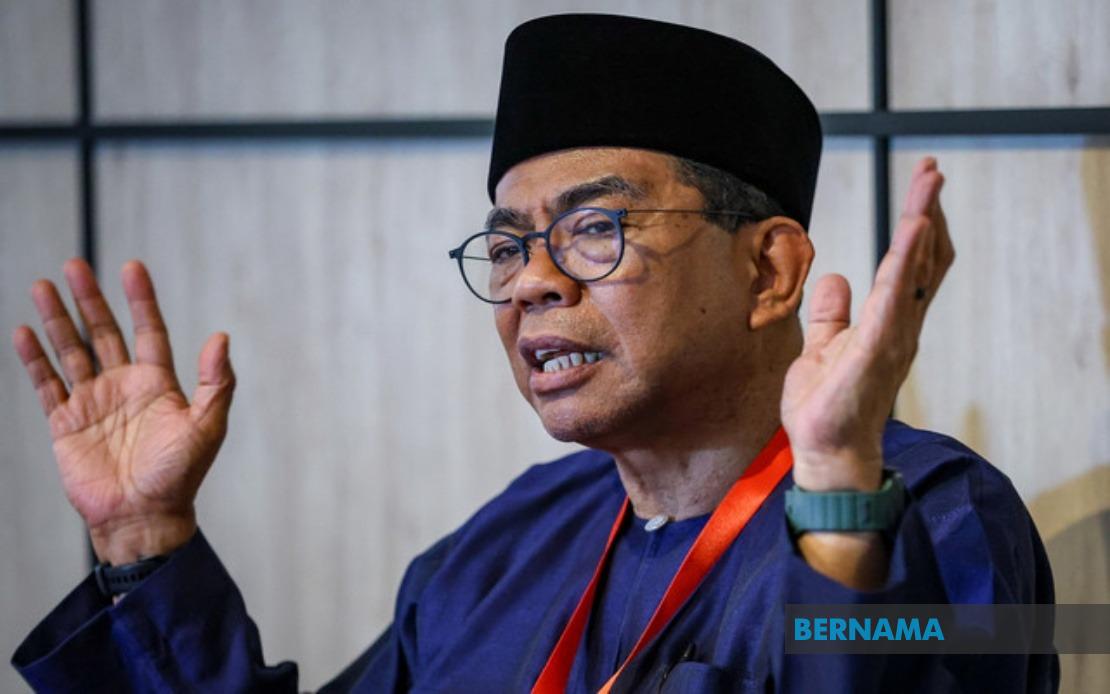
Malaysia's government has doubled down on its longstanding refusal to recognise Israel as a state, with Defence Minister Datuk Seri Mohamed Khaled Nordin asserting that recent expulsions of Israeli nationals represent a consistent application of established policy rather than a shift in diplomatic stance. Speaking in Johor Bahru following his opening address at the Pasir Gudang UMNO division delegates meeting, Mohamed Khaled characterised the enforcement actions as routine implementation of Malaysia's foundational position on Israel, signalling no wavering despite mounting international pressure.
The Defence Minister's statements come in response to escalating tensions with Washington, where eight members of the US Congress have initiated moves to potentially weaponise foreign aid as leverage against Malaysian policy. In a sharply worded letter dated July 21 addressed to US Secretary of State Marco Rubio, these lawmakers have challenged Malaysia to reconsider its stance within a 15-day window or face suspension of the International Military Education and Training (IMET) programme, which has historically provided valuable professional development opportunities for Malaysian security personnel. The ultimatum represents a notable shift in diplomatic tone, suggesting growing frustration in sections of the American legislative branch over Malaysia's immigration enforcement related to Israeli nationals.
The underlying controversy centres on an incident involving an Israeli individual who allegedly entered Malaysia using travel documents issued by another country, triggering investigations into whether additional Israeli nationals had infiltrated the country in connection with the Network School project in Forest City. Rather than treating this as an isolated border control matter, the situation has ballooned into a broader challenge to Malaysia's foundational foreign policy doctrine. Mohamed Khaled's response indicates the government views any compromise on this principle as untenable, particularly given the depth of public and political consensus around the non-recognition stance within Malaysia.
Mohammad Khaled explicitly denied that Malaysia's firm policy implementation had resulted in any disruption to IMET programme funding, suggesting the Defence Ministry remains confident about the stability of this military education arrangement despite Congressional threats. His dismissive tone towards the American lawmakers—characterising their position as an internal matter for Congress and the US administration to resolve—reflects a calculated strategy of appearing unmoved by external pressure. This posture serves important domestic political purposes, as any apparent capitulation to American demands would be extraordinarily costly domestically across Malaysia's political spectrum.
Prime Minister Datuk Seri Anwar Ibrahim has similarly fortified the government's position, explicitly committing that Malaysia would pursue expulsion of any Israeli national discovered within the country's borders, reiterating that such actions remain entirely consistent with Malaysia's historical, constitutional, and diplomatic frameworks. Anwar's intervention at the highest executive level underscores that this is not merely a Defence Ministry matter but a whole-of-government position endorsed at the highest level of political authority. His statements also emphasise that security agencies are conducting comprehensive investigations into allegations of Israeli entry, signalling that enforcement remains an active priority.
The confrontation between Malaysian policy and American Congressional demands illuminates broader tensions between different models of statecraft and foreign relations. The United States operates from an assumption that military and economic partnerships can be instrumentalised to encourage policy alignment, particularly on Middle Eastern issues where American strategic interests remain paramount. Malaysia, by contrast, operates from a foundational principle rooted in its post-colonial identity and its role within the Non-Aligned Movement, viewing its Israel policy as non-negotiable and integral to its sovereignty and self-determination.
For Malaysian analysts and observers, the significance of this moment extends beyond bilateral relations with the United States. Malaysia's positioning within ASEAN and the broader Indo-Pacific requires careful navigation of relationships with both Western powers and non-Western states. Any appearance of capitulating to American pressure could undermine Malaysia's credibility within regional forums and among non-aligned nations that similarly maintain positions of principle on Palestinian rights and Israeli recognition. The government's explicit resistance therefore carries strategic weight across multiple diplomatic registers.
The IMET programme, while operationally significant for professional military training, represents a relatively modest component of Malaysia's overall defence partnerships and strategic relationships. This suggests the government's calculus includes an assessment that any short-term interruption to military training funding would be manageable and ultimately less damaging than abandoning a core foreign policy principle. The government appears willing to absorb potential consequences from the American side rather than capitulate to what it views as external pressure on a matter of constitutional and civilisational principle.
Within Malaysia's domestic political context, Mohamed Khaled's statements reflect a rare area of genuine cross-party consensus. Support for the Palestinian cause and rejection of Israeli recognition cuts across ideological lines within Malaysian politics, from Islamist to secular nationalist to progressive constituencies. Any government that appeared to backpedal on this position would face overwhelming domestic political backlash, making the Defence Minister's firm public stance not merely a matter of diplomatic conviction but also basic political survival.
The unfolding situation also highlights how foreign policy issues that appear settled within particular national contexts can suddenly become active points of international dispute when geopolitical interests converge. For Malaysia, the Israel question has been administratively settled for decades—it simply does not recognise Israel and does not permit Israeli nationals entry. What appears to Malaysian policymakers as routine border enforcement becomes, in American eyes, a provocation warranting economic sanctions. This fundamental difference in perception and stakes helps explain why dialogue has proven difficult.
Moving forward, Malaysia faces the challenge of managing this confrontation while preserving critical defence cooperation with the United States and its allies. The government's strategy appears to involve maintaining absolute firmness on the Israel policy while simultaneously reassuring American defence partners that this principled stance does not reflect broader hostility toward US security interests in the region. Whether this distinction can be sustained while the Congress applies financial pressure remains an open question that will likely define Malaysia's diplomatic posture in coming weeks.

