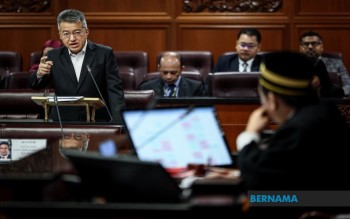
The Malaysian government has managed to save nearly RM5 billion through disciplined spending controls implemented during the first half of 2026, according to Deputy Finance Minister Liew Chin Tong. Speaking in the Senate on July 29, Liew outlined how these savings were achieved following a RM10 billion reduction in operating expenditure allocations announced earlier in the year, demonstrating the administration's commitment to fiscal prudence amid challenging global economic conditions.
The Ministry of Finance initiated its expenditure control directive on April 29, 2026, when it instructed all government ministries and agencies to realign their budget allocations and implement stricter spending protocols. Rather than imposing blanket cuts that could compromise service delivery, the ministry adopted a more nuanced approach by conducting comprehensive engagement sessions with departmental heads to clarify the spending criteria and expectations. This structured consultation process helped ensure that agencies understood both the rationale behind the cuts and the flexibility available to them in restructuring their finances.
According to Liew, the primary motivation behind these measures was Malaysia's need to respond effectively to the global supply chain crisis that has created economic headwinds across Asia and beyond. By tightening domestic spending early, the government sought to maintain macroeconomic stability and preserve Malaysia's fiscal standing at a time when many regional economies were struggling with inflationary pressures and investment volatility. The timely implementation of these controls appears to have paid dividends, with Liew asserting that Malaysia has remained comparatively stable despite external economic turbulence.
The expenditure controls have been carefully calibrated to avoid damaging public service delivery or economic development. Ministries and agencies were granted considerable autonomy in deciding how to reorganise their spending priorities based on current operational needs, rather than facing rigid prescriptive cuts. This bottom-up approach recognises that different departments face varying circumstances and allows them to identify non-essential expenditures that can be deferred without affecting core functions. The approach reflects a more sophisticated understanding of government operations than simple across-the-board reductions would allow.
Liew was responding to Senator Hussin Ismail's parliamentary inquiry about the scope of budget savings, the total value of allocations that were reduced, and whether impact assessments had been conducted on the affected programmes. His response provided reassurance that the Ministry of Finance maintains a flexible stance towards legitimate departmental needs. The ministry remains willing to review and discuss urgent spending requests from individual agencies, provided such requests align with the government's overall fiscal position and spending priorities. This safety valve mechanism prevents the expenditure controls from becoming overly rigid and allows for legitimate flexibility.
The specific areas protected from spending restrictions highlight government priorities during this period of fiscal constraint. Health services, including frontline medical delivery and disease prevention programmes, have been explicitly shielded from expenditure cuts. Subsidies and financial assistance to low-income Malaysians, food price support mechanisms, and social welfare payments remain funded at full levels. These protections ensure that vulnerable population segments are not penalised by budget restrictions and that the government's social contract with citizens remains intact despite fiscal pressures.
Beyond social programmes, the government has prioritised maintaining agricultural sector support through various subsidy and incentive schemes, recognising farming's importance to rural livelihoods and food security. Educational assistance and school funding have similarly been protected, reflecting the administration's commitment to human capital development. These prioritisations suggest that while the government is pursuing fiscal discipline, it is doing so in a way that preserves investment in long-term economic and social resilience.
The specific mechanisms of expenditure control have focused on areas with minimal impact on public welfare. Non-critical spending—such as consultancy contracts, external subscriptions, or discretionary office expenses—has borne the brunt of reductions. Official travel by government personnel has been restricted to essential journeys, reducing transportation and accommodation costs across the civil service. Recruitment of new civil service positions has been frozen, allowing natural attrition to reduce the government payroll without requiring redundancies or mass layoffs that would damage morale and service capacity.
Liew's presentation of these measures in the Senate suggests an attempt to position Malaysia's fiscal adjustment as both necessary and carefully managed. By emphasising early intervention, the government is arguing that acting promptly to control spending during a global crisis prevents more severe adjustment pressures later. The framing also highlights that savings were achieved through efficiency improvements and reordering of priorities rather than through services that ordinary Malaysians depend upon being withdrawn or degraded.
For Malaysian policymakers and regional observers, these expenditure controls represent a pragmatic middle path between maintaining fiscal sustainability and protecting social commitments. As other Southeast Asian economies grapple with similar supply chain disruptions and inflationary pressures, Malaysia's approach of targeted restraint combined with protected social spending may offer a template for combining fiscal discipline with social stability. The successful achievement of RM5 billion in savings within half a year suggests that further similar savings may be possible should external economic conditions continue to warrant such measures.

