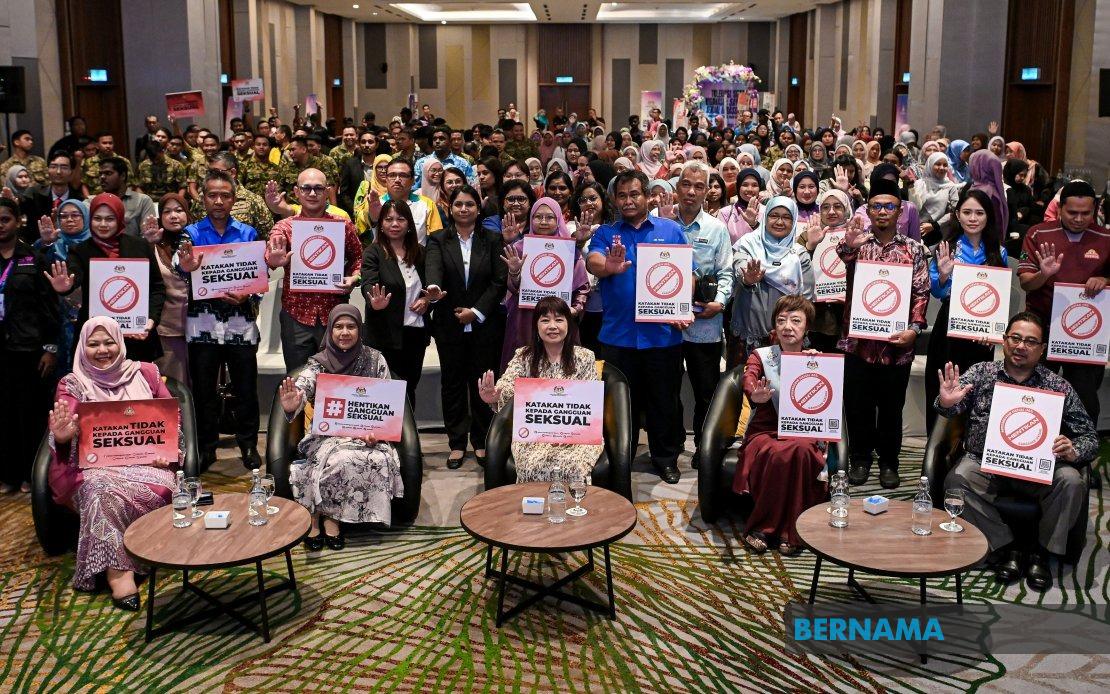
Malaysia's sexual harassment landscape shows troubling escalation, with 388 incidents documented during the opening five months of 2024. The figure underscores a persistent challenge facing Malaysian workplaces, educational institutions and communities. Deputy Minister of Women, Family and Community Development Lim Hui Ying unveiled these statistics during an engagement in Port Dickson on June 18, drawing attention to what she characterised as a multifaceted social problem requiring coordinated intervention across government, private sector and civil society.
The trajectory of reported cases demands closer examination. Royal Malaysia Police data reveals a dramatic surge from 477 documented cases in 2022 to 1,038 cases throughout 2023, indicating that the phenomenon extends well beyond individual workplace disputes or isolated incidents. The current year's pace, if sustained, suggests reporting patterns are stabilising at elevated levels rather than representing a temporary spike. Lim emphasised that rising statistics should not be interpreted solely as evidence of worsening conduct, but rather as a positive indicator that victims feel emboldened to lodge formal complaints and that communities increasingly reject silence surrounding harassment.
Geographic and sectoral patterns emerge from available data, with workplace environments identified as primary sites where harassment occurs. The Deputy Minister's acknowledgment that perpetrators frequently maintain family or personal relationships with victims adds critical nuance—harassment often remains embedded within trust dynamics, making reporting psychologically difficult. Career anxieties, concerns about family stability and internalised shame continue deterring many targets from seeking intervention, particularly women who fear professional repercussions or reputational damage. This underreporting phenomenon means official statistics capture only a fraction of actual incidents occurring across Malaysian institutions.
A significant dimension often obscured in public discourse involves male victims, whose numbers remain proportionally low but represent an important recognition that harassment transcends gender boundaries. Lim's explicit acknowledgment that men experience sexual harassment challenges lingering assumptions that victims are exclusively female, potentially encouraging reluctant male complainants to seek recourse. Creating safe reporting channels for all genders requires tailored support acknowledging different social pressures and vulnerability patterns affecting men and women differently.
Institutional responses have expanded through dedicated mechanisms designed to accelerate justice delivery. The Tribunal for Anti-Sexual Harassment (TAGS) demonstrates promising efficiency metrics—of 100 complaints received through mid-June, 82 reached resolution within 60 days of initial hearing. This performance metric contrasts sharply with conventional litigation timelines, suggesting that specialised tribunals can meaningfully reduce barriers to justice. Accelerated case processing may encourage additional reporting by demonstrating that formal channels deliver timely outcomes rather than protracted bureaucratic ordeals.
The Ministry of Women, Family and Community Development is simultaneously advancing preventive initiatives through its Women, Peace and Security advocacy framework, aligned with the National Action Plan 2025-2030. This approach recognises that combating harassment requires investment in broader structural changes strengthening women's participation in national security and development decision-making. When women exercise substantive influence across government, business and institutional hierarchies, their interests in harassment prevention arguably receive greater priority and resource allocation.
Build systemic cultural change represents the foundational challenge underlying all tactical interventions. Lim stressed that sexual harassment constitutes serious misconduct eroding victims' dignity, psychological wellbeing and life quality—a framing that positions it beyond interpersonal conflict or workplace etiquette questions into human rights territory. Normalising harassment through jokes, dismissive attitudes or victim-blaming narrows acceptable conduct boundaries and enables perpetrators. Establishing zero-tolerance frameworks demands engagement from parents, educators, employers, colleagues and students, creating accountability throughout social structures where harassment originates and propagates.
Educational interventions beginning at formative ages represent essential prevention infrastructure. Early exposure to concepts of bodily autonomy, consent and respectful relationships potentially interrupts harassment trajectories before problematic attitudes crystallise. Simultaneously, creating institutional courage to report requires that organisations visibly protect complainants from retaliation, properly investigate allegations and impose meaningful consequences on perpetrators. When targets observe that speaking up triggers genuine institutional response rather than career sabotage, reporting thresholds decline.
Support infrastructure extends beyond adjudication into comprehensive victim assistance. The government operates Talian Kasih 15999, a 24-hour counselling and psychosocial support hotline, alongside local social support centres providing accessible assistance for those experiencing harassment. These services acknowledge that trauma from harassment demands specialised psychological intervention and that many victims require support navigating reporting processes, legal procedures and recovery. Integrated service delivery across counselling, legal aid and social support acknowledges that harassment creates multifaceted harms requiring multidisciplinary response.
For Malaysian and Southeast Asian observers, these statistics and institutional responses signal that sexual harassment is receiving heightened policy attention after years of relative invisibility. Regional counterparts face similar workplace and community harassment patterns, often compounded by conservative social norms discouraging victim disclosure. Malaysia's expansion of reporting mechanisms, establishment of specialised tribunals and ministerial commitment to awareness campaigns provides a model that neighbouring countries might adapt. Simultaneously, Malaysia's experience demonstrates that legal and institutional frameworks alone prove insufficient—meaningful reduction requires sustained cultural change spanning families, schools, workplaces and public spaces.
The agenda moving forward demands that government agencies, employers and civil society organisations sustain pressure on normalising the culture of accountability rather than silence. Statistical improvements will ultimately manifest through fewer incidents occurring rather than merely more reports filed. Creating workplace environments, educational institutions and communities where harassment carries genuine social and professional consequences while providing robust support for victims represents the ambitious transformation Malaysia's leadership has begun articulating.

