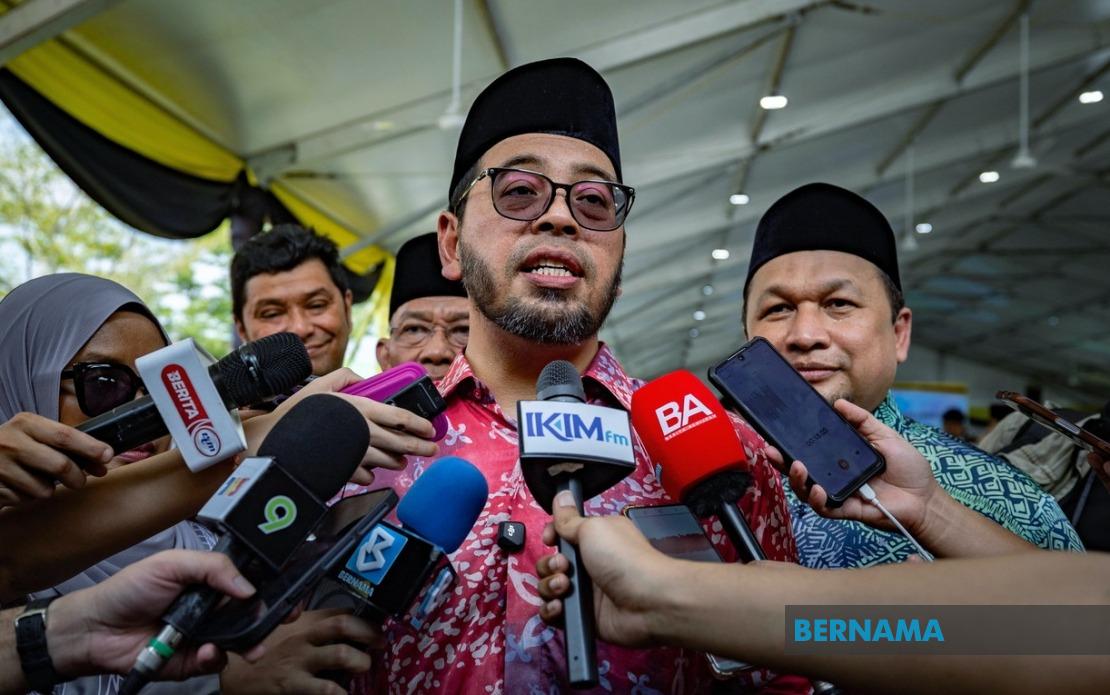
Malaysia's federal government has reaffirmed its commitment to positioning pondok institutions and religious schools as essential strategic partners in nation-building, prioritising the development of human capital alongside physical infrastructure. Minister Dr Zulkifli Hasan underscored this commitment during his address at the 2026 Perak Pondok and Religious Schools Gathering (HIPSA) held in Chemor, emphasising that progress cannot be measured solely through economic metrics or infrastructure advancement. The event, officiated by Prime Minister Datuk Seri Anwar Ibrahim, brought together state leadership including Perak Menteri Besar Datuk Seri Saarani Mohamad and Chief Secretary to the Government Tan Sri Shamsul Azri Abu Bakar, signalling the high political priority afforded to Islamic educational institutions.
At the heart of the government's approach lies a fundamental philosophy that national development must be anchored in human values and character development. Minister Zulkifli articulated this vision clearly, arguing that a nation's true strength derives from the quality and moral fibre of its people rather than economic indicators alone. This positioning represents a deliberate policy choice to integrate Islamic educational institutions into the broader development framework, recognising their historical and ongoing role in shaping Malaysian society. The gathering itself demonstrated the scale of this ecosystem, drawing approximately 3,000 participants including pondok members, religious school staff, KAFA teachers, NGO representatives and community residents, reflecting the grassroots importance of these institutions across the country.
The Prime Minister's Department (Religious Affairs) continues to serve as the primary coordinating mechanism for this relationship between government and Islamic educational institutions. Through this department, the federal administration maintains structured collaboration with state governments, State Islamic Religious Departments, and state Islamic religious councils to ensure educational quality and relevance. This coordinated approach seeks to create coherence across Malaysia's diverse Islamic education landscape, which spans pondoks with centuries of tradition, government-aided religious schools, and community-based KAFA programmes. The government's commitment extends to ensuring that these institutions remain responsive to contemporary needs while maintaining pedagogical integrity and spiritual grounding.
Beyond rhetorical commitment, the government has implemented tangible support mechanisms for these institutions and their communities. During the Perak gathering, Minister Zulkifli presented MADANI Aid Baskets to twelve recipients in a symbolic gesture representing 250 actual beneficiaries from surrounding communities. This initiative channels assistance directly to vulnerable populations within areas served by religious schools, acknowledging the social welfare dimension of these institutions' work. The MADANI Membantu programme, which underwrites these efforts, represents a broader government initiative to ensure that support mechanisms reach pondok communities, religious school teachers working at grassroots levels, and families dependent on these educational networks.
The 2026 gathering incorporated substantive intellectual engagement through its "Bicara Murobbi" forum, titled "The Role of Religious Scholars and Leaders in Nation Building." This discussion platform featured prominent Islamic scholars and leaders including Kelantan-based Sheikh Wazir Che Awang Al-Makki, former Perak mufti Datuk Seri Wan Zahidi Wan Teh, and preacher Ustaz Mohamad Saifuddin Abdul Latiff. The deliberate inclusion of scholarly discourse reflects recognition that religious educators serve functions extending beyond classroom instruction, positioning them as thought leaders and community guides in nation-building efforts. This framing elevates Islamic educators from service providers to strategic participants in national discourse about values, identity, and social cohesion.
Financial support and educational sponsorships constitute another pillar of government backing for these institutions. The Perak event involved distribution of essential food items to needy families, presentation of financial support cheques to pondok institutions and religious schools operating in the state, and funding for student fee sponsorships and participation in the Fast Track Sijil Pelajaran Malaysia programme. These interventions target both institutional sustainability and individual student access, recognising that economic barriers often prevent talented students from pursuing Islamic education pathways. The Fast Track programme particularly addresses efficiency concerns by allowing motivated students to complete secondary Islamic education within compressed timeframes without compromising quality.
Yayasan Dakwah Islamiah Malaysia (YADIM), the organisation coordinating HIPSA 2026, frames these initiatives within the Malaysia MADANI aspirational framework, which explicitly prioritises people's well-being and human capital development. This ideological anchoring positions Islamic education support not as sectarian provision but as integral to a broader national development philosophy that encompasses diverse populations and belief systems. YADIM's coordination role suggests that government strategy operates through both direct bureaucratic channels and through civil society organisations with deep community legitimacy, creating multiple pathways for policy implementation and community engagement.
The emphasis on pondok institutions and religious schools reflects historical and contemporary realities of Islamic education in Malaysia. These institutions have traditionally served as repositories of Islamic knowledge, cultural transmission mechanisms, and sources of social stability in their communities. Many operate with minimal government funding despite serving essential functions, and some serve economically disadvantaged populations with limited alternative educational options. By formally recognising these institutions as strategic partners rather than peripheral actors, the government signals intent to integrate them into mainstream national development planning and resource allocation frameworks.
For Malaysian readers and policymakers, this government positioning carries several implications. The recognition of Islamic educational institutions as strategic development partners suggests growing emphasis on moral and values-based education alongside technical and economic skills development. This approach aligns with regional and global trends recognising education's role in developing socially responsible citizens capable of navigating complex modern challenges. Furthermore, the integration of YADIM and state-level religious authorities into coordinated development frameworks indicates institutional maturation in how religious affairs are administered and coordinated across federal and state boundaries, potentially serving as a model for other areas of shared jurisdiction between central and state governments in Malaysia.

