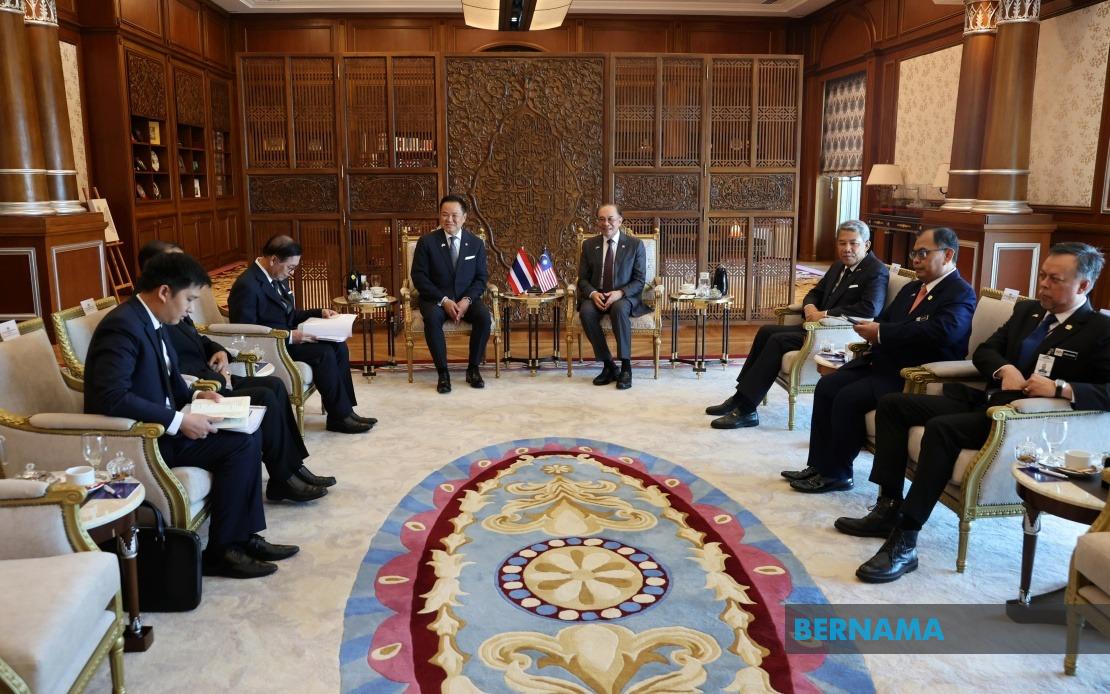
Malaysia continues to champion dialogue-based solutions to the Myanmar crisis, with Prime Minister Datuk Seri Anwar Ibrahim emphasising the importance of allowing the Myanmar people to chart their own course during bilateral discussions with Thai counterpart Anutin Charnvirakul in Putrajaya on Thursday. The Malaysian government's position reflects a broader regional consensus within ASEAN that military intervention and coercive approaches have limited effectiveness, and that sustained engagement remains the most viable pathway toward stability in the troubled nation.
Anwar's remarks underscore Malaysia's diplomatic strategy of supporting Myanmar's eventual democratic restoration without imposing external solutions. By emphasising the agency of Myanmar's own population in determining the country's future direction, the Malaysian Prime Minister has articulated a principle that balances regional security concerns with respect for national sovereignty. This framing is significant for Southeast Asian politics, as it sidesteps the ideological tensions between major powers while maintaining pressure on Myanmar's military leadership to engage constructively.
Turning attention to Thailand's role, Anwar identified the kingdom as uniquely positioned to facilitate progress toward resolution. As Myanmar's neighbour sharing a lengthy border, Thailand faces direct consequences from the ongoing instability, including refugee flows and cross-border security challenges. The Malaysian government evidently believes Bangkok's proximity and relationship with Myanmar's junta give it leverage and credibility that other regional states cannot easily replicate. This assessment reflects practical recognition of Thailand's geographic and political circumstances rather than wishful thinking about its capabilities.
The emphasis on Thailand's responsibility comes at a moment when ASEAN's own Five-Point Consensus mechanism has shown limited tangible results since the 2021 military coup. The regional bloc's diplomatic efforts have struggled to compel meaningful progress toward dialogue between competing Myanmar power centres, exposing the limitations of consensus-based regional diplomacy when confronting entrenched internal conflicts. By redirecting focus toward bilateral Thai-Myanmar engagement, Malaysia may be tacitly acknowledging that ASEAN-wide approaches require complementary bilateral efforts to gain traction.
Anwar's satisfaction with Anutin's perspective on Myanmar suggests that Thai leadership shares Malaysia's commitment to dialogue-based solutions, creating a shared foundation for bilateral cooperation on this critical issue. This convergence of views between two major ASEAN economies could prove influential in shaping broader regional responses and preventing Myanmar from becoming a source of strategic divergence among Southeast Asian nations. Unified messaging from Malaysia and Thailand carries considerable weight within ASEAN deliberations.
Beyond Myanmar, the bilateral engagement touched on the Thailand-Cambodia border dispute, where Anwar acknowledged Thailand's dedication to preserving regional peace. This reference highlights how Myanmar's instability exists within a broader ecosystem of Southeast Asian tensions that require careful diplomatic management. The Malaysian leader's willingness to praise Thailand's restraint on the border issue demonstrates how regional partnerships function through mutual recognition of shared interests in stability, even when individual bilateral relationships face friction.
Anwar's comments reflected confidence in the wisdom and peaceful intentions of relevant ASEAN leaders, framing the bloc's role as maintaining conditions where member states can resolve differences through negotiation rather than confrontation. This rhetorical positioning serves to reinforce ASEAN's foundational principle of non-interference while simultaneously encouraging interstate dialogue. Malaysia's approach treats ASEAN solidarity as compatible with member states taking active bilateral roles in regional problem-solving.
Anutin's visit to Malaysia, his first bilateral trip to the country since his reappointment in March 2026, carried symbolic weight beyond the Myanmar discussion. By scheduling an official visit at this juncture, Thailand signalled continuity in its relationships following its own political transitions. The two-day format allowed for substantive engagement on multiple dimensions of the bilateral relationship, moving beyond ceremonial exchanges to substantive policy coordination.
The planned joint visit to Bukit Kayu Hitam in Kedah on Friday to inaugurate a cross-border road infrastructure linking Malaysian and Thai facilities demonstrates how bilateral cooperation extends into practical economic and administrative domains. The opening of the linked Immigration, Customs, Quarantine and Security Complex in Bukit Kayu Hitam and its counterpart in Sadao represents investment in facilitated cross-border movement that benefits both nations' traders and citizens. Such infrastructure development reinforces the connection between stable interstate relations and tangible economic benefits, creating stakeholder constituencies for maintaining good bilateral ties.
For Malaysian readers and regional observers, this engagement illustrates how high-level diplomatic visits serve multiple purposes simultaneously. While the Myanmar discussion captures headlines, the accompanying infrastructure projects address practical concerns affecting millions of daily border crossers. This multipurpose approach to diplomacy reflects recognition that regional stability depends on both political conflict resolution and economic cooperation that distributes benefits widely enough to maintain public support for integrated Southeast Asian development.
The dialogue-centred position Malaysia has adopted toward Myanmar also carries implications for how the country approaches similar regional crises. By consistently advocating for engagement over isolation or coercive measures, Malaysia positions itself as a stable, predictable partner committed to ASEAN principles. This reputation serves Malaysian interests across multiple diplomatic domains, from mediation opportunities to credibility when advancing its own agenda in regional forums.
Looking forward, Malaysia and Thailand's continued coordination on Myanmar matters may shape how the international community engages with Myanmar's military leadership over coming months. If dialogue-oriented diplomacy yields incremental progress, it could validate the Southeast Asian approach and strengthen ASEAN's role in regional problem-solving. Conversely, if engagement fails to produce movement toward greater inclusion and accountability, it may force reconsideration of what approaches might prove more effective in encouraging Myanmar toward democratic restoration.

