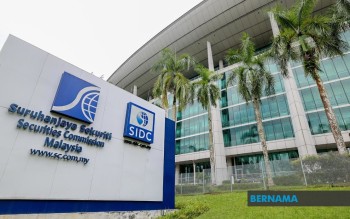
Malaysia is intensifying efforts to attract Russian capital into its burgeoning Islamic finance sector, signalling a strategic pivot towards emerging markets in Central Asia and positioning itself as a bridge between Western investors and shariah-compliant opportunities. The Ministry of Finance, working alongside the Securities Commission Malaysia, has committed to building a comprehensive Islamic financial infrastructure designed specifically to appeal to investors from Russia and the broader Central Asian region—a significant departure from Malaysia's traditional focus on Middle Eastern and Southeast Asian capital sources.
The Securities Commission has outlined an ambitious roadmap that includes exploratory missions to Central Asia scheduled for 2026 or 2027, part of a broader internationalisation strategy for Malaysia's Islamic capital market. These visits are not merely fact-finding exercises but represent a deliberate assessment of market conditions, investor appetite and the feasibility of establishing long-term financial connections. The strategy recognises that Russia and Central Asian nations represent an untapped reservoir of capital seeking alternatives to Western financial systems, particularly among institutional investors and wealth managers seeking diversification aligned with ethical and religious investment principles.
A notable catalyst for this initiative emerged in May 2025 when the Head of the Republic of Tatarstan expressed formal interest in adopting Malaysia's Islamic finance development model. This expression of intent from Russia's largest Muslim-majority region offers Malaysia a compelling opportunity to export not just financial products but the entire ecosystem of expertise, regulatory frameworks and institutional know-how that have made Kuala Lumpur a leading global Islamic finance centre. Beyond investment inflows, Malaysia stands to generate substantial revenue through the provision of professional services including shariah advisory, management consultancy, capacity-building programmes and specialist training for Russian financial institutions seeking to enter the Islamic finance space.
The groundwork for this expansion has already been laid through bilateral engagement between Malaysian and Russian financial authorities. The Securities Commission has conducted multiple rounds of discussions with the Central Bank of Russia and the Saint Petersburg International Mercantile Exchange in 2023 and 2025, establishing communication channels and identifying shared interests. These exchanges have generated mutual understanding about regulatory requirements, market structure and the potential for Russian participation in Malaysian Islamic capital markets. Such institutional relationships are essential infrastructure for attracting sophisticated institutional capital, which typically demands regulatory clarity and established relationships with domestic authorities.
Malaysia's approach reflects a calculated strategic calculation about the future of global capital flows. Western financial systems have increasingly imposed restrictions and heightened scrutiny on Russian institutions due to geopolitical tensions, creating genuine demand among Russian investors and corporations for alternative financial channels. Islamic finance, with its emphasis on ethical investing, real asset backing and avoidance of speculative instruments, offers philosophical alignment with some Russian institutional investors' objectives. Simultaneously, Malaysian regulators recognise that Central Asian markets remain significantly underserved in terms of Islamic financial products and expertise, presenting first-mover advantages for Malaysian institutions willing to invest in market development.
The Capital Market Masterplan 2026-2030 provides the overarching policy framework supporting this expansion. The plan emphasises strengthened regulatory environments, innovative product development and deepened international collaboration—elements essential for attracting cautious institutional capital from unfamiliar markets. Rather than relying solely on existing players, Malaysia is systematically building the institutional capacity to service Russian and Central Asian clients across the entire value chain of Islamic finance, from basic advisory services to sophisticated investment products.
From a Malaysian perspective, this initiative offers multiple competitive advantages. The country already possesses deep expertise in Islamic finance architecture, a mature regulatory framework administered by the Securities Commission and Bank Negara Malaysia, and a proven track record of attracting international capital. By proactively targeting Russian investors, Malaysia effectively differentiates itself from other competing Islamic finance hubs in the Middle East and Southeast Asia. This outreach also diversifies Malaysia's investor base, reducing over-reliance on traditional sources of Islamic capital and creating more balanced, resilient capital flows.
The Ministry of Finance has explicitly framed this engagement as welcoming legitimate, productive Russian investment consistent with Malaysia's domestic laws and international standards—a careful formulation that acknowledges geopolitical sensitivities while establishing clear parameters. This balancing act is crucial given Malaysia's position as an ASEAN member state maintaining relationships with multiple global powers. The emphasis on legitimacy and transparency signals that Malaysia intends to screen investments appropriately and maintain compliance with international financial standards and sanctions regimes where applicable.
Beyond immediate commercial considerations, this strategy reflects Malaysia's aspiration to position itself as an inclusive global financial hub. By extending Islamic finance capabilities to previously underserved markets, Malaysia advances the universal principles of Maqasid al-Shariah—the objectives of Islamic law emphasising fairness, justice and collective benefit. This philosophical dimension adds depth to the purely commercial rationale, allowing Malaysian policymakers to frame investor attraction as contributing to broader goals of financial inclusion and global economic stability. The positioning of Malaysia as a connector between Russian investors and global shariah-compliant markets represents a sophisticated articulation of soft power and financial leadership in a multipolar world.

