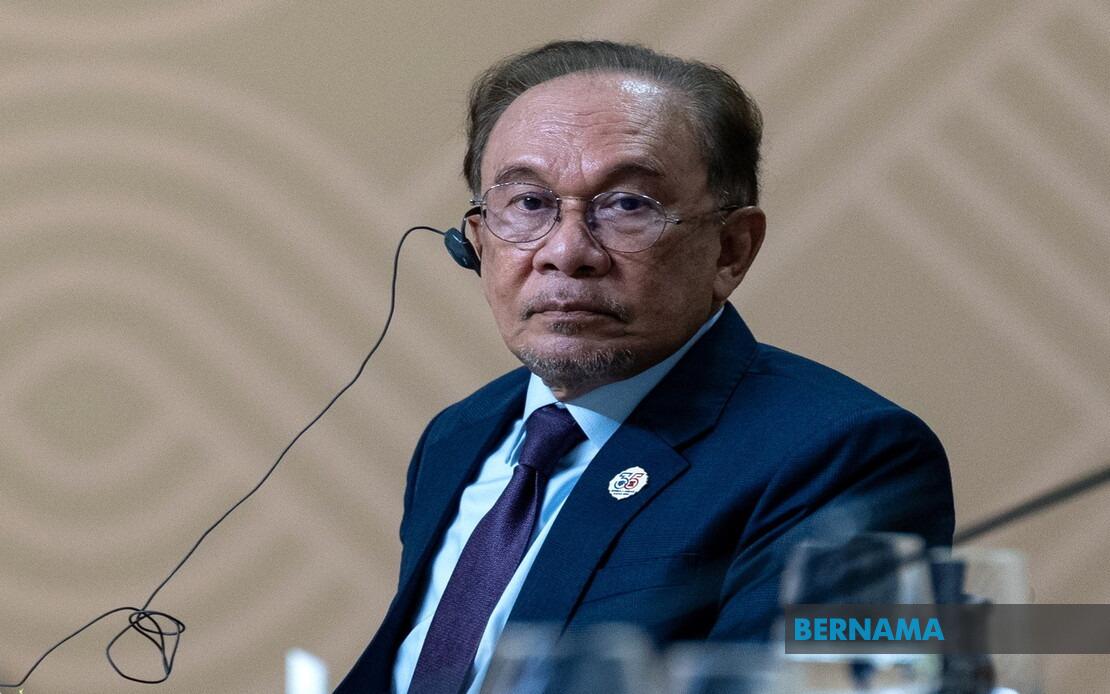
Malaysian Prime Minister Datuk Seri Anwar Ibrahim has thrown his weight behind emerging hopes for a peace settlement between the United States and Iran, believing that a formal memorandum of understanding could provide the foundation for resolving the broader West Asian conflict and establishing durable regional stability. His remarks, delivered at a press conference in Kazan following the 35th ASEAN-Russia Commemorative Summit, reflect growing diplomatic optimism about negotiations that must reach finality within the next 60 days.
The Malaysian leader's confidence does not emerge from abstract reasoning but from substantive intelligence gathered during direct consultations with key players in the mediation process. Pakistan Prime Minister Shehbaz Sharif, who has assumed a pivotal intermediary role, has provided Anwar with comprehensive briefings on the current trajectory of talks. According to Anwar, Sharif has been engaged at every critical juncture, giving him unique visibility into whether momentum is genuinely building toward a breakthrough or whether obstacles remain unresolved.
Anwar characterised the timeline constraint as neither prohibitive nor unusual in high-stakes diplomacy. The 60-day window, while compressed, represents a deliberate choice to impose discipline on negotiations that have historically suffered from protracted delays and cyclical crises. Rather than viewing this deadline as ominous, the Malaysian Prime Minister framed it as a necessary forcing mechanism that could concentrate minds and accelerate consensus-building on outstanding issues that have divided Washington and Tehran for decades.
The diplomatic reading room extends beyond South Asia to encompass Russia's strategic perspective. During his separate meeting with Russian President Vladimir Putin at the Kazan summit, Anwar discerned a comparable assessment of progress. Putin's optimistic outlook carries particular weight given Moscow's historical alignment with Tehran and its role as a stakeholder in any regional settlement that affects its own interests and those of its partners.
Yet Anwar tempered his optimism with a prudent caveat rooted in the unpredictability of American politics and policy. The involvement of US President Donald Trump and his administration introduces elements of uncertainty that defy conventional prediction. Trump's previous withdrawal from the Iran nuclear accord and his unpredictable foreign policy pivots have conditioned observers to view assertions of US commitment with measured scepticism. Anwar acknowledged these complicating variables without allowing them to extinguish the cautious hope currently circulating through regional capitals.
The significance of Malaysia's public backing for a US-Iran settlement deserves scrutiny within the broader context of Southeast Asian foreign policy. As a Muslim-majority nation and a member of multilateral organisations spanning both Asia and the broader developing world, Malaysia occupies a position where it can credibly advocate for conflict resolution to audiences in both Washington and Tehran. Anwar's statements serve to amplify the message that regional states, far from viewing a US-Iran agreement as threatening their interests, actively welcome it as a prerequisite for stability.
The 60-day negotiating window extends from June through early August, placing the deadline well within the middle of the calendar year when parliamentary recesses and summer schedules might otherwise distract policymakers. The compressed timeline also ensures that any agreement would need to withstand immediate implementation challenges rather than languishing in procedural limbo. This temporal structure mirrors lessons learned from previous attempts, where prolonged gaps between signing and implementation allowed political circumstances to shift and agreements to unravel.
For Malaysia and the Association of Southeast Asian Nations more broadly, a US-Iran rapprochement carries tangible strategic implications. Reduced tensions in the Persian Gulf would diminish the risk of military escalation that could disrupt global oil markets, dampen shipping through vital maritime corridors upon which Southeast Asian trade depends, and destabilise the broader Middle Eastern security architecture within which several regional players maintain investments and diplomatic presence. A stabilised West Asia would permit greater focus on challenges directly affecting Southeast Asia, from maritime security in the Strait of Malacca to managing great power competition in the Indo-Pacific.
Anwar's comments also reflect Malaysia's evolving role as a bridge state navigating relationships with both traditional Western powers and rising non-Western centres of influence. His simultaneous engagement with Pakistani, Russian, and American perspectives demonstrates how middle powers can productively contribute to conflict resolution without abandoning principled neutrality. By publicly encouraging the negotiations while avoiding partisan positioning, Malaysia reinforces its credentials as an honest broker concerned primarily with regional peace rather than geopolitical advantage.
The underlying diplomatic machinery supporting these talks remains largely obscured from public view, with negotiators compartmentalising information and principals limiting their remarks to carefully calibrated optimism. Anwar's willingness to speak publicly about positive momentum, informed by direct consultation with active mediators, suggests that confidential channels are indeed producing substantive progress. Whether this translates into a signed agreement within the prescribed timeline will depend on whether negotiators can resolve the most contentious outstanding issues: sanctions architecture, nuclear programme parameters, and security guarantees satisfactory to both parties.
The international community watches these developments with more than academic interest. A successful US-Iran settlement would represent a significant diplomatic victory for countries invested in de-escalation and multilateral problem-solving. Conversely, a collapsed negotiation would reinforce perceptions that fundamental interests remain irreconcilable and that the international system lacks mechanisms for bridging the most profound divides. Malaysia's public support, amplified through statements by its Prime Minister, adds diplomatic weight to the negotiating table even as the principals themselves conduct the substantive work behind closed doors.

