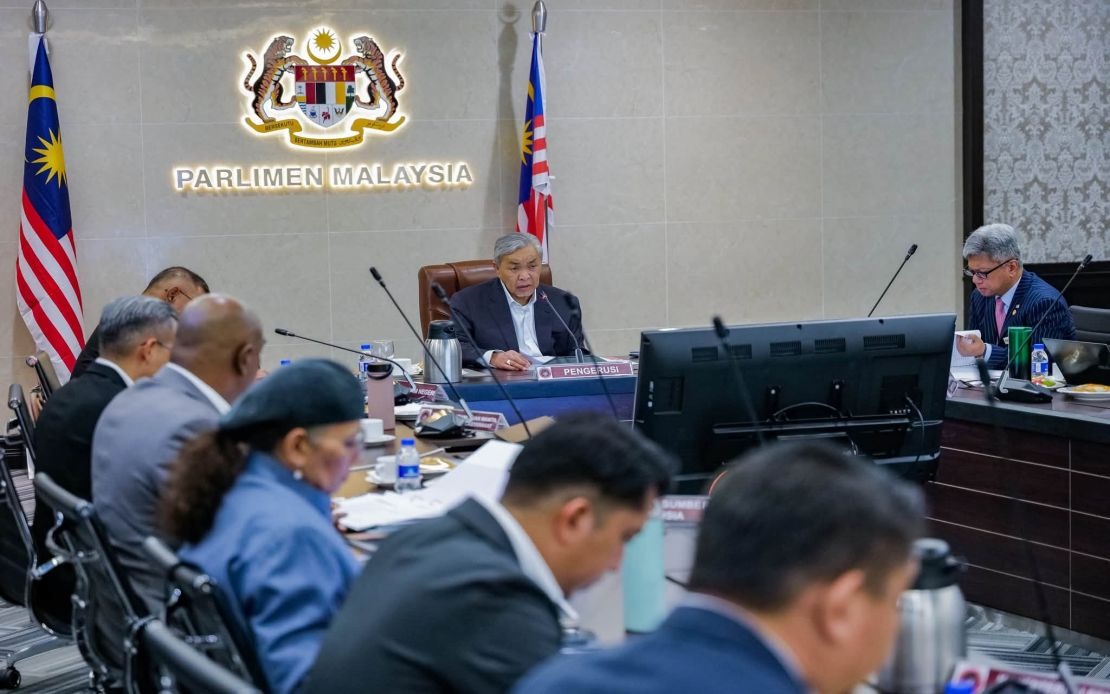
Malaysia requires an upgraded refugee management framework that can simultaneously honour humanitarian obligations and protect national security interests, Deputy Prime Minister Datuk Seri Dr Ahmad Zahid Hamidi said on June 30. Speaking following his leadership of the 6th Meeting of the High-Level Committee on the Management of Refugees and Asylum Seekers, he underscored the urgency of balancing competing policy objectives in an era of unprecedented global displacement.
The context for this policy direction is sobering. The world currently grapples with an exceptionally severe humanitarian emergency, with more than 122 million people forcibly displaced due to armed conflicts and widespread instability. This figure represents a compound crisis spanning multiple regions and perpetuating cycles of poverty, trauma, and vulnerability. For Malaysia, which sits along crucial migration corridors and hosts significant refugee populations including Rohingya and others fleeing persecution, the pressure to develop coherent responses has intensified substantially.
Ahmad Zahid, who concurrently holds the Rural and Regional Development Minister portfolio, framed refugee management not as a purely administrative or technical exercise but as fundamentally intertwined with national sovereignty and public safety. This positioning reflects a growing consensus among Southeast Asian governments that refugee policy cannot be separated from broader security considerations. The Deputy Prime Minister emphasised that every decision affecting asylum policy must be grounded in protecting Malaysia's territorial integrity, maintaining social order, and prioritising the welfare of Malaysian citizens and residents.
The committee meeting addressed several operational dimensions of Malaysia's refugee response system. Officials reviewed how existing policies are being implemented in practice, examining whether management mechanisms remain effective and consistent with evolving national priorities. This assessment-based approach suggests the government recognises that refugee frameworks require regular recalibration as circumstances change and new challenges emerge.
A significant focus involved the Refugee Registration Document, known locally as DPP, which forms the administrative backbone of Malaysia's refugee identification system. This documentation mechanism is crucial for tracking displaced populations, determining eligibility for services, and preventing security risks. The committee evaluated whether current DPP implementation processes are functioning as intended and whether they adequately serve both humanitarian and security objectives.
Additionally, the committee deliberated on streamlining guidelines governing refugee access to education and healthcare services. These are critical areas because education and medical care directly affect both human dignity and integration outcomes. However, providing such services requires coordination among multiple government agencies, legal compliance with various regulations, and manageable administrative procedures. The committee appears to have identified inefficiencies in how current guidelines operate across agencies, prompting efforts to simplify and better align implementation.
For Malaysia and the broader Southeast Asian region, this policy emphasis carries significant implications. Most countries in the region are not signatories to the 1951 Refugee Convention, instead relying on bilateral agreements and ad-hoc management approaches. This policy vacuum has historically created vulnerabilities where humanitarian concerns and security risks coexist without clear resolution mechanisms. Malaysia's efforts to develop a more structured framework could influence how other nations in the region approach similar challenges.
The emphasis on balancing humanitarian and security considerations reflects real tensions that policymakers must navigate. Stringent security protocols can inadvertently restrict access to asylum processes for genuine refugees, while overly permissive humanitarian policies might create security blind spots. The challenge lies in designing systems sophisticated enough to distinguish between legitimate asylum seekers and individuals who pose genuine security threats, whilst maintaining processing efficiency.
For refugee populations already in Malaysia, these policy developments hold practical consequences. Enhanced coordination between education and healthcare providers, if successfully implemented, could improve access to services that remain inconsistently available across different states and administrative zones. Clearer guidelines would reduce the bureaucratic uncertainty that currently forces many refugees to navigate overlapping or contradictory regulations from different agencies.
The international dimension also matters significantly. Malaysia hosts populations fleeing situations that most countries have limited capacity to address, including the Rohingya crisis and ongoing instability in Myanmar, Afghanistan, and Syria. How Malaysia develops its refugee framework influences regional perceptions of burden-sharing and international responsibility. Countries receiving proportionally large refugee populations often advocate for greater international support and responsibility distribution.
Implementing this balanced approach requires sustained investment in institutional capacity. Government agencies need clear operational guidance, training for frontline staff making eligibility determinations, and adequate resources to conduct background checks and assess security implications. This institutional infrastructure is expensive but essential for preventing both security lapses and humanitarian failures.
The committee's work also reflects recognition that refugee policy cannot remain static. As global displacement patterns evolve, security threats shift, and regional dynamics change, Malaysia's approach must be sufficiently flexible to adapt. The periodic review mechanism represented by this high-level committee meeting suggests government commitment to continuous improvement rather than static policy frameworks.
Moving forward, success will depend on how effectively Malaysia translates these principles into functioning mechanisms that displaced persons, government agencies, and Malaysian citizens experience as coherent and credible. The test lies not in policy statements but in whether the framework consistently delivers outcomes that protect security whilst upholding fundamental human dignity.

