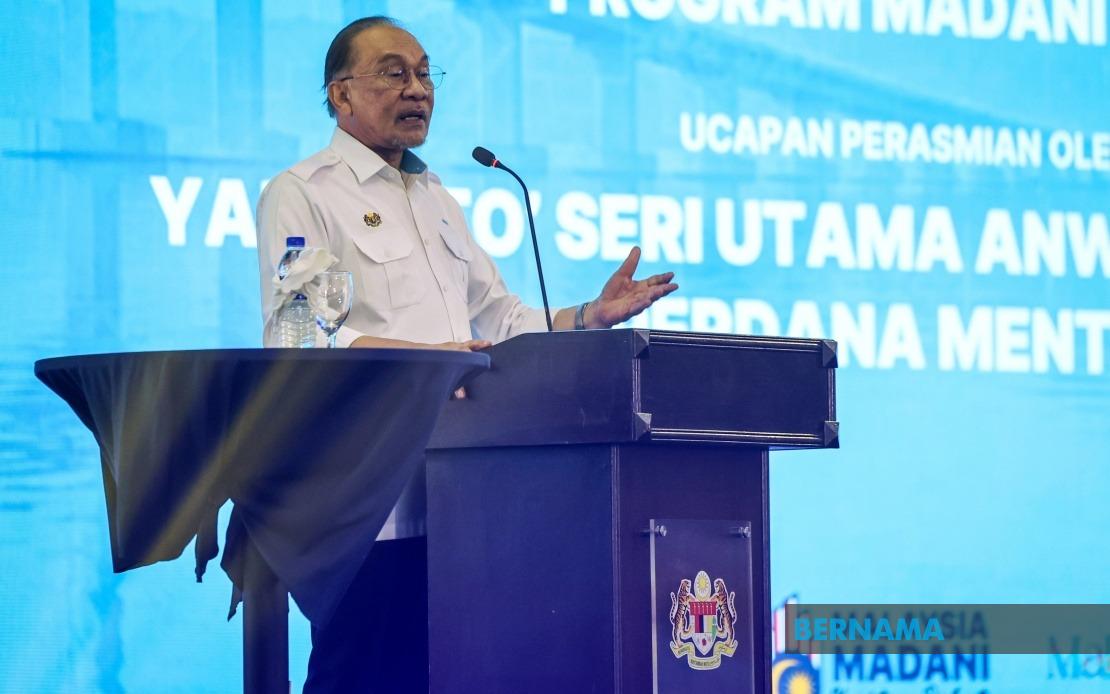
Prime Minister Datuk Seri Anwar Ibrahim has outlined an ambitious vision for Malaysia to consolidate its position as a commanding force in the global halal economy, contingent on the nation's ability to marry its respected certification frameworks with tangible manufacturing and service delivery infrastructure. Speaking at the launch of the Penang International Halal Expo (PIHEX) 2026 and the Penang Bumiputera Entrepreneurs Gathering (HUBPP) at Politeknik Seberang Perai in Permatang Pauh, the Prime Minister underscored that international recognition alone cannot sustain Malaysia's competitive advantage in this rapidly expanding sector.
The halal industry has become a strategic economic pillar for Malaysia, extending far beyond religious compliance to encompass food production, pharmaceuticals, cosmetics, logistics, and financial services. The sector generated significant economic activity in recent years, with the global halal market reaching hundreds of billions of dollars annually. Malaysia's position as a trusted certifier has granted it considerable soft power in Muslim-majority and Muslim-minority nations alike, translating recognition into trade opportunities and investment flows. However, Anwar's remarks signal an awareness that certification authority alone—without corresponding domestic production capacity, quality assurance systems, and technological innovation—risks becoming an empty credential.
Anwar revealed that his recent diplomatic engagements with several major global leaders have demonstrated the appetite among nations for Malaysian halal standards and partnerships. Chinese President Xi Jinping, Brazilian President Luiz Inacio Lula da Silva, and South African President Matamela Cyril Ramaphosa have each expressed interest in collaborating with Malaysia to establish halal certification frameworks within their own economies or to obtain Malaysia's official halal endorsement. These overtures from three continents—Asia, South America, and Africa—underscore the universality of demand for halal-certified goods and services in an increasingly diverse global marketplace.
The strategic significance of these partnerships extends beyond bilateral trade agreements. For Malaysia, they represent an opportunity to embed its certification standards into supply chains across multiple regions, effectively creating a network of halal-compliant production and distribution infrastructure that generates recurring demand for Malaysian expertise, auditing, and validation services. This model mirrors how other nations have leveraged technical standards—such as those in automotive, electronics, and food safety—to establish long-term competitive advantages and recurring revenue streams. Malaysia's challenge lies in translating diplomatic interest into concrete institutional arrangements and commercial frameworks.
Domestic industry capability represents the foundation upon which this international expansion must rest. Malaysia hosts a network of halal-certified manufacturers, processors, and service providers, yet significant gaps remain in research and development, innovation in halal logistics, and the development of advanced testing and verification technologies. Local enterprises must be equipped not only to meet existing halal standards but to pioneer new applications and sectors—such as cultured meat, plant-based alternatives, and digital supply chain verification—that will define the halal industry of the coming decade. Without competitive domestic producers capable of serving international markets at scale, Malaysia risks becoming a certifier of foreign goods rather than an exporter of Malaysian halal products.
The Penang International Halal Expo serves as a platform to showcase local industry capabilities to both domestic and international stakeholders. Such gatherings facilitate networking between manufacturers, retailers, logistics providers, and financiers, fostering the ecosystem-building that Anwar implicitly calls for. The inclusion of the Penang Bumiputera Entrepreneurs Gathering alongside PIHEX suggests a deliberate effort to integrate small and medium-sized enterprises—traditionally underrepresented in halal supply chains—into higher-value production and export activities. This inclusive approach may prove essential to ensuring that halal sector growth translates into broad-based economic benefits across Malaysia's regions.
Strategic international collaboration, as Anwar framed it, encompasses more than trade agreements. It includes technical cooperation in standard-setting, the establishment of Malaysian training centres and certification hubs in partner nations, and investment in joint ventures that position Malaysian expertise at the core of emerging halal industries abroad. Such arrangements create pathways for knowledge transfer, while simultaneously anchoring foreign supply chains to Malaysian oversight and quality assurance—a model already evident in sectors such as palm oil and rubber, where Malaysia has maintained significant control over global standards and traceability mechanisms.
The timing of these statements coincides with growing competition in the halal certification space. Indonesia, Turkey, and other nations have invested in their own certification bodies and are competing for the same market share. Malaysia's traditional first-mover advantage is eroding as standards become more uniform and other countries develop credible institutions. In this context, Anwar's emphasis on industry capability and strategic partnerships reflects a recognition that Malaysia must move beyond reputation to substantive competitive advantages—the ability to deliver superior products, services, and integrated solutions that command premium prices and customer loyalty.
For Malaysian manufacturers and entrepreneurs, Anwar's remarks signal government commitment to supporting halal sector expansion as a pillar of economic diversification. This is particularly relevant for Penang, which has developed expertise in precision manufacturing, electronics, and food production, all sectors capable of incorporating halal dimensions. Small and medium enterprises in these fields may find new export markets and higher profit margins by pursuing halal certification and positioning themselves for partnerships with international entities seeking reliable, certified suppliers.
The halal economy also intersects with Malaysia's broader foreign policy objectives. By positioning itself as indispensable to the halal value chains of major powers—whether China, Brazil, or South Africa—Malaysia enhances its strategic relevance and negotiating capacity across multiple domains. Halal certification becomes a tool of economic statecraft, allowing Malaysia to deepen relationships with nations that might otherwise have limited commercial or diplomatic ties with the country. This dimension may be particularly important as Malaysia seeks to strengthen ties with non-Muslim-majority economies and diversify its economic partnerships beyond traditional regional relationships.
Moving forward, translating Anwar's vision into reality will require sustained investment in industry development, research institutions, and regulatory frameworks that maintain Malaysia's certification credibility while facilitating faster, more cost-effective compliance for international partners. Government agencies, private sector stakeholders, and educational institutions must collaborate to create a comprehensive ecosystem capable of supporting not only certification but the entire value chain of halal-compliant production, from raw material sourcing through final distribution. Without such infrastructure, Malaysia risks seeing its hard-earned certification authority become a commodity, replicated and undermined by competitors operating in jurisdictions with lower regulatory costs and equally rigorous standards.
The pathway to global halal leadership, as articulated by the Prime Minister, hinges on Malaysia's ability to remain at the forefront of both standards-setting and implementation. This requires continuous investment in capability-building, unwavering commitment to credibility, and strategic positioning within international supply networks that ensure Malaysia derives sustained economic value from its halal sector expertise.

