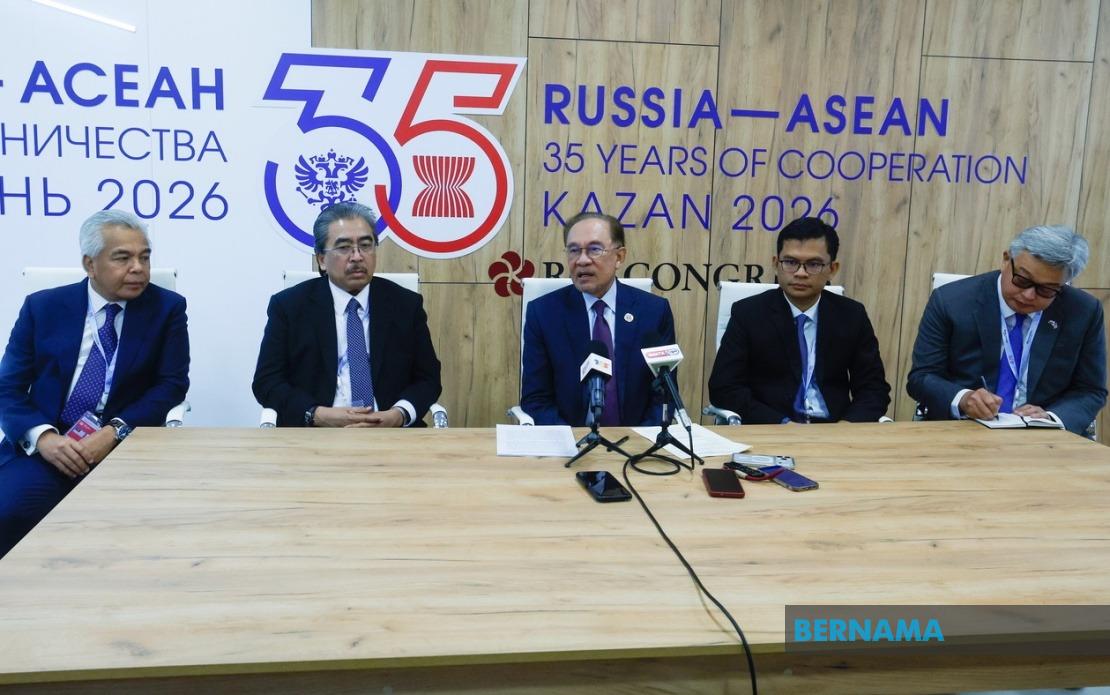
Prime Minister Datuk Seri Anwar Ibrahim has stressed the urgency of establishing visa-free travel facilities and launching direct flight connections between Malaysia and Russia, asserting that both measures are essential to reversing the country's underperformance in capturing Russian tourist arrivals. Speaking to Malaysian journalists in Kazan following his two-day attendance at the ASEAN-Russia Commemorative Summit, Anwar highlighted a concerning disparity in visitor flows that demands immediate governmental attention and bilateral coordination.
The statistical contrast he presented underscores Malaysia's tourism competitiveness problem in the Russian market. While Turkey welcomed approximately five million Russian tourists annually and Thailand attracted roughly two million, Malaysia managed only around 100,000 visitors from Russia—a figure that Anwar characterized as inadequate given the countries' diplomatic relations and Malaysia's considerable appeal as a tourist destination. This substantial gap represents both a missed economic opportunity and a strategic shortcoming in leveraging bilateral ties to strengthen people-to-people connections.
Anwar attributed this underperformance to multiple structural barriers that remain entrenched within Malaysia's travel and financial systems. He specifically identified outdated procedures and archaic payment mechanisms as major obstacles preventing Russian citizens from easily planning and executing visits to Malaysia. The complexity of financial transactions, combined with bureaucratic inefficiencies, creates friction at precisely the point where potential tourists are making travel decisions—making them more likely to select destinations with smoother, more accessible booking and payment processes.
The Prime Minister further criticized what he described as an overly cautious institutional mindset that prioritizes avoiding negative international reactions above pragmatic policy implementation. This defensive posture, he argued, unnecessarily constrains Malaysia's ability to modernize its travel facilitation mechanisms and align them with international best practices. By becoming excessively concerned about how other nations might perceive certain bilateral arrangements, Malaysia essentially hobbles its own economic interests and tourism potential.
Anwar's remarks suggest frustration with the pace of bureaucratic reform and interagency coordination required to unlock Russia-Malaysia tourism potential. The absence of direct flights represents a particularly acute problem, as it forces Russian travelers to undertake lengthy connections through regional hubs, adding both cost and journey time while diminishing the appeal of Malaysia as a destination. Direct connectivity would dramatically reduce friction in the travel decision-making process and make Malaysia more competitive against Turkey and Thailand, which benefit from more convenient routing options for Russian visitors.
The payment systems challenge extends beyond mere inconvenience; it reflects deeper issues surrounding financial sanctions compliance and banking restrictions that affect Russia broadly. However, Anwar's comments suggest that Malaysia may have overcorrected in implementing safeguards, creating barriers even for legitimate tourism and commercial exchange. His reference to Iran indicates recognition that this constraint affects multiple important bilateral relationships and warrants a more nuanced, context-specific approach rather than blanket restrictions.
From a broader regional perspective, Anwar's advocacy for expedited visa-free arrangements aligns with Southeast Asia's competitive positioning in global tourism markets. Countries like Thailand have successfully leveraged convenient visa policies and direct connectivity to capture substantially larger shares of Russian tourist spending. Malaysia's failure to implement similar measures places it at a disadvantage not just against regional competitors but also against Middle Eastern and Mediterranean destinations that have recognized Russian tourism's commercial significance.
The timing of these remarks—delivered at an ASEAN-Russia summit—suggests Anwar views tourism facilitation as integral to broader strategic engagement with Moscow. Strengthening people-to-people links through increased tourism flows can generate political goodwill, cultural understanding, and sustained bilateral interest that extends beyond formal diplomatic channels. This mirrors successful approaches adopted by other nations seeking to deepen relationships with Russia amid complex global geopolitical circumstances.
Implementing Anwar's recommendations would require coordinated action across multiple government agencies. The Foreign Ministry must negotiate visa-free travel protocols with Moscow while immigration authorities redesign entry procedures for Russian nationals. Civil aviation authorities need to engage with airlines to establish commercially viable direct routes, potentially requiring initial incentive structures. Financial regulators must undertake careful review of payment processing restrictions to enable transactions that comply with international standards without becoming prohibitively complex.
The political economy of tourism expansion also merits consideration. Russian tourist spending generates substantial revenue for hospitality, transportation, and retail sectors while creating employment opportunities across Malaysia's tourism ecosystem. Beyond economic metrics, increased Russian visitor numbers would enhance Malaysia's international profile and demonstrate the country's capacity to develop multifaceted relationships across different geopolitical spheres. This diversification strengthens Malaysia's strategic autonomy and reduces dependence on traditional tourism source markets.
Anwar's framing suggests he views tourism facilitation not as a peripheral issue but as a legitimate component of Malaysia's foreign policy toolkit and economic development strategy. His willingness to openly critique existing procedures and international caution indicates confidence that Malaysia can pursue pragmatic bilateral initiatives without suffering adverse consequences from other quarters. This stance reflects broader Southeast Asian confidence in navigating great power dynamics through selective engagement and relationship-building.
Moving forward, the effectiveness of Anwar's exhortations will depend on translating political will into concrete administrative reforms. Malaysian tourism authorities must produce specific timelines and implementation roadmaps for visa-free travel, bilateral discussions with Russian counterparts must accelerate, and aviation authorities must actively recruit airlines to establish direct service. Only through sustained institutional commitment and cross-agency coordination can Malaysia hope to capture a meaningful share of Russian tourism demand and justify Anwar's optimism about bilateral potential.

