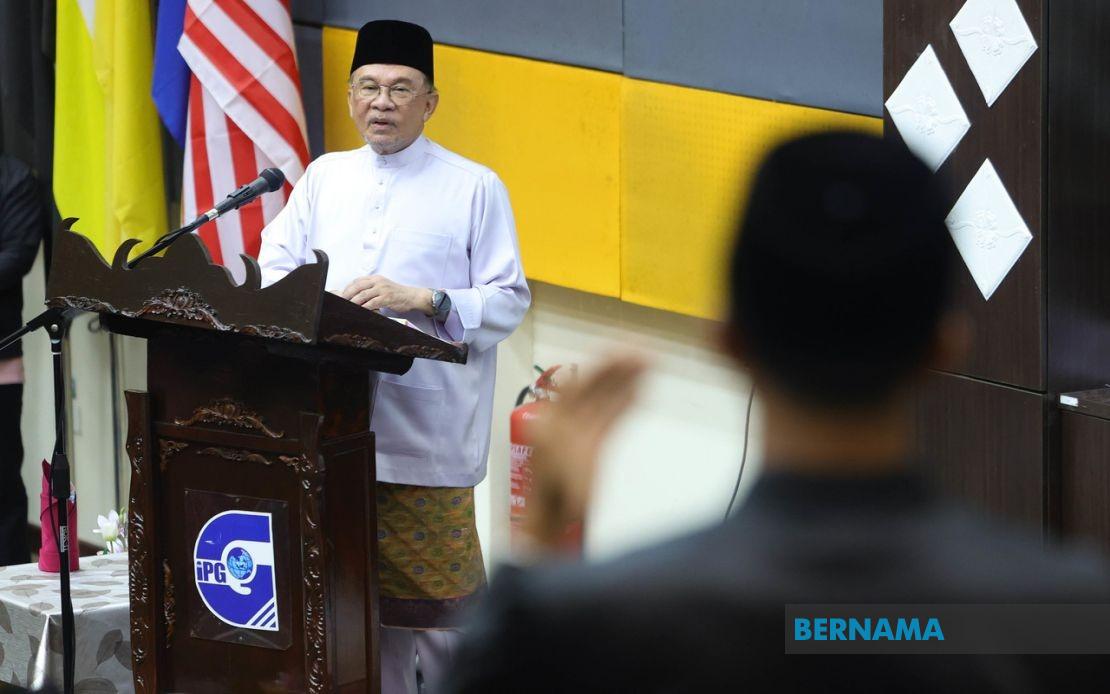
Prime Minister Datuk Seri Anwar Ibrahim has underscored a fundamental challenge facing Malaysia's education system: the need to cultivate teachers who are simultaneously cutting-edge technologists and guardians of moral character. Speaking in Nilai, the Prime Minister articulated a vision where educators command expertise in artificial intelligence, robotics, and advanced STEM fields, yet maintain unwavering commitments to ethical frameworks and the broader human values that define Malaysian society. This dual imperative reflects the tensions inherent in a developing nation striving to compete globally while preserving its cultural and spiritual foundations.
The rapidly evolving technological landscape presents both opportunity and peril for Malaysian education. Anwar acknowledged that stagnation is not an option; curricula frozen in outdated methodologies will inevitably leave Malaysian students and workers disadvantaged as artificial intelligence reshapes labour markets worldwide. Countries that fail to integrate emerging technologies into teaching risk condemning their populations to economic peripherality. Yet the Prime Minister rejected the false choice between modernisation and values, instead framing technological mastery as meaningless without ethical grounding. This positions Malaysia distinctly within global educational discourse, refusing the purely technocratic approach adopted by some nations.
The metaphor Anwar employed—"reach for the skies while keeping our roots on the ground"—captures the balancing act required. Teachers must understand machine learning algorithms and data science, fields increasingly critical to economic competitiveness, but they cannot be permitted to treat these disciplines as value-neutral. The integration of AI into classrooms and workplaces inevitably raises questions about algorithmic bias, data privacy, and the displacement of human labour. Malaysian educators equipped only with technical knowledge but devoid of ethical frameworks would be ill-prepared to guide students through these moral complexities.
However, the challenge extends beyond individual competence. Teacher training institutions across Malaysia must fundamentally restructure their programmes to embed ethical reasoning within technical curricula rather than treating them as separate domains. This requires investment in faculty development, curriculum redesign, and potentially partnerships with international institutions that have pioneered integrated approaches. The presence of Education Minister Fadhlina Sidek and IPGKPT director Dr Kartini Abdul Mutalib at the event suggests the government recognises this requires coordinated action across institutions responsible for educator development.
The Prime Minister's emphasis on Malaysia's multiracial and multireligious character adds another dimension to his educational vision. He warned explicitly that education systems poisoned by racial or religious hatred become instruments of societal destruction rather than progress. This concern is not merely rhetorical; educational materials, classroom dynamics, and teacher attitudes profoundly shape how young Malaysians perceive citizens of different backgrounds. Teachers who master modern technology but harbour or tolerate discriminatory sentiments would actively undermine national cohesion and economic development.
At a deeper level, Anwar's remarks reflect anxiety about social fragmentation in an increasingly polarised region. Southeast Asia has witnessed concerning examples of how educational systems can be weaponised to deepen communal divides. By insisting that tolerance, mutual respect, and commitment to human values are non-negotiable foundations for education quality, the Prime Minister positions educators as custodians of plural democracy itself. This is particularly significant given Malaysia's history of communal tensions and ongoing debates about national identity.
The economic implications are substantial. Malaysia competes for investment and talent against nations offering superior technical expertise and educational quality. A workforce proficient in AI and emerging technologies but fractured along religious or ethnic lines loses its competitive edge. Multinational corporations and high-value industries increasingly prioritise locations where diverse teams can collaborate effectively. Conversely, nations that successfully cultivate both technical excellence and social cohesion attract premium investments and attract top talent globally. From this perspective, Anwar's emphasis on character and ethics is not a soft counterbalance to technical training but integral to national economic strategy.
Implementing this vision requires substantial resource commitment. Teacher salaries in Malaysia have long been a pressure point, affecting both recruitment and retention of quality educators. Developing teachers capable of teaching advanced STEM while simultaneously fostering ethical reasoning demands competitive compensation and continuous professional development opportunities. Malaysia risks falling into a trap where calls for upgraded education outpace actual investments in the teaching profession, resulting in rhetorical commitment unmatched by financial reality.
The timing of these remarks carries significance within Malaysia's broader political context. Educational reform has become a rallying point for various constituencies—economic nationalists seeking competitive advantage, traditionalists concerned about cultural erosion, and progressives advocating for inclusive development. By articulating a vision that explicitly encompasses technological advancement, ethical grounding, and communal harmony, Anwar attempts to construct a consensual framework that acknowledges legitimate concerns across the political spectrum. Whether this translates into sustained policy implementation and budgetary priorities remains an open question.
Regionally, Malaysia's educational trajectory influences the broader Southeast Asian development model. Neighbouring countries grapple with similar challenges of rapid technological change amid diverse populations. A Malaysian success in producing ethically-grounded technologists could offer valuable lessons for Indonesia, the Philippines, Thailand, and Vietnam as they confront comparable educational crossroads. Conversely, failure to operationalise this vision might suggest that balancing technical excellence with ethical grounding remains perpetually aspirational rather than achievable.
The practical pathway forward demands clarity about implementation mechanisms. Teacher training curricula must be restructured; qualification standards updated; assessment frameworks revised to measure both technical competence and character development. International partnerships could facilitate knowledge transfer from jurisdictions that have successfully integrated ethics into technical education. Within Malaysia, government agencies, private sector partners, and civil society organisations must align around shared objectives rather than pursuing fragmented initiatives. The Prime Minister's statement provides direction, but translating vision into systemic change requires sustained institutional commitment.

