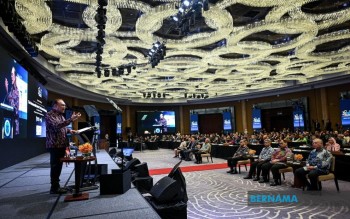
Prime Minister Datuk Seri Anwar Ibrahim has called for Malaysia to establish a sovereign cloud infrastructure as a strategic measure to protect critical security and personal data, even as the nation remains committed to welcoming foreign digital investments. Speaking at the 39th Asia-Pacific Roundtable in Kuala Lumpur on July 2, Anwar framed the proposal as a necessary response to the region's deepening reliance on digital technologies and critical infrastructure while navigating an increasingly complex geopolitical landscape shaped by competing interests from major powers.
The Prime Minister's comments were prompted by discussion on how Malaysia and other Southeast Asian nations could preserve meaningful agency within an interconnected digital ecosystem. Rather than advocating isolation or protectionism, Anwar presented the sovereign cloud concept as a balanced approach—one that enables Malaysia to defend its most sensitive information without surrendering the openness that characterises a modern, globalised economy. This distinction is crucial for Malaysian policymakers seeking to manage digital sovereignty without triggering backlash from trading partners or disrupting the investment climate.
Anwar specifically referenced the United States Cloud Act as a catalyst for Malaysia's strategic reconsideration. The legislation permits American companies to comply with US government requests for data access regardless of where servers are physically located or where citizens reside. This provision has created genuine concerns across multiple jurisdictions, particularly among nations worried about the asymmetrical access enjoyed by Washington to confidential government and commercial information. For Malaysia, where government systems, financial institutions, and telecommunications infrastructure increasingly depend on cloud services, the implications are substantial and warrant serious attention from both technical and policy perspectives.
The sovereign cloud would incorporate firewalls and security protocols designed to shield sensitive information from unauthorised external access. However, Anwar acknowledged the inherent limitations of such protective measures within an interconnected world, recognising that absolute security is neither achievable nor necessarily desirable in a democratic society. This nuanced perspective reflects sophisticated understanding of the trade-offs between privacy, security, and the innovation benefits that flow from open digital ecosystems. Malaysia's approach would need to distinguish between data requiring enhanced protection—such as national security information, government systems, and critical infrastructure records—and information that can circulate more freely without jeopardising national interests.
The Prime Minister's framing of digital sovereignty connects directly to broader concerns about the dual challenges of openness and security. While unrestricted information flow supports democratic principles, innovation, and economic dynamism, it simultaneously creates vulnerabilities that sophisticated actors exploit. Malaysia has experienced documented cases of social media misuse for political manipulation, economic fraud, and sexual exploitation, particularly targeting vulnerable populations including youth. The government therefore faces legitimate pressure to implement safeguards that defend citizens without morphing into censorship or authoritarian control.
Anwar's emphasis on maintaining investment attractiveness from the United States, China, and Germany suggests Malaysia intends to pursue digital sovereignty through complementary rather than exclusionary measures. A sovereign cloud need not prevent American, Chinese, or German companies from operating in Malaysia; rather, it establishes a protected domain for the most sensitive categories of data while preserving commercial opportunities elsewhere. This approach acknowledges that Malaysia's economic interests depend substantially on foreign capital and technology transfer, particularly from these three major sources of digital innovation and investment capital.
The invocation of ASEAN centrality in Anwar's remarks underscores another dimension of the sovereignty discussion. Rather than individual Southeast Asian nations negotiating digital terms in isolation, coordinated regional approaches could generate greater leverage with major powers. If multiple ASEAN member states adopted similar sovereign cloud architectures, the cumulative economic and political significance would strengthen their collective bargaining position regarding data governance, technology standards, and cross-border digital flows. This regional dimension transforms what might otherwise appear as a technical infrastructure question into a matter of geopolitical consequence.
Anwar's characterisation of Malaysia as a small nation seeking to leverage ASEAN's collective strength provides important context for understanding the government's digital strategy. Malaysia cannot unilaterally dictate terms to technology giants or reshape the international digital architecture; however, through coordinated regional action and strategic partnerships, Malaysian policymakers can influence outcomes affecting tens of millions of Southeast Asians. This perspective aligns with Malaysia's traditional approach to international affairs, wherein diplomatic skill, alliance-building, and coalition formation compensate for limited independent power projection.
The practical implementation of a sovereign cloud will demand substantial technical expertise, capital investment, and ongoing maintenance. Malaysia would need to develop or acquire world-class cybersecurity capabilities to ensure the system itself does not become a vulnerability. International partnerships with trusted nations and technology providers would likely prove essential, suggesting that sovereignty need not mean complete independence or self-sufficiency. Rather, sovereignty in this context means Malaysia retains control over the governance, access, and use of sensitive data, even while relying on external expertise and potentially external infrastructure components.
For Southeast Asian readers, Anwar's proposal carries direct implications. Enhanced data protection could reduce risks of identity theft, financial fraud, and privacy violations affecting ordinary Malaysians and regional residents. Simultaneously, the sovereign cloud represents an assertion of regional agency in digital affairs—a pushback against the assumption that American legal frameworks or Chinese corporate practices should determine how Asian citizens' information is handled. This reclamation of control over digital destiny resonates with broader Southeast Asian efforts to reduce technological dependence on external powers.
The timeline and budget for establishing Malaysia's sovereign cloud infrastructure remain unclear from Anwar's remarks, but the public commitment signals serious governmental intent. Related work on digital infrastructure, cybersecurity, and technology governance will likely accelerate within relevant ministries and state-owned enterprises. Malaysia's experience with previous megaprojects suggests implementation will prove more complex and protracted than initial announcements suggest, yet the strategic direction appears set.
Ultimately, Anwar's proposal reflects the fundamental challenge facing all developing nations in the digital era: how to harness technology's benefits while protecting citizens and national interests from exploitation. By framing the sovereign cloud as complementary to rather than contradictory with openness and investment, Malaysia attempts to chart a middle course. Whether this approach succeeds will depend on execution quality, regional coordination, and the goodwill of major powers toward Southeast Asian autonomy in digital affairs.

