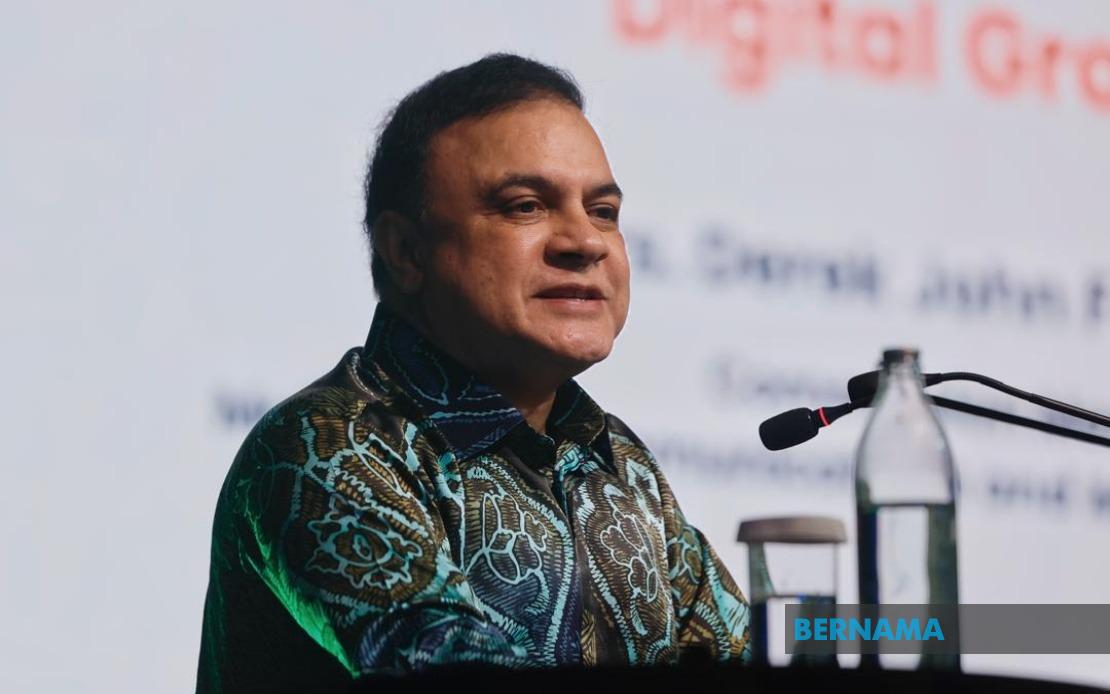
Malaysia's approach to regulating the digital realm must mirror the protections already embedded in its physical world regulations if the country is to effectively counter the escalating tide of online criminal activity. This assessment came from Derek John Fernandez, a member of the Malaysian Communications and Multimedia Commission (MCMC), during his opening remarks at the International Regulatory Conference (IRC) 2026 in Kuala Lumpur on July 21, where Communication Minister Datuk Seri Fadhmi Fadzil presided over proceedings.
The regulatory disparity that currently exists creates a troubling loophole in Malaysia's defense against digital harm. Society has long established age restrictions for physical activities—whether prohibiting minors from accessing certain films or establishing criminal liability thresholds—yet these same protective guardrails have not been consistently applied to the digital environment. This inconsistency has become an invitation for criminal exploitation. Fernandez pointed out that wrongdoers deliberately shift their operations online not merely for convenience, but because the regulatory landscape is demonstrably more permissive, anonymity is easier to maintain, and enforcement remains considerably weaker than in the traditional sphere.
The stakes of this regulatory gap have become unmistakably clear through Malaysia's enforcement data. The MCMC receives between two and three reports of child sexual abuse material daily and performs approximately 1,700 takedowns of harmful content every single day. These figures underscore that online child exploitation is not a theoretical concern but an urgent, persistent threat operating within Malaysia's digital borders. The sheer volume of harmful material being circulated and the daily intervention required demonstrate that existing frameworks, while recently strengthened, remain stretched by the scale of the problem.
In response to these mounting challenges, Malaysia has implemented a series of legislative reforms designed to bring regulatory standards for digital platforms into closer alignment with physical-world protections. The Communications and Multimedia Act 1998 and the newly introduced Online Safety Act 2025 (ONSA), which took effect on January 1 this year, represent significant steps forward. These laws include provisions requiring digital platforms to verify the identities and ages of users—a measure that attempts to introduce the kind of age-gating that has long been standard practice in physical venues but is still novel in the online context.
The expansion of criminal law through amendments to the Penal Code further demonstrates Malaysia's legislative response to the digital challenge. However, Fernandez's emphasis on parity suggests that regulatory completeness requires ongoing refinement. The goal is not simply to punish crimes after they occur but to establish preventive frameworks that make committing such crimes significantly more difficult and risky, much as licensing systems, identity verification, and environmental controls reduce crime in physical spaces.
What makes the digital threat environment distinctly dangerous is the fundamental difference in how children encounter risk in these spaces compared to the material world. In traditional settings, parental supervision and environmental controls provide at least some buffer against harm—parents know where their children are and can monitor their interactions. The digital realm obliterates these boundaries. A child sitting alone in their bedroom, on a smartphone or computer, faces potential exposure to predators, scams, and exploitation around the clock, without geographic or temporal limitations. The intimacy and privacy of home, which once offered sanctuary, now becomes a direct pipeline to global dangers.
Central to this emerging threat landscape is the weaponization of personal data. In Malaysia's digital economy, information has become a high-value commodity that criminals actively harvest and weaponize. Data breaches enable targeted scams, fraud operations become more sophisticated through personal intelligence, and child exploitation rings utilize data to identify and manipulate vulnerable targets. This represents a qualitative shift from traditional crime: the digital world generates its own fuel for criminal enterprise through the data trails users involuntarily create.
Regulators now face an increasingly complex balancing act between protecting citizens and accommodating the commercial models that drive the digital economy. Many major technology platforms depend fundamentally on extensive user data collection as their primary revenue mechanism. Implementing stricter age verification, limiting data harvesting, or requiring greater transparency about algorithmic content curation directly conflicts with business models that have generated extraordinary wealth and market valuations. Malaysia must navigate this tension deliberately, ensuring that commercial interests do not override child safety and consumer protection.
Globally, an emerging consensus is forming around age-based restrictions on social media access, with an increasing number of countries implementing such measures. Malaysia's consideration of similar approaches reflects both international pressure and domestic recognition that current safeguards prove insufficient. Yet Fernandez cautioned against viewing age verification as a panacea. This mechanism alone cannot eliminate online harms; rather, it must form one component within a comprehensive, layered strategy. Effective protection requires legislation to establish the legal framework, technology to enforce restrictions and detect violations, enforcement resources to investigate and prosecute breaches, and international cooperation to address the cross-border nature of digital crime.
The IRC 2026, themed 'Shaping the Next Digital Era: Regulation, Resilience and Trust,' reflects Malaysia's deliberate shift toward implementing homegrown policy frameworks rather than simply adopting international standards wholesale. The ONSA 2025 embodies this sovereign approach, tailored to Malaysian contexts and values. However, the fundamental principle Fernandez articulated—that the digital and physical worlds must operate under equivalent protective standards—transcends any single nation's regulations. This principle becomes increasingly important as Southeast Asian countries develop their own digital governance approaches and as the region emerges as both a significant market for technology platforms and a geography where online crime networks operate with particular virulence.
For Malaysian policymakers, technology companies, and civil society, the implication is clear: the current generation of regulatory reform represents only the beginning of a sustained effort to realign digital safeguards with physical-world protections. As artificial intelligence accelerates the creation of new online harms, as social media platforms evolve their features and algorithms, and as criminals develop more sophisticated methods of exploitation, the legal framework will require continuous adaptation. The fundamental commitment to parity—ensuring that a child is equally protected whether they are in a cinema or on social media, whether they are in a shopping mall or in a chat room—must guide this ongoing evolution.

