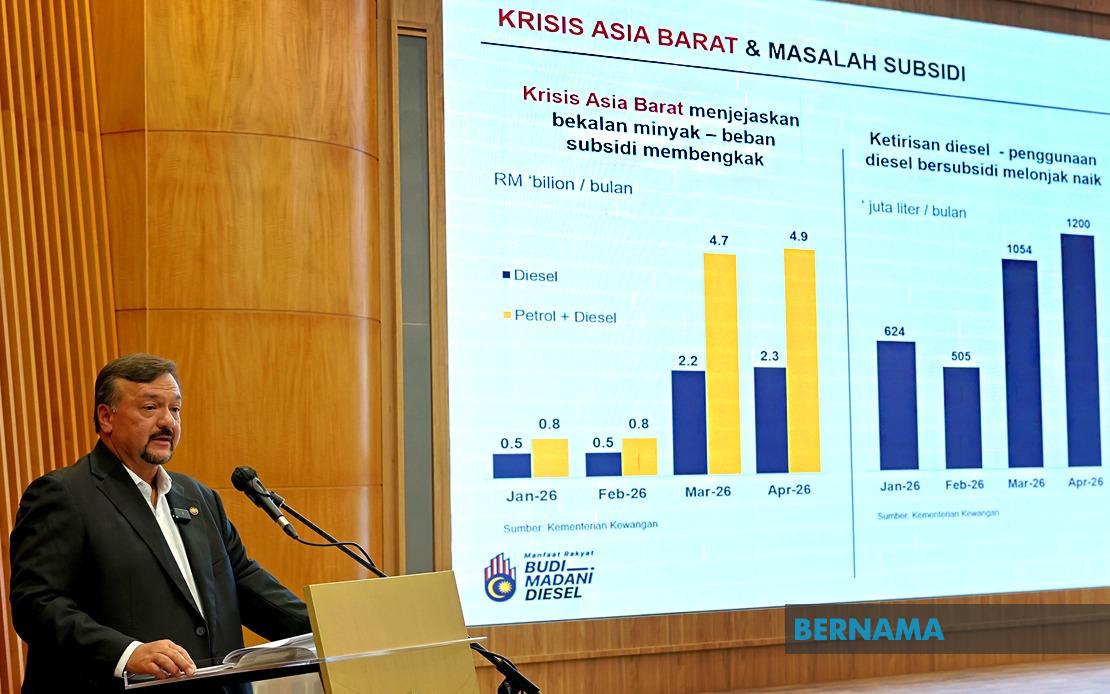
Malaysia's government has decided to keep the monthly BUDI MADANI RON95 subsidy quota unchanged at 200 litres for now, signalling a cautious approach to fuel assistance as geopolitical tensions in West Asia remain fluid. Finance Minister II Datuk Seri Amir Hamzah Azizan outlined the decision during a press briefing in Putrajaya on June 22, emphasising that the administration will closely track regional developments and their ripple effects on crude oil markets before contemplating any increase in the petrol subsidy entitlement.
The decision reflects the government's prudent stance following months of elevated geopolitical risk stemming from conflict in the Middle East. The previous quota of 300 litres per month was reduced to 200 litres as the administration sought to manage fiscal pressures amid oil price volatility. Any restoration would require clear evidence that the international situation has stabilised and that crude prices will not surge unexpectedly, placing fresh strain on Malaysia's fuel subsidy budget.
A critical factor in the government's wait-and-see approach is the recent preliminary agreement between the United States and Iran, which includes a 14-point framework aimed at de-escalating tensions in the region. However, both Amir Hamzah and Prime Minister Datuk Seri Anwar Ibrahim have emphasised that significant time must pass before the effectiveness of this diplomatic breakthrough can be properly evaluated. The agreement itself provides a 60-day window for detailed negotiations between Washington and Tehran, meaning any final peace accord remains distant and uncertain.
For Malaysian motorists reliant on the BUDI95 subsidy programme, the continuation of the 200-litre monthly ceiling means no immediate relief from the reduced allowance. However, the Finance Ministry stressed that the impact on household budgets remains manageable, pointing to data showing that roughly 80 per cent of subsidy recipients consume fewer than 200 litres monthly. This statistical reality suggests the current cap adequately covers the majority of beneficiaries, even if some high-mileage drivers find themselves stretching beyond the limit.
The government is simultaneously promoting behavioural adjustments to cushion the reduction's effects. Officials have encouraged subsidy recipients to adopt fuel-efficient practices, including flexible working arrangements from home that reduce commuting requirements. This dual strategy—combining targeted subsidies with demand-side management—reflects budget constraints while attempting to protect household incomes from volatile international energy prices. The messaging underscores that fuel conservation benefits both individual households and the national fiscal position.
For Malaysia's broader economy, the decision has implications extending beyond individual petrol users. The fuel subsidy programme represents a significant budgetary commitment, with any expansion requiring parliamentary approval and careful fiscal planning. By holding the line at 200 litres, the government avoids widening the fiscal deficit at a time when Malaysia continues efforts to enhance medium-term debt sustainability and credit ratings. International investors monitoring Putrajaya's financial management will likely view the cautious approach positively.
The Middle East remains a crucial variable in Malaysia's energy policy calculations. Any fresh escalation of conflict in the region could trigger renewed oil price spikes that would severely test the government's commitment to affordable fuel. Conversely, sustained diplomatic progress could eventually create space for quota restoration. This uncertainty explains why officials prefer gathering more evidence before making long-term subsidy commitments that could prove fiscally unsustainable if geopolitical risk re-emerges.
The regional dimension merits attention for Southeast Asian neighbours as well. Malaysia's experience managing fuel subsidies amid oil price volatility mirrors challenges faced by other developing economies in the region. As crude prices and regional security dynamics shift, governments across Southeast Asia must balance citizen welfare against fiscal responsibility. Malaysia's decision to pause quota restoration pending clearer signals from global markets reflects a pragmatic approach gaining currency across the developing world.
Prime Minister Anwar's earlier optimism about the US-Iran accord must be tempered by awareness of the agreement's fragility. Diplomatic breakthroughs of this magnitude often falter during implementation phases, and the 60-day negotiation window represents only the beginning of what could be a protracted reconciliation process. The Finance Ministry's caution about making long-term policy shifts until regional stability becomes demonstrable reflects realistic expectations about the pace of geopolitical change.
For Malaysian households, the message is mixed. The government has signalled its awareness of subsidy concerns and willingness to reconsider the quota if circumstances permit, offering a glimmer of hope to petrol subsidy recipients. Yet the decision to hold firm at 200 litres, at least temporarily, indicates Putrajaya views fiscal prudence and budget sustainability as non-negotiable priorities. This stance likely reflects pressure from international credit rating agencies and a determination to avoid repeating the fiscal mistakes that previously constrained Malaysia's development spending.
The broader policy framework suggests Malaysia is adopting a graduated approach to energy subsidies that emphasises targeting scarce resources toward genuinely needy households rather than universal programmes. The data showing 80 per cent of recipients use less than 200 litres monthly can be interpreted as evidence that the current quota succeeds in protecting the majority while encouraging efficiency among high consumers. This calibrated approach may point toward Malaysia's longer-term subsidy philosophy.
Moving forward, the government faces a balancing act. Maintaining the quota too long despite falling oil prices might invite political criticism from motorists and transport workers. Conversely, rushing to restore 300 litres during a period of lingering geopolitical risk could prove fiscally reckless. The decision to monitor developments before deciding reflects this genuine tension, though it also requires public patience with uncertainty that may extend for months or longer.

