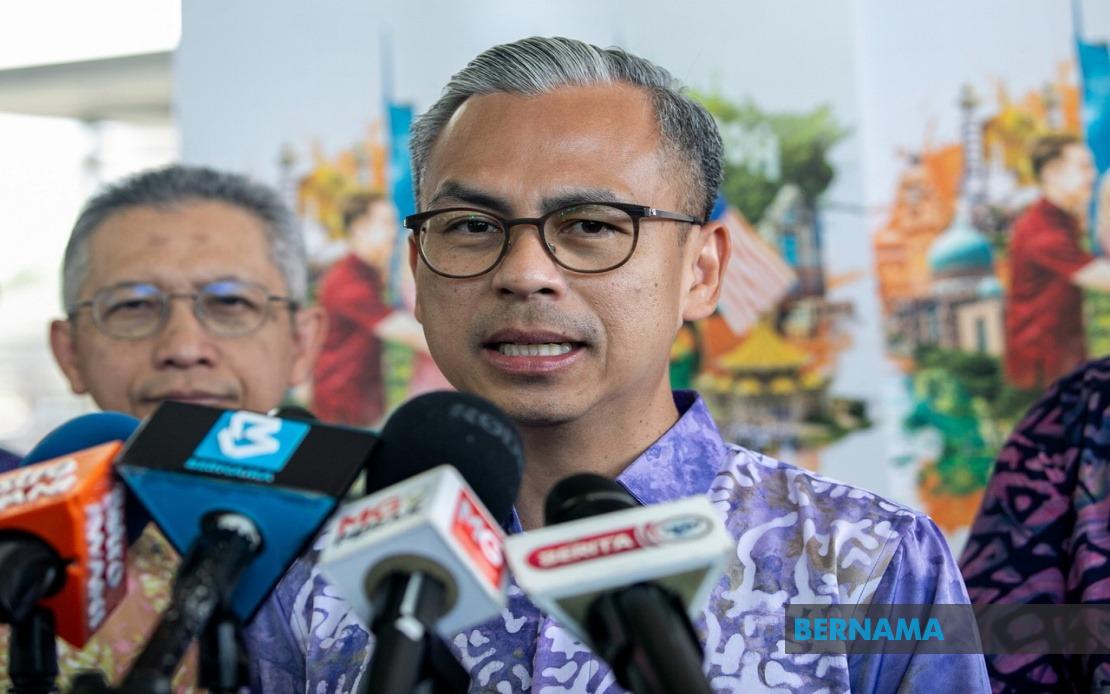
Communications Minister Datuk Seri Fahmi Fadzil has underscored the government's foundational pledge by launching the 2026 National Day and Malaysia Day campaign around the unifying theme of 'Malaysia MADANI: Kesejahteraan Dinikmati' — translating to Malaysia MADANI: Shared Prosperity. Speaking at the Sultan Azlan Shah Ministry of Health Training Institute in Tanjung Rambutan, Perak, Fahmi articulated how this thematic choice encapsulates the MADANI administration's broader developmental philosophy and its resolve to distribute the fruits of national progress equitably across Malaysian society.
At its core, the shared prosperity agenda extends considerably beyond conventional metrics of economic expansion. Instead, the government has framed prosperity as a multidimensional concept encompassing tangible improvements in citizens' daily living standards, the creation of meaningful economic opportunities accessible regardless of background, and a deliberate architecture ensuring development gains are distributed fairly across all demographic and geographic segments of the nation. This conceptual broadening reflects evolving global development thinking, where GDP growth alone is increasingly recognised as insufficient without corresponding enhancements in healthcare, education, housing and social mobility.
Fahmi's articulation of the "no one left behind" principle addresses a persistent developmental challenge in Malaysia's post-independence trajectory. While the nation has achieved upper-middle-income status, regional disparities, urban-rural gaps and variations in opportunity access across different communities remain pressing policy concerns. By anchoring 2026's national celebrations around inclusive prosperity, the government signals its intention to foreground these equity dimensions in public discourse and development planning.
The diversity of Malaysian society, according to Fahmi, constitutes both historical richness and contemporary strength. He positioned this multicultural fabric as foundational to the nation's existing stability and mutual respect, rather than as a challenge requiring management. This framing carries implications for how national unity narratives are constructed — emphasising celebration and protection of pluralism rather than anxious preservation of a fragile equilibrium. For a nation navigating complex communal dynamics, this positive articulation of diversity as an asset rather than liability shapes the emotional and political tone of patriotic expression.
Prime Minister Datuk Seri Anwar Ibrahim's presence at the campaign launch, combined with attendees including National Unity Minister Datuk Aaron Ago Dagang and Perak Menteri Besar Datuk Seri Saarani Mohamad, demonstrated cabinet-level commitment to the prosperity agenda. The high-level officiation underscores that shared prosperity messaging forms a central pillar of government communications strategy, potentially intended to build consensus around the MADANI administration's developmental direction ahead of the next electoral cycle.
Practical manifestations of the prosperity theme will unfold through several programmatic initiatives. The 'One House, One Jalur Gemilang' campaign seeks to deepen patriotic connection at household level, while the Kembara Merdeka Jalur Gemilang convoy programme employs mobile outreach to transmit the message across Malaysia's geographically dispersed population. These mechanisms acknowledge that national narrative construction requires more than rhetorical commitment — it demands sustained, visible presence in communities.
The thematic selection reflects sophisticated understanding of Malaysia's contemporary political landscape. Prosperity messaging appeals across ideological and demographic lines, offering substantive content beyond ceremonial patriotism. For urban professionals concerned with economic competitiveness, shared prosperity connects to meritocratic opportunity and market efficiency. For rural communities and lower-income groups, it speaks to equitable resource distribution and poverty reduction. This rhetorical versatility suggests the government views 2026's celebrations as an opportunity to articulate a unifying national purpose transcending narrower factional interests.
From a Southeast Asian perspective, Malaysia's emphasis on inclusive development carries regional significance. As ASEAN nations grapple with widening inequality, weak institutions and environmental pressures, Malaysia's explicit governmental commitment to equitable prosperity offers a counterweight to purely growth-focused development models. Whether the 2026 celebrations catalyse meaningful policy shifts toward equity or remain largely celebratory remains crucial for evaluating the MADANI administration's substantive impact.
The invocation of Malaysia's sovereignty and international respect as outcomes of internal harmony suggests the government recognises that domestic stability and external standing reinforce each other. Shared prosperity, from this perspective, serves not merely domestic audiences but also projects an image of political maturity and social cohesion to international observers. This dual messaging — simultaneously consolidating national consensus and projecting stability abroad — reflects contemporary governance complexity where domestic and foreign policy dimensions increasingly intertwine.
Fahmi's emphasis on collective Malaysian responsibility for preserving this developmental legacy distributes agency beyond government institutions toward civil society, businesses and citizens themselves. This framing potentially broadens ownership of prosperity objectives beyond state capacity, though it also raises questions about how accountability for achieving equitable outcomes will be apportioned between government and non-state actors.
The campaign's digital dimension through the Merdeka 360 portal and social media platforms indicates recognition that national narrative construction in contemporary Malaysia must operate across multiple media channels simultaneously. Traditional flag campaigns intersect with digital engagement strategies, reflecting how national identity formation increasingly occurs in hybrid spaces between physical and virtual communities.
Looking forward, the success of the 2026 celebrations' shared prosperity theme will be measured not by slogan resonance but by demonstrable policy implementation. Whether subsequent budgets, sectoral strategies and institutional reforms translate thematic aspirations into concrete improvements in living standards, opportunity distribution and communal harmony will ultimately determine whether the MADANI Government's commitment extends beyond celebratory rhetoric into transformative governance.

