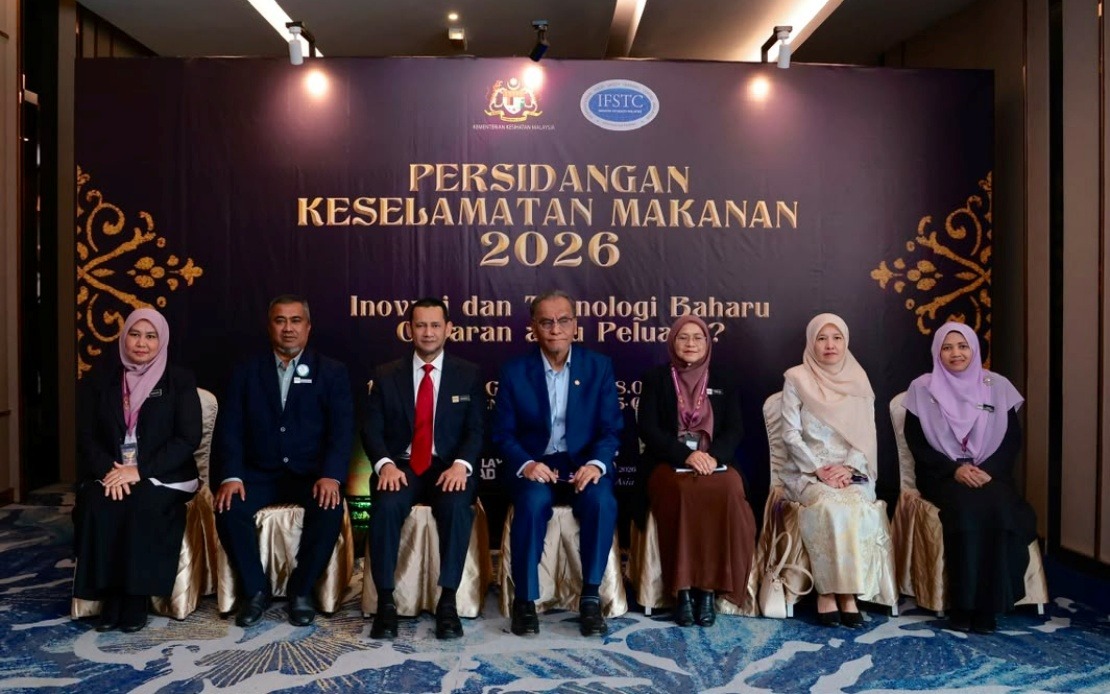
Malaysia has taken a significant step in regional food governance by becoming a member of the Asia-Pacific Food Regulatory Authority Summit, a move designed to enhance the country's capacity to manage an unprecedented reliance on imported food products. Health Minister Datuk Seri Dr Dzulkefly Ahmad announced the Cabinet's formal approval of the membership at a signing ceremony in Putrajaya, marking Malaysia's commitment to transforming how food safety is governed across the region through advanced technological solutions.
The decision reflects growing concerns about Malaysia's food security landscape, where imports have ballooned dramatically over the past decade. Food imports surged from RM42.6 billion in 2013 to RM78.9 billion in 2023, representing an 85 per cent increase that underscores the country's expanding dependence on international suppliers. This trajectory means that the majority of food consumed by Malaysians today travels through intricate global supply chains that cross multiple national borders, exposing the domestic food system to risks that extend far beyond what local authorities alone can manage.
By joining APFRAS, Malaysia positions itself as a Smart Gatekeeper at the Asia-Pacific level, a designation that comes with both responsibilities and opportunities. Dr Dzulkefly emphasised that the membership directly supports two critical national frameworks: the National Food Safety Policy and the National Food Security Policy. This alignment suggests that the government views APFRAS participation not merely as a regulatory compliance measure but as an essential component of broader food security strategy.
A central pillar of Malaysia's approach under this new membership involves spearheading digital transformation of food safety governance at the regional level. The country intends to lead efforts to harmonise how member states oversee novel food innovations and regulate emerging materials such as biodegradable packaging. These initiatives address practical challenges that individual nations face when multinational food companies introduce new products and manufacturing practices that may not fit neatly into existing regulatory frameworks.
The Health Ministry has already begun piloting modern technologies to strengthen surveillance at Malaysia's ports of entry. Artificial intelligence and predictive analytics represent the frontier of this effort, enabling authorities to identify potential safety risks in incoming shipments with greater speed and accuracy than traditional inspection methods allow. Given the volume of food entering the country daily, such technological leverage is no longer optional but essential for maintaining adequate oversight.
The membership announcement came during the opening of the 2026 Food Safety Conference, a two-day gathering convening over 300 participants from across the region. The conference's theme, "New Innovations and Technologies – Challenges or Opportunities?", reflects an underlying tension in contemporary food regulation: technological change creates both efficiency gains and novel risks that regulatory systems must anticipate. Malaysia's positioning within APFRAS suggests the government believes active engagement with peer regulators offers the best pathway through this uncertainty.
For Malaysian consumers, the practical implications are considerable. Food safety incidents anywhere in Southeast Asia or beyond can rapidly affect supply chains that feed the Malaysian market. By strengthening coordination with regional partners through APFRAS, Malaysia gains early warning capacity and access to shared intelligence about emerging food safety threats. This collaborative approach is more effective than unilateral action, particularly for a trading nation that imports substantial volumes from dozens of countries.
The regulatory harmonisation agenda carries particular significance for Malaysian food manufacturers and exporters. When APFRAS members align their standards for biodegradable packaging, novel ingredients, and production technologies, companies face a more predictable operating environment. Rather than reformulating products or adjusting processes for each market, businesses can work to a common regional framework, reducing costs and accelerating innovation.
Dr Dzulkefly's emphasis on evidence-based control and technological innovation also signals a shift in regulatory philosophy. Rather than relying solely on post-market surveillance and reactive recalls, authorities increasingly aim to prevent contamination and adulteration upstream in supply chains. This preventive orientation requires the sophisticated data collection and analysis capabilities that artificial intelligence and predictive modelling provide.
However, the membership alone does not resolve the underlying vulnerability that Malaysia's import-dependent food system represents. While 85 per cent growth in food imports reflects Malaysia's economic development and urbanisation, it also exposes the country to supply shocks, price volatility, and quality control challenges beyond its direct control. APFRAS membership should therefore be viewed as one tool among several that policy-makers must deploy to build genuine food security.
The conference gathering of 300 regional participants suggests momentum behind this collaborative approach. Food safety challenges such as pesticide residues, pathogenic contamination, and undeclared allergens do not respect national borders. Regulators across the region face common pressures to keep pace with evolving manufacturing techniques, evolving consumer preferences for certain ingredients, and the complexity of tracing products through global supply networks. APFRAS provides institutional scaffolding for sharing solutions and best practices.
Looking forward, Malaysia's active participation in APFRAS could influence how the broader region approaches food regulation. If the country successfully leads digital transformation initiatives or develops effective frameworks for biodegradable packaging, other Southeast Asian nations may adopt similar approaches. This multiplicative effect would strengthen the region's collective capacity to safeguard food systems even as import volumes continue rising.
The formal acknowledgement that food security depends on technological innovation and regional cooperation reflects a maturation of Malaysia's approach to food governance. Rather than viewing food safety narrowly as a health ministry concern, the decision demonstrates recognition that security, economic competitiveness, and public health are interconnected dimensions of a single challenge.

