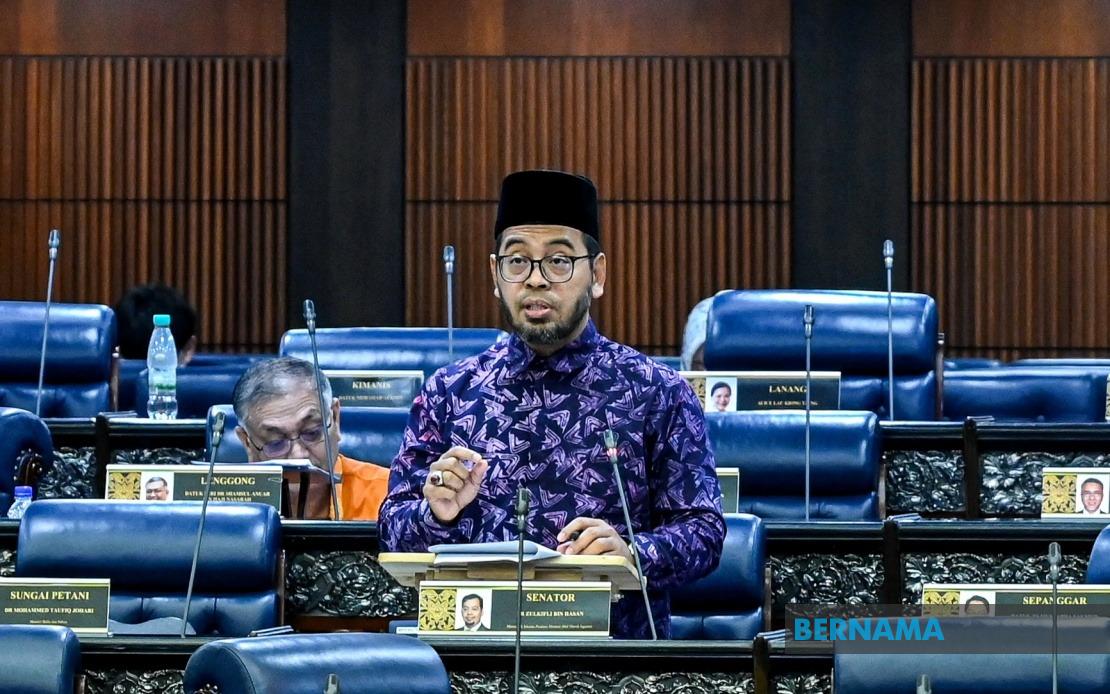
Malaysia's government is mobilising a coordinated, multi-agency response to confront the growing challenge posed by unorthodox Islamic teachings spreading rapidly across digital channels and encrypted messaging services. Speaking in Parliament, Minister in the Prime Minister's Department (Religious Affairs) Dr Zulkifli Hasan outlined an expansive strategy involving cooperation between the Department of Islamic Development Malaysia (JAKIM), state-level Islamic authorities, law enforcement, telecommunications regulators, and immigration officials to identify and contain doctrines that diverge from mainstream Ahli Sunnah Wal Jamaah teachings.
The enforcement challenge has undergone a fundamental transformation in recent years. Rather than operating through traditional closed-door congregations and study circles, fringe religious movements have adapted by migrating to Instagram, WhatsApp, Telegram, and other digital ecosystems where they operate with greater anonymity and reach. These groups disguise their doctrinal messaging within seemingly benign frameworks—personal development seminars, wellness retreats, charitable organisations, and informal Quranic study groups—making detection and intervention considerably more difficult for authorities accustomed to monitoring physical locations.
Dr Zulkifli characterised the tactics employed by these movements as deliberately manipulative and psychologically sophisticated. Proponents leverage motivational narratives, spiritual rhetoric drawn from unorthodox interpretations, conspiracy narratives that tap into broader social anxieties, and the charisma of influential personalities who command followings on social media. This approach proves particularly effective in recruiting younger Malaysians who may lack deep grounding in classical Islamic jurisprudence and are more vulnerable to persuasive digital content that arrives through trusted peer networks.
The government's enforcement efforts have yielded visible results in recent months. In May, authorities detained 288 followers of Ahmadiyya Qadiani in Sabah during coordinated raids, representing one of the largest single operations against the community in recent years. Separately, police conducted a significant enforcement action against a Syiah learning centre in the Kuala Lumpur suburbs, apprehending 226 foreign nationals present at the facility. These operations reflect the scale and sophistication of the underground networks that exist beneath the surface of Malaysian society.
Beyond detention and enforcement, the government has developed a parallel infrastructure focused on counselling, rehabilitation, and ideological counter-messaging. Individuals identified as having adopted heterodox teachings can be referred to faith rehabilitation centres through Syariah court orders, where they receive intensive religious counselling designed to reorient their understanding toward orthodox Islamic scholarship. The approach acknowledges that detention alone cannot address the underlying appeal of these movements and that successful counter-radicalisation requires sustained engagement with affected individuals' spiritual and intellectual concerns.
A newly established National Steering Committee to Address Threats to Faith represents the institutional centrepiece of this preventive strategy. Convening representatives from the Education Ministry, Higher Education Ministry, Home Affairs Ministry, and JAKIM alongside security personnel, this committee operates on the principle that religious resilience among young people must be systematically cultivated through formal educational channels rather than left to chance or informal family instruction. By bringing multiple government portfolios into alignment around this objective, Malaysia seeks to ensure that counter-narratives and orthodox teachings reach youth before marginal movements do.
Several curriculum and programme initiatives flow from this coordinated framework. IPHAM, the government's principal institution for strengthening Islamic doctrinal understanding, operates alongside the My Insaniah Programme and the Rakan Masjid Programme in partnership with the Youth and Sports Ministry to create touchpoints where young Malaysians encounter reinforced religious instruction. The KAFA 2.0 curriculum update specifically aims to deepen students' mastery of Quranic recitation and foundational Islamic obligations while simultaneously building psychological and intellectual resilience against sectarian appeals.
For Malaysia's policymakers, the shift of these movements online represents a fundamental strategic challenge distinct from previous eras of Islamic heterodoxy in the country. Digital platforms operate across national borders, making traditional state-based regulatory approaches insufficient. A Malaysian youth can access Syiah or Ahmadiyya theological content hosted on servers in Turkey or the United States, effectively placing the material beyond JAKIM's direct enforcement reach. Consequently, the government has increasingly emphasised vaccination through education and psychological inoculation through counter-messaging rather than reliance on censorship or arrest alone.
The involvement of the Malaysian Communications and Multimedia Commission and the National Security Council in this portfolio indicates recognition that online heterodox content simultaneously raises national security implications. Government analysis apparently identifies connections between certain unorthodox movements and transnational networks, with foreign nationals detained in the Petaling Jaya raid suggesting organised international coordination. This fusion of religious, security, and communications policy reflects contemporary assumptions that ideological movements operating digitally cannot be neatly separated from broader national security considerations.
For observers in Southeast Asia, Malaysia's approach offers both a case study in institutional adaptation and a window into the genuine difficulties faced by Muslim-majority states attempting to regulate religious expression while respecting constitutional freedoms. The challenge of distinguishing between legitimate minority Islamic jurisprudence, genuine theological innovation, and genuinely problematic doctrinal movements remains genuinely contested. Malaysia's framework relies heavily on JAKIM's orthodox Islamic credentials and state Mufti offices to make these determinations, but reasonable disagreement persists about where legitimate doctrinal boundaries should be drawn.
The practical implications extend beyond counter-terrorism into questions of religious pluralism, minority protection, and the appropriate scope of state religious authority. Foreign observers have periodically raised concerns about whether Malaysia's enforcement against Ahmadiyya and Syiah groups, despite their theological unorthodoxy within Malaysian Islamic frameworks, nonetheless raises civil liberties questions. The government counters that it is defending mainstream Islamic orthodoxy against teachings it regards as fundamentally deceptive and doctrinally unsound, framing enforcement as protection rather than persecution.
Moving forward, the sustainability of this whole-of-government approach will depend on maintained coordination among agencies with sometimes divergent institutional interests and on sufficient resourcing for the educational and preventive components that the government claims will reduce demand for fringe teachings. If implementation falters or bureaucratic rivalries undermine coordination, the current enforcement intensity may dissipate. Conversely, if digital platforms become increasingly difficult to monitor and international cooperation in content removal proves elusive, the challenge facing JAKIM and partner agencies will intensify despite current enforcement successes.

