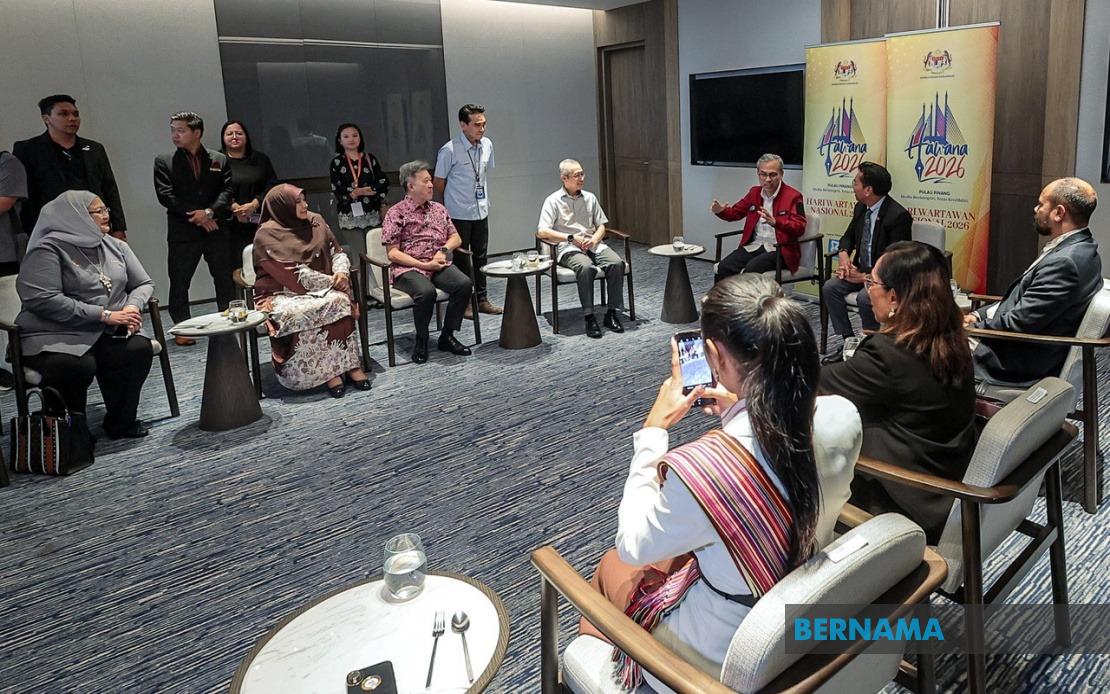
Malaysia is pursuing a strategic deepening of media cooperation with Timor-Leste, signalling a fresh commitment to regional media integration at a time when press freedom has become a focal point in Southeast Asian governance. Communications Minister Datuk Fahmi Fadzil outlined the initiative during discussions with a Timor-Leste delegation in Butterworth, positioning the partnership as central to Malaysia's broader regional media strategy and its efforts to strengthen institutional capacity across Southeast Asia.
The delegation, headed by Timor-Leste's Secretary of State for Social Communication Expedito Loro Dias Ximenes and accompanied by senior officials from the country's national news agency Agencia Noticiosa de Timor-Leste (TATOLI), visited Malaysia as part of the HAWANA 2026 conference at the PICCA Convention Centre in Butterworth. The event, now in its sixth edition, has drawn approximately 1,000 media practitioners from across the region and internationally, operating under the theme "Media Integrity Strengthens Credibility." Prime Minister Datuk Seri Anwar Ibrahim was scheduled to officiate the gathering, underscoring the Malaysian government's investment in positioning itself as a regional media hub.
Fahmi articulated plans to leverage Malaysia's established media infrastructure to benefit Timor-Leste's developing media ecosystem. Key proposals include enhanced collaboration between Malaysia's flagship news agency Bernama and state broadcaster Radio Televisyen Malaysia (RTM) with their Timor-Leste counterparts, fostering direct institutional linkages. Beyond these structural partnerships, Fahmi proposed that the Tun Abdul Razak Broadcasting and Information Institute (IPPTAR) establish dedicated training programmes for Timorese journalists, addressing capacity-building needs in a country still developing its professional media standards following independence.
A particularly noteworthy dimension of the discussion centred on press freedom metrics, where the two nations occupy starkly different positions in international rankings. Timor-Leste has achieved first place in Southeast Asia according to the World Press Freedom Index published by Reporters Without Borders (RSF), ranking 30th globally among 180 countries assessed. Malaysia, by contrast, occupies the second position regionally, a relative achievement that nonetheless underscores the competitive dynamic emerging around press freedom in Southeast Asia. This disparity prompted candid exchanges about the mechanisms through which Timor-Leste has sustained robust press freedoms despite its post-conflict development challenges.
Fahmi acknowledged Malaysia's trajectory under the MADANI Government, noting measurable improvement in the nation's RSF index standing compared to the previous administration. The Communications Ministry has made press freedom reform a signature policy area, recognising that international media freedom rankings carry diplomatic weight and affect Malaysia's regional standing. Officials emphasised that whilst the improvements of the past three to four years represent genuine progress, Malaysia remains committed to climbing further, framing press freedom not merely as a compliance exercise but as integral to governance credibility and democratic maturity.
The timing of this initiative reflects broader regional dynamics in Southeast Asia where media freedom has emerged as a differentiating factor in international relations and soft power competition. Timor-Leste's strong ranking despite economic constraints and nascent institutions suggests that press freedom advancement need not require advanced development status, a lesson potentially instructive for Malaysia as it recalibrates its media governance framework. The willingness to engage in comparative discussion about these rankings also signals a shift towards greater transparency about press freedom challenges, departing from previous patterns of defensive posturing.
The composition of Malaysia's delegation at the meeting, which included senior figures from Bernama, RTM, and the Communications Ministry, reflected the significance attached to the initiative. Bernama chairman Datuk Seri Wong Chun Wai, chief executive officer Datin Paduka Nur-ul Afida Kamaludin, and editor-in-chief Arul Rajoo Durar Raj were present, indicating direct institutional buy-in from Malaysia's flagship news agency. This high-level representation suggests these proposals are likely to advance into concrete programming, potentially establishing formal exchanges and joint initiatives.
The proposed training programmes through IPPTAR represent Malaysia's most direct contribution to capacity development in the region. Such initiatives can generate soft power returns whilst genuinely strengthening professional standards across Southeast Asia. For Malaysian journalists, reciprocal learning opportunities could provide exposure to Timor-Leste's institutional approaches to press protection, potentially offering insights into different models for safeguarding editorial independence in environments with varying political pressures.
From Malaysia's perspective, deepening media ties with Timor-Leste fits into a wider strategy of positioning the nation as a media and communications hub within Southeast Asia. Bilateral partnerships in media are increasingly leveraged for diplomatic objectives, cultural influence, and institutional learning. By engaging constructively with a neighbour that outranks Malaysia on press freedom metrics, Fahmi's ministry is demonstrating pragmatism about learning from regional peers, a posture that could enhance Malaysia's credibility in international media governance discussions.
The HAWANA conference itself serves as a platform for showcasing Malaysia's media evolution and regional role. By hosting international media practitioners and anchoring discussions around media integrity, Malaysia projects itself as invested in professional standards and democratic communication practices. The presence of Timor-Leste's delegation and bilateral engagement underscores that regional media cooperation transcends competition, focusing instead on institutional strengthening and professional development.
Looking ahead, the concrete manifestation of these proposals will be telling. Actual training programmes, institutional partnerships, and evidence of journalist exchanges would validate the commitments expressed. For Malaysian media observers, these initiatives warrant monitoring as indicators of whether rhetoric about press freedom translates into systemic changes that support editorial independence and investigative capacity. The Malaysian government's openness to engaging with a regional partner that ranks higher on press freedom provides a testing ground for its commitment to tangible improvement in the media environment.

