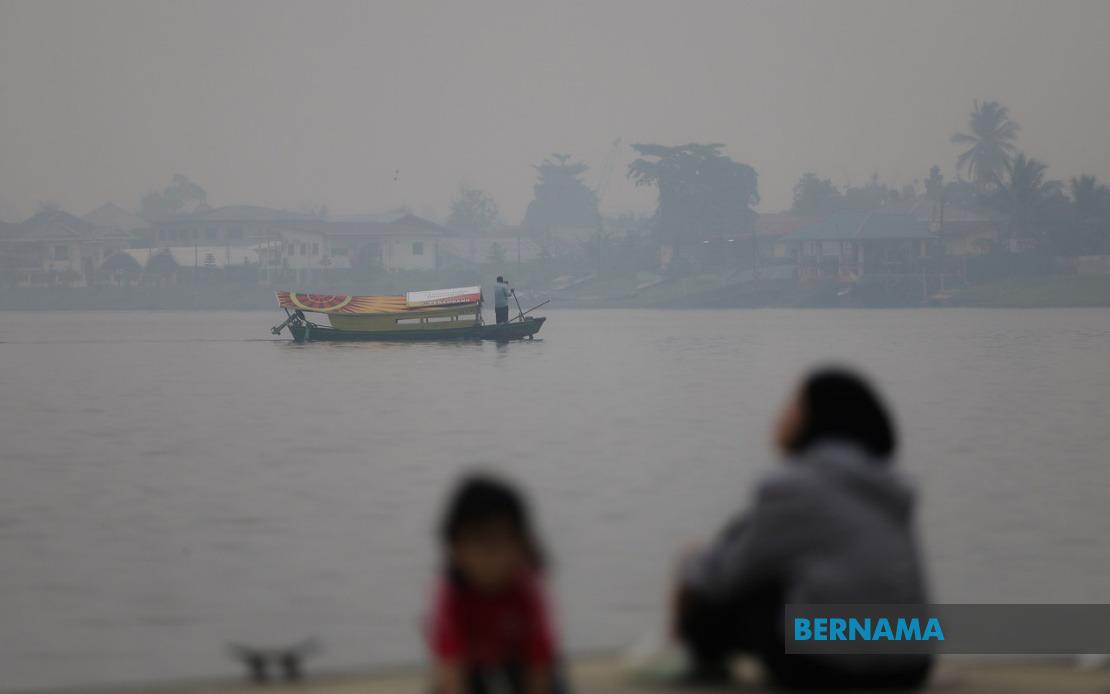
Malaysia has initiated cloud seeding operations across haze-affected regions, prioritising areas where the Air Pollutant Index exceeds 150 and where water storage facilities are experiencing significant depletion. The coordinated environmental intervention reflects mounting concerns over the dual challenges of air quality deterioration and water resource scarcity during the country's hot season, with authorities treating the measures as essential to maintaining public health and critical infrastructure supply chains.
Deputy Prime Minister Datuk Seri Dr Ahmad Zahid Hamidi outlined the operational strategy during remarks at the 2026 Malaysia Agriculture, Horticulture and Agrotourism Show in Serdang, emphasising that the initiative represents a comprehensive response to environmental pressures facing multiple regions. The programme involves active coordination with the Malaysian Meteorological Department and the Royal Malaysian Air Force, bringing together civilian and military capabilities to execute the cloud seeding missions with precision and timeliness.
The government's approach reflects recognition that water security constitutes a critical vulnerability during extended dry periods. With numerous reservoirs experiencing declining levels, authorities have determined that precipitation enhancement through cloud seeding offers a necessary intervention to replenish supplies and prevent service disruptions that could affect millions of households and commercial operations. The measure carries particular significance for densely populated areas dependent on centralised water distribution networks.
Operations already underway in Putrajaya during late August are set to expand to Sarawak, Kedah and Perlis from September 3 to 5, indicating a geographically staggered deployment designed to address the most critical situations across the peninsula and east Malaysia. This phased approach allows authorities to concentrate resources where conditions are most severe whilst maintaining flexibility to respond to changing weather patterns and pollution episodes.
Dr Ahmad Zahid highlighted a crucial operational constraint in cloud seeding programmes: success depends not merely on the presence of clouds but on meteorological conditions favourable to precipitation. Operators must continuously monitor cloud movements to ensure seeding occurs only when trajectories align with designated target areas, a requirement that demands sophisticated real-time tracking and decision-making capabilities. This technical reality explains why even well-resourced programmes cannot guarantee results on demand.
Air quality deterioration across Sarawak has reached hazardous levels in multiple locations, with readings recorded at the Serian Police headquarters monitoring station reaching 412 according to the Department of Environment's Air Pollutant Index Management System portal. Samarahan registered 332, whilst Kuching recorded 304, all exceeding the threshold of 150 that triggers cloud seeding activation. Sri Aman separately reported a very unhealthy reading of 228, confirming that haze impacts have extended across diverse localities with varying severity.
The cloud seeding initiative must be understood within the broader context of Southeast Asia's recurring transboundary haze challenges, which typically emerge during the dry season when agricultural burning and forest fires in regional neighbours create atmospheric conditions that blanket Malaysia and neighbouring countries with smoke and particulate matter. Such episodes impose measurable costs on public health, productivity, visibility and air quality dependent systems including aviation and commerce.
For Malaysian readers and businesses, the operational deployment signals both governmental awareness of current environmental stresses and the practical limits of technological interventions. Cloud seeding remains an imperfect tool dependent on natural meteorological cooperation, meaning that whilst such measures can provide supplementary precipitation, they cannot substitute for comprehensive regional environmental management or cross-border cooperation on fire prevention and land-use practices.
The water supply dimension adds urgency beyond immediate air quality concerns. Malaysia's rapid urbanisation and climate variability have intensified pressure on existing water infrastructure, with some regions experiencing seasonal stress that cloud seeding operations attempt to mitigate. However, these short-term interventions highlight the necessity for longer-term water security strategies including infrastructure investment, demand management and integrated water resource planning across state boundaries.
The convergence of haze episodes and low water levels during certain months demonstrates how environmental challenges in the region interconnect and compound. Addressing both simultaneously requires coordinated action across multiple agencies and jurisdictions, positioning cloud seeding as one tactical component within a broader framework of environmental governance and resource management that remains under development across Southeast Asia.
Authorities have indicated that these operations will continue according to both immediate environmental needs and prevailing weather conditions, suggesting a flexible and responsive posture rather than fixed deployment schedules. This adaptive approach acknowledges that environmental crises follow natural cycles unpredictable in precise timing or intensity, requiring decision-makers to maintain operational readiness and resource availability despite inherent uncertainties in environmental forecasting and intervention efficacy.

