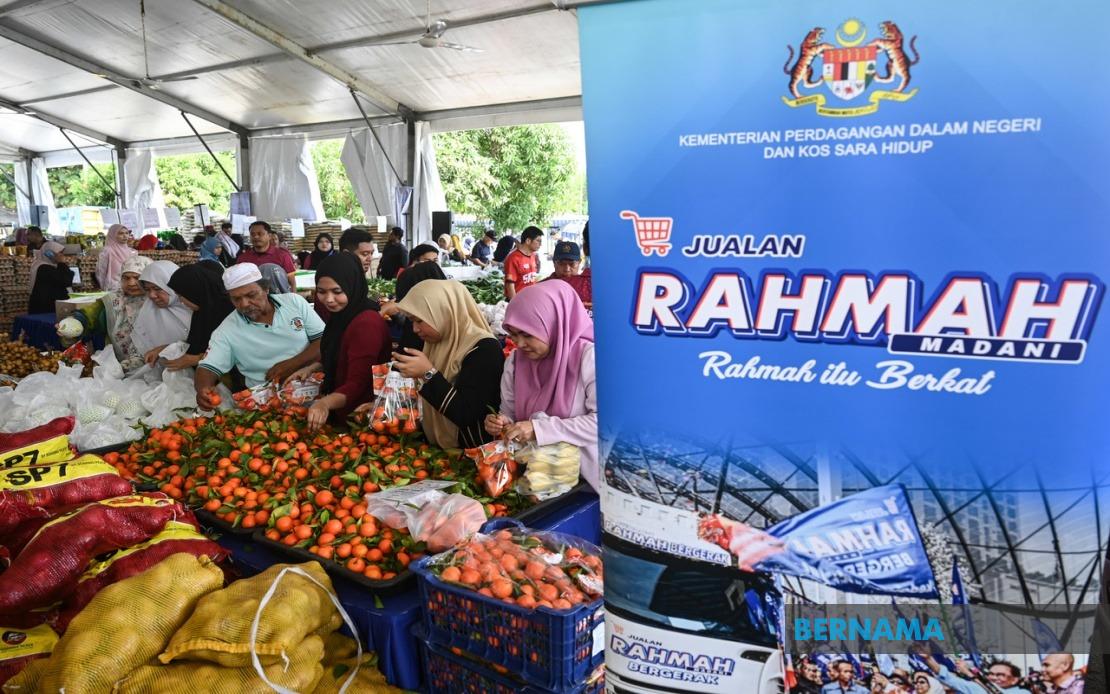
Prime Minister Datuk Seri Anwar Ibrahim has announced plans to launch the Ihsan Rahmah 9.9 online sale on September 9 coinciding with Malaysia Day 2026, marking the first time the government's discount initiative will be conducted entirely online. The announcement came after Anwar officiated the TikTok Shop Summit Malaysia in Kuala Lumpur, highlighting the government's commitment to leveraging digital platforms for nationwide retail programmes.
The initiative represents a significant shift in how the government reaches Malaysian consumers with affordable goods. By transitioning the traditionally physical Jualan Rahmah programme to an online platform, the government aims to extend its reach beyond urban centres and retail hubs, potentially benefiting citizens in rural and remote areas who may have previously faced barriers to participating in in-store sales events. Anwar framed the move as comprehensive support directed at all 34.5 million Malaysians, emphasizing that digital commerce accessibility is now central to government social spending strategy.
The online sale will offer basic necessities and everyday items at prices between 10 and 30 per cent lower than regular retail rates, continuing the model pioneered by the Ministry of Domestic Trade and Cost of Living (KPDN) through its Jualan Rahmah programme. The discounts target essential categories including food, household goods, and personal care items that directly impact household budgets. By maintaining these price reduction levels in the online environment, the government seeks to ensure that lower-income households and middle-class consumers alike can meaningfully benefit from the programme without geographic or temporal constraints.
Anwar stressed that economic growth alone is insufficient without corresponding improvements in citizens' lived experiences. He linked the Ihsan Rahmah initiative to broader government priorities including education quality, healthcare access, infrastructure development, and cost-of-living management. This positioning suggests the government views retail discount programmes not merely as charitable gestures but as integral components of an integrated social support ecosystem aimed at distributing the benefits of economic expansion across the population.
The programme has received backing from multiple government departments and relevant ministries, creating a coordinated approach to implementation. Present at the announcement were Communications Minister Datuk Seri Fahmi Fadzil, Entrepreneur and Cooperative Development Minister Steven Sim Chee Keong, and Domestic Trade and Cost of Living Minister Datuk Armizan Mohd Ali. This multi-agency involvement underscores the cross-departmental nature of the initiative and suggests that coordination between digital commerce, trade regulation, and consumer protection will be essential to the sale's success.
The decision to launch on September 9 specifically ties the Ihsan Rahmah sale to Malaysia Day 2026 celebrations, infusing the programme with nationalist symbolism and framing cost-of-living support as an expression of government unity and national solidarity. Historically, Jualan Rahmah sales have been scheduled around national occasions and public holidays, using festive periods to drive consumer participation. The online format allows the government to extend promotional periods more flexibly and reach night-time and early-morning shoppers who might not visit physical retail locations during standard business hours.
For Malaysian retailers and e-commerce platforms, particularly TikTok Shop which has experienced rapid growth in Southeast Asia, the Ihsan Rahmah 9.9 sale represents both opportunity and operational challenge. Participating merchants must manage discounted inventory while maintaining supply chain efficiency, and digital platforms must ensure their infrastructure handles increased traffic during the promotional window. The government's emphasis on promoting the sale widely suggests an expectation that awareness-raising campaigns will precede the September 9 launch, potentially involving traditional and social media channels.
The timing of this announcement at the TikTok Shop Summit Malaysia indicates the government's strategic recognition of social commerce's role in retail modernization. Short-form video platforms and livestream shopping have fundamentally altered Malaysian consumer behaviour, particularly among younger demographics. By aligning the Ihsan Rahmah programme with TikTok Shop and similar platforms, the government positions itself as attuned to technological shifts in commerce while simultaneously using these platforms to amplify social spending messages to digitally-native audiences.
From a regional perspective, Malaysia's approach to integrating government subsidies and price controls with e-commerce infrastructure offers a model potentially applicable across Southeast Asia, where cost-of-living pressures similarly challenge middle and lower-income households. The online-first approach also addresses logistical challenges that plague traditional in-store sales events, such as crowding, limited inventory visibility, and inability to serve dispersed populations. If successful, the Ihsan Rahmah 9.9 online sale could establish precedent for how developing economies leverage digital platforms for targeted welfare distribution.
Anwar's emphasis on promoting the sale widely suggests government recognition that awareness remains a significant barrier to programme utilization. Previous Jualan Rahmah events have sometimes suffered from inadequate publicity, particularly in smaller towns and rural areas where citizens may lack access to comprehensive information channels. The online environment theoretically enables more efficient targeting through digital advertising, email campaigns, and social media notifications, allowing the government to reach segmented audiences based on location, demographics, and consumer behaviour patterns.

