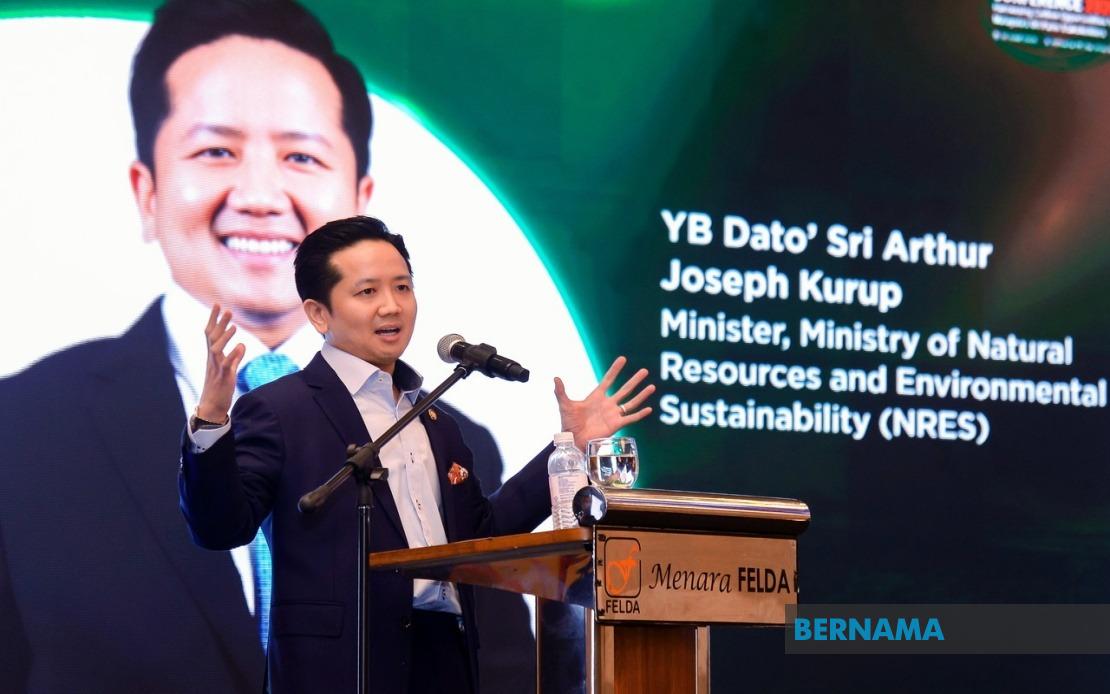
The government remains committed to introducing a carbon tax but is proceeding carefully, taking into account the readiness of Malaysian industries and the broader economic environment, according to Natural Resources and Environmental Sustainability Minister Datuk Seri Arthur Joseph Kurup. Speaking at the Malaysia Palm Carbon Conference (MPC) 2026 in Kuala Lumpur on June 16, the minister acknowledged that the policy framework is still under development and that officials are actively examining how best to sequence the rollout to maximise effectiveness and minimise disruption.
When the carbon tax was first proposed, the government envisioned targeting specific sectors—particularly steel, cement, and construction industries—to incentivise a shift toward lower-carbon practices. However, the timeline has shifted as policymakers grapple with competing priorities and external pressures. In April, Arthur indicated that implementation, originally earmarked for 2024, might need to be postponed to shield businesses and consumers from additional financial strain during a period of energy supply challenges and mounting geopolitical tensions affecting global markets.
The minister made clear that the carbon tax is not conceived as a punitive instrument designed to penalise polluters, but rather as a carrot-and-stick mechanism that encourages adoption of cleaner technologies while making compliance economically rational for enterprises. This framing is significant for Malaysia's business community, which has expressed concerns about the competitiveness implications of unilateral carbon pricing, particularly given the global nature of industries like palm oil production and manufacturing.
Crucially, the government is examining how revenue collected through the carbon tax will be deployed. Current proposals include channelling funds toward climate adaptation initiatives, forest conservation programmes, and sustainable land management projects—areas where Malaysia faces genuine challenges given its tropical climate, deforestation pressures, and vulnerability to extreme weather events. This approach would create a direct link between the cost imposed on carbon-intensive activities and tangible environmental benefits that accrue to Malaysian communities.
The revenue recycling dimension addresses a key concern among developing economies participating in global climate efforts. By demonstrating that carbon tax proceeds directly support climate resilience and natural capital preservation rather than merely swelling government coffers, Malaysia can build stakeholder consensus across business, environmental, and civil society groups. For a country whose economic fortunes are partially tied to agriculture and natural resources, building institutional capacity to manage climate risks becomes a competitive advantage rather than an added burden.
The timing of these announcements coincides with broader legislative efforts to strengthen Malaysia's climate governance framework. The National Climate Change Bill, which is expected to be presented to the Dewan Rakyat during the current parliamentary session, represents a structural complement to the carbon tax. Together, these measures would position Malaysia as a jurisdiction taking climate action seriously, potentially affecting how international investors assess sovereign risk and environmental compliance standards across the region.
For Malaysian exporters, the global trajectory toward carbon border adjustment mechanisms and emissions pricing schemes makes domestic carbon tax implementation increasingly strategic rather than merely aspirational. The European Union's Carbon Border Adjustment Mechanism, for instance, will impose tariffs on carbon-intensive imports from countries without equivalent pricing regimes. By establishing a credible domestic carbon tax framework now, Malaysia preserves optionality and avoids the need for costly retrofitting later when international standards become binding constraints on market access.
At the same time, the government's deliberate approach reflects legitimate anxieties about sequencing. Introducing a new tax during periods of volatile energy markets and uncertain consumer demand could trigger cost-of-living pressures or accelerate business relocation to jurisdictions with lighter regulatory burdens. The minister's emphasis on industry readiness therefore signals recognition that implementation success depends partly on giving enterprises time to model financial impacts, identify abatement opportunities, and plan capital expenditures for cleaner technologies.
The presence of Federal Land Development Authority Chairman Datuk Seri Ahmad Shabery Cheek at the conference underscores that carbon policy extends beyond abstract environmental goals to touch specific sectors and constituencies. Felda's significance in Malaysian palm oil production means that any carbon pricing framework must account for the realities of smallholder farmers, supply chain economics, and international market dynamics in the sector that remains one of Malaysia's largest export earners.
The broader Southeast Asian context also matters. If Malaysia implements a credible carbon tax while regional competitors remain slower to act, there is potential for competitive distortion in traded goods and industrial relocation. Conversely, if Malaysia moves in tandem with peers like Indonesia and Thailand, the region could develop harmonised or at least compatible carbon pricing approaches that avoid arbitrary economic disadvantages while building a stronger collective voice in international climate negotiations.
Experts watching this policy evolution note that the gap between announcement and implementation often reflects not political wavering but genuine technical complexity. Designing a tax that is economically efficient, administratively feasible, and politically durable across multiple sectors and firm sizes requires extensive modelling, stakeholder consultation, and institutional capacity building. The government's refusal to rush this process, despite mounting international pressure, suggests a commitment to getting the mechanics right rather than pursuing symbolic action.
Looking forward, the minister's statements indicate that a formal timeline for carbon tax introduction will be communicated once technical preparations advance further and the economic outlook becomes clearer. For businesses, this creates a window to begin internal assessments of exposure and opportunity. For policymakers elsewhere in Southeast Asia, Malaysia's cautious approach offers a template for implementing climate policy without sacrificing economic competitiveness or social stability. The carbon tax, when it arrives, will represent not an abrupt policy shift but the culmination of deliberate institutional preparation.