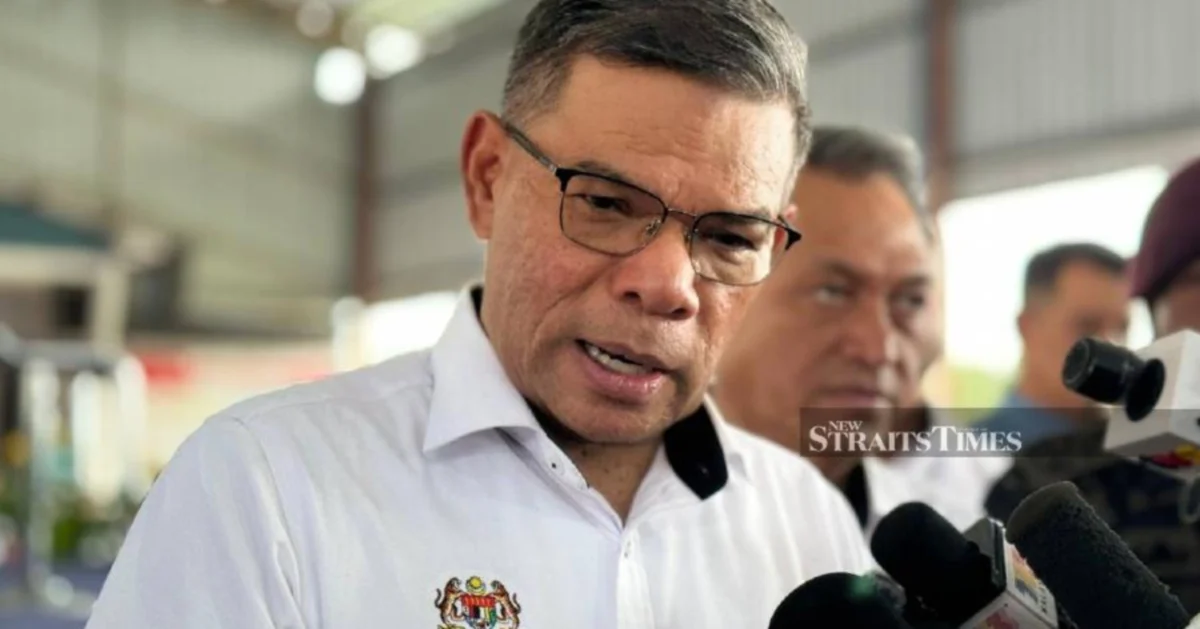
Prime Minister Datuk Seri Anwar Ibrahim has given his approval for RM22 million to be channelled towards arming and equipping the Malaysian Border Control and Protection Agency (MCBA), reflecting the government's commitment to bolstering security along Malaysia's extensive terrestrial and maritime frontiers. The funding decision, disclosed by a government official, represents a significant financial commitment to modernise the capabilities of the relatively young agency tasked with safeguarding the country's borders.
The MCBA, established as a unified command structure to consolidate border security operations, has faced considerable operational demands across Malaysia's diverse geographical terrain. The agency manages oversight of both land boundaries shared with Thailand and Brunei, as well as maritime boundaries in the Straits of Malacca, the South China Sea, and waters off Sabah and Sarawak. The investment in firearms and operational equipment addresses longstanding gaps in the agency's capacity to respond effectively to transnational security threats ranging from human trafficking to arms smuggling and irregular border crossings.
The RM22 million allocation signals a tangible shift in how Kuala Lumpur is prioritising border management as a cornerstone of national security policy. Rather than relying solely on existing police and military assets, the dedicated funding for the MCBA suggests a recognition that modern border control requires specialised training, equipment, and command structures. This approach aligns with regional trends where Southeast Asian governments have increasingly invested in dedicated border agencies to manage the complexities of cross-border movement in an era marked by transnational organised crime and migration pressures.
For Malaysian readers, the significance of this investment extends beyond headline figures. The eastern borders in Sabah and Sarawak, which remain vulnerable to maritime incursions and organised smuggling operations, stand to benefit from enhanced operational capacity. Similarly, the long terrestrial boundary with Thailand, traditionally a focal point for drug trafficking and illegal entry, requires sophisticated interdiction capabilities that well-equipped personnel can provide. The commitment demonstrates that border security remains a priority despite competing budgetary demands across other government agencies.
The MCBA's modernisation comes at a moment when regional stability and cross-border security have become increasingly urgent concerns. The agency must contend not only with traditional smuggling routes but also evolving transnational challenges including cybercrimes orchestrated across borders and human trafficking networks that exploit geographical vulnerabilities. Equipping personnel with contemporary firearms and supporting infrastructure enables faster response times and greater operational effectiveness in detecting and preventing these activities.
From a Southeast Asian perspective, Malaysia's investment in border capacity building holds implications for regional cooperation frameworks. Well-resourced national agencies often become more effective partners in bilateral and multilateral security arrangements, enabling better intelligence sharing and coordinated operations with neighbouring countries. Thailand, Indonesia, and Brunei, all of which share borders with Malaysia, have corresponding interests in a capable Malaysian border authority that can effectively manage shared security challenges and prevent the use of Malaysian territory by transnational criminal networks.
The equipment acquisition will likely include not only firearms suitable for border patrol operations but also detection systems, surveillance technology, and personal protective gear necessary for personnel to operate safely across diverse environments. Such comprehensive provisioning goes beyond simple armament, instead reflecting a modernisation strategy that accounts for the technical sophistication required in contemporary border management. This approach suggests the government is thinking systematically about operational readiness rather than making ad-hoc resource transfers.
Economic observers and security analysts will closely monitor how effectively the MCBA deploys this capital allocation. The agency's track record in preventing smuggling, reducing illegal entries, and apprehending transnational criminals will partly depend on implementation efficiency. Public discussions surrounding border security often focus on visible operations such as drug seizures and arrest statistics, which will provide measurable benchmarks for assessing the initiative's success. Malaysian citizens with concerns about irregular border crossings and their purported security implications may also scrutinise operational outcomes in the months following the equipment rollout.
The timing of this announcement also reflects broader government priorities under the current administration. Investment in law enforcement and security infrastructure represents a policy area where Anwar Ibrahim's government has sought to demonstrate competence and responsiveness to public concerns. Border security resonates across Malaysia's political spectrum, as threats to sovereignty and national integrity transcend partisan divisions. The RM22 million commitment thus serves both immediate operational purposes and the government's broader narrative regarding effective administration and commitment to protecting national interests.
Looking forward, this funding decision may signal the first phase of a longer-term modernisation programme for the MCBA. Security agencies typically require sustained investment rather than one-time allocations to maintain operational edge and adapt to evolving threats. If the current allocation proves effective in measurable terms, policymakers may consider additional investments to expand the agency's regional presence, particularly in remote border areas where personnel scarcity has historically hampered security operations. The decision also indicates that despite fiscal constraints facing the Malaysian government, border security has retained priority status in budgetary negotiations.

