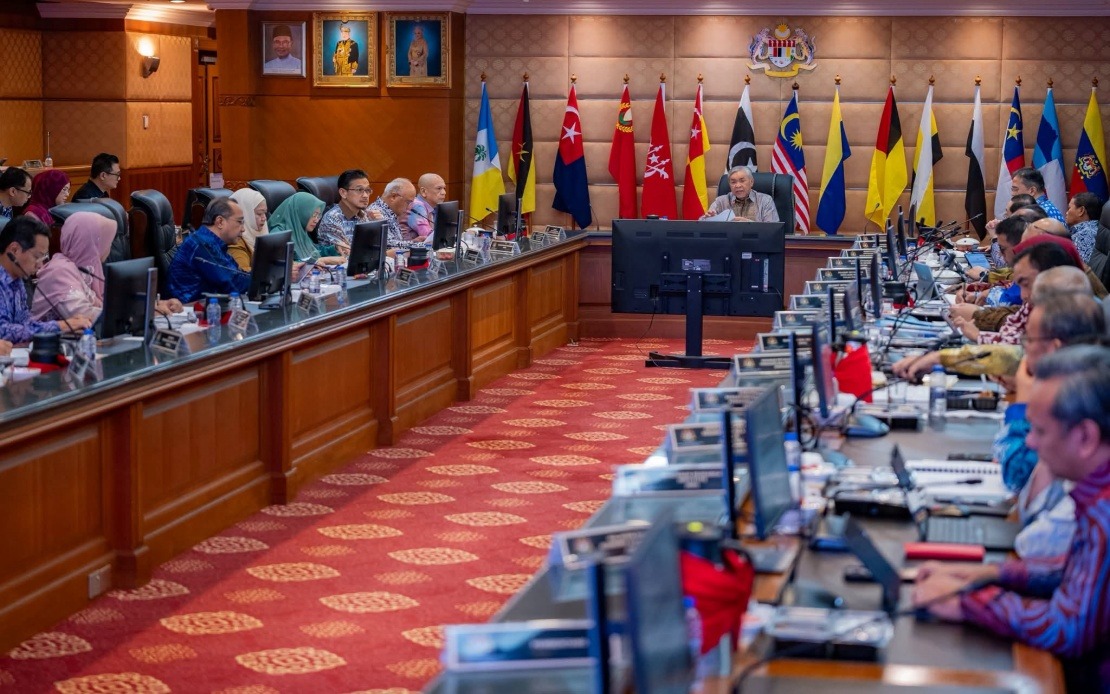
The Malaysian government is pursuing a carefully calibrated approach to rice policy that seeks to balance competing pressures from consumers, farmers, and producers, according to discussions at the 18th Executive Committee meeting of the National Cost of Living Action Council held in Putrajaya. Deputy Prime Minister Datuk Seri Dr Ahmad Zahid Hamidi, who oversaw the session, indicated that policymakers are acutely aware of the tensions inherent in any major shift affecting the nation's most fundamental food staple, and are determined to avoid abrupt changes that could destabilise either household budgets or agricultural livelihoods.
The meeting's review of the local white rice roadmap reflects a broader government philosophy that tackling affordability requires engagement across multiple layers of the economy and society. Rather than focusing narrowly on retail prices in supermarkets, Ahmad Zahid emphasised that the council is examining production expenses, distribution networks, and access to nutritious food as interconnected challenges. This wider lens recognises that genuinely affordable food depends not only on what consumers pay at the checkout but also on the health of upstream supply chains and the viability of farming operations. The inclusion of healthcare and education costs in the council's remit further illustrates the government's conviction that cost-of-living relief must address the major expense categories that squeeze household budgets most severely.
Central to the rice strategy is a proposed soft-landing transition mechanism involving subsidised rice provision, designed to shield lower-income households during the implementation of any broader policy adjustments. This targeted approach suggests the government intends to avoid the shock that sudden price movements could inflict on those least able to absorb increased food costs. The phased framework acknowledges that policy changes affecting staple foods carry acute political and social risks if handled clumsily, particularly in a nation where rice occupies both practical and cultural significance. By protecting the most vulnerable segments during a transition period, the administration appears to be attempting a politically sustainable path that does not require an indefinite commitment to universal subsidies that drain public resources.
The council also deliberated on expanding the Sumbangan Asas Rahmah (SARA) assistance programme to encompass fresh produce including fruits, vegetables, and protein sources. Currently focused on cash assistance for living expenses, broadening SARA to include nutritious foods represents a shift from purely income support toward direct provision of healthier dietary options. This expansion, which requires approval from the main NACCOL meeting chaired by Prime Minister Datuk Seri Anwar Ibrahim, underscores recognition that cost-of-living assistance must address not merely purchasing power but also nutritional quality and food security. For Malaysian households struggling financially, the ability to access fresh, protein-rich foods remains challenging despite nominal income levels, and this measure attempts to tackle that disparity directly.
The deliberations also highlight growing anxiety within government circles regarding external economic pressures that cascade into domestic food production costs. Ahmad Zahid referenced geopolitical tensions, particularly volatility in West Asia, import compliance expenses, and the ripple effects of subsidy reforms on agricultural input costs as legitimate concerns demanding continuous monitoring. Southeast Asian policymakers have learned repeatedly that global shocks—whether trade disruptions, commodity price spikes, or regulatory changes—inevitably reach local farmers and consumers. Malaysia's position as an economy dependent on food imports for certain categories makes it particularly vulnerable to such external dynamics, and the council's explicit acknowledgment of these risks suggests a defensive posture against potential inflationary transmission.
The government has directed relevant agencies to strengthen mechanisms for assisting farmers, fishermen, and other affected groups facing pressure from these multiple cost drivers. This reflects an understanding that stabilising consumer prices without simultaneously supporting agricultural producers will simply push farming into further distress, potentially eroding long-term domestic food production capacity. The commitment to targeted assistance programmes suggests the authorities recognise that price controls alone are insufficient policy instruments and must be accompanied by production-side support to remain sustainable over extended periods.
On the healthcare front, the council reviewed progress on eleven initiatives under the RESET strategy aimed at managing private healthcare costs while simultaneously improving access and expanding treatment availability within the public system. This dual focus—restraining cost inflation in the private sector while strengthening public provision—reflects the government's attempt to address the reality that many Malaysians are increasingly drawn toward private healthcare despite its higher costs, often due to perceptions of waiting times or service quality in the public system. The RESET initiatives appear designed to address both the supply-side constraints that push people toward private options and the pricing pressures that make such options unaffordable for ordinary households.
These healthcare deliberations sit within the broader Cost of Living Action Plan 2030, a multi-year integrated framework that contrasts with piecemeal, sector-by-sector responses. This coordinated structure acknowledges that living costs cannot be effectively managed through isolated interventions in individual sectors; instead, housing, food, transport, healthcare, and education must be considered as an interconnected whole where pressures in one area offset gains in another. For Malaysian voters and households, this signals a commitment to sustained, systematic attention rather than ad-hoc announcements during periods of political pressure.
Education emerges as another priority within the council's purview, with administrators noting that cost must never obstruct access to higher learning and talent development. The government directed particular attention to tertiary education support, observing that 62,937 Form Six and university students received assistance totalling RM589.6 million through 13 different aid schemes in the previous year. The substantial sums involved and the multiplicity of schemes suggest both genuine government commitment to accessible higher education and potential room for improved coordination or consolidation. Ensuring that financial barriers do not exclude talented students from disadvantaged backgrounds represents both an economic imperative—developing human capital—and a social justice concern central to government messaging.
For Malaysian households already experiencing financial strain, these policy directions offer modest reassurance that policymakers are grappling seriously with interconnected cost pressures rather than offering superficial gestures. The emphasis on protecting vulnerable groups during transitions, expanding food assistance, supporting agricultural producers, and keeping education accessible suggests a multi-front approach designed to address the lived reality of cost pressures across essential expenditure categories. Whether these measures ultimately prove sufficient to ease the financial burdens facing ordinary Malaysians will depend heavily on implementation fidelity, adequacy of budget allocations, and the extent to which external economic shocks can be contained or absorbed.

