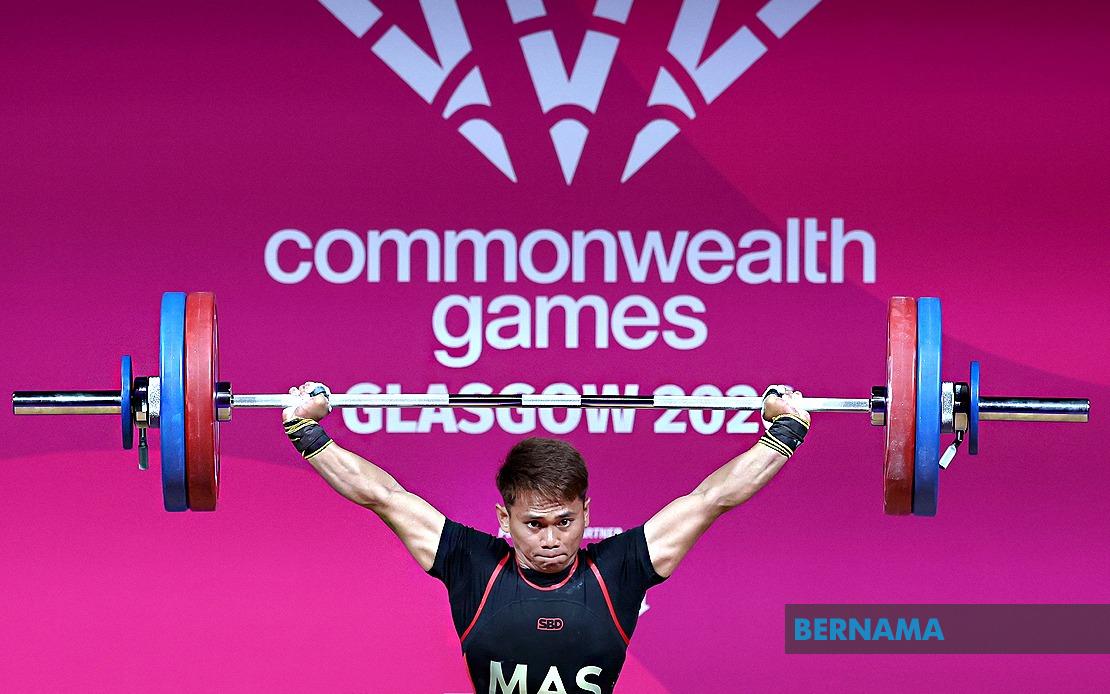
Malaysia has begun its 2026 Commonwealth Games campaign on a triumphant note with weightlifter Mohamad Aniq Kasdan capturing the first gold medal for the nation in Glasgow. The 24-year-old delivered a dominant performance at Scottish Event Campus (SEC) Armadillo, announcing Malaysia's presence at the Scottish Games with a commanding victory that has drawn national pride and congratulations from the country's political leadership.
Prime Minister Datuk Seri Anwar Ibrahim was among the first to acknowledge the significance of Aniq's achievement, taking to social media to express the nation's pride in the young athlete's performance. The Premier emphasised that the entire country stands behind Malaysia's sporting contingent at the Games and called upon the achievement to serve as inspiration for other Malaysian competitors still in action. His public recognition underscores the importance placed on international sporting success as a vehicle for national honour and soft power projection at the Commonwealth level.
Aniq's victory was decisive both in margin and in record-breaking fashion. The Malaysian weightlifter combined a snatch of 121 kilogrammes with a clean and jerk of 152 kilogrammes for a total of 273 kilogrammes, surpassing the previous Commonwealth Games standard in his weight division. This improvement over the existing benchmark demonstrates not merely a victory but a genuine advancement of the sport's competitive standards at the Games, positioning Aniq among the continent's elite performers in his category.
The competition at the SEC Armadillo proved to be a closely contested affair among the region's strongest lifters. India's Rishikanta Singh Chanambam secured the silver medal with a combined lift of 264 kilogrammes, placing him nine kilograms behind the Malaysian champion. Kenya's Joshua Amunga Mboya rounded out the podium in bronze position with a lift of 260 kilogrammes. The quality of opposition reinforces that Aniq's victory came against established regional competitors rather than in a weak field, lending greater credibility to his achievement.
Weightlifting has traditionally represented a reliable source of medal success for Malaysia at Commonwealth Games. The sport's technical demands and the significant investment in athlete development programmes have positioned Malaysian lifters as consistent performers on the Games stage. Aniq's gold medal continues this tradition while also suggesting a generational transition to younger talent capable of maintaining Malaysia's competitive standing in the discipline across future Commonwealth Games cycles.
The timing of this early gold medal carries psychological significance for the broader Malaysian delegation in Glasgow. Opening medals, particularly in gold, establish momentum and confidence that reverberates through a nation's entire contingent, potentially elevating performance across other sports and events. Prime Minister Anwar's public message acknowledging this ripple effect demonstrates the government's understanding of how individual sporting achievements translate into collective national motivation.
For Aniq personally, this victory represents validation of years of dedicated training and technical refinement in a sport where marginal gains often determine outcomes. At 24 years old, he enters the prime years of an athlete's career with an established track record of performing under pressure on an international stage. This Commonwealth Games gold positions him as a potential medal prospect for Malaysia at future major competitions, including regional championships and potentially the Olympic Games if his development trajectory continues favourably.
The achievement also reflects broader investment and institutional support within Malaysian sports. National weightlifting programmes, coaching infrastructure, and athlete development systems have collectively enabled Aniq to reach this competitive level. The gold medal thus validates not only his individual effort but also the effectiveness of Malaysia's sports governance and funding mechanisms in producing world-class performers.
From a regional perspective, Aniq's success demonstrates that Malaysia remains a competitive force in Commonwealth sporting circles. The nation's position across multiple sports—from badminton to weightlifting to aquatics—means that accumulating medals across diverse disciplines remains within reach. Early golds in sports like weightlifting, where technical mastery rather than resource-intensive infrastructure often determines outcomes, provide encouragement that Malaysia's medal target for Glasgow remains achievable despite intensifying competition from larger sporting nations.
Looking forward, Aniq's performance will likely attract increased attention and resources to Malaysian weightlifting programmes. Funding bodies and national sports administrators often respond to demonstrated success by increasing investment in proven medal-winning sports. This virtuous cycle of success breeding further opportunity could position future Malaysian weightlifters to challenge for medals at subsequent Commonwealth Games and other international competitions.
The broader narrative of Malaysia's Commonwealth Games campaign will now include this early success story. As the Glasgow Games progress, other Malaysian athletes will compete with the knowledge that their nation has already begun accumulating medals and that their own efforts are part of a collective push toward a successful Games. Prime Minister Anwar's endorsement ensures that Aniq's achievement receives prominence in national discourse, cementing his status as a sporting hero and role model for upcoming generations of Malaysian athletes aspiring to international recognition.

