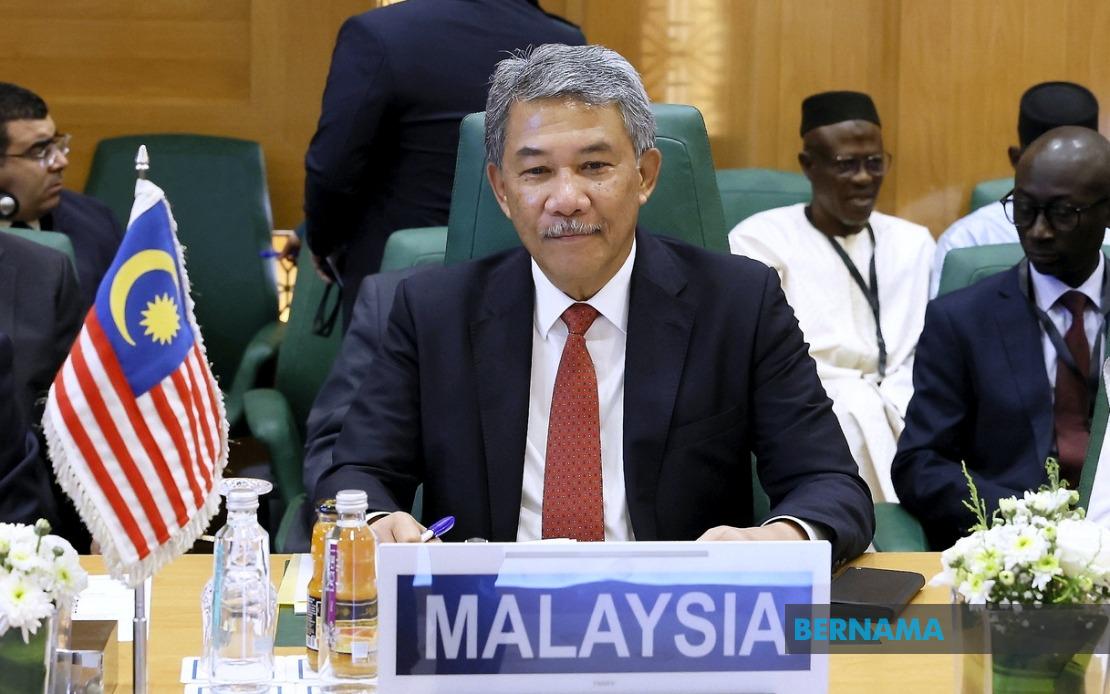
Malaysia has called on all member states of the Organization of Islamic Cooperation to reject Israel's US$2.3 billion illegal settlement expansion programme in the occupied Palestinian territories. Speaking at an extraordinary meeting of the OIC Council of Foreign Ministers in Jeddah on August 27, Foreign Minister Datuk Seri Mohamad Hasan stressed that the bloc must enforce the International Court of Justice's advisory opinion released in July 2024, which addressed the legal status of Israel's occupation and settlements. The call represents Malaysia's continued diplomatic push within the Islamic world's primary multilateral organisation to unite member states around a hardened stance on Palestinian territorial claims.
The settlement expansion plan, which includes the so-called E1 project, represents a systematic effort to fragment Palestinian territorial continuity and render a future independent Palestinian state geographically and economically unviable. Mohamad highlighted that Israel's relentless construction of illegal settlements across the West Bank and East Jerusalem constitutes a deliberate strategy to entrench control over disputed territory. The E1 scheme specifically targets a critical corridor between Jerusalem and the rest of the West Bank, effectively cutting off Palestinian communities from one another and consolidating Israeli dominion over the region. This interconnected expansion strategy, if completed, would make it virtually impossible for Palestinians to establish a geographically coherent state capable of functioning as a unified political entity.
Beyond settlement expansion, Mohamad addressed the broader pattern of Israeli actions that he characterised as undermining Palestinian self-determination. Settler violence in the West Bank, illegal evictions of Palestinians from homes in Jerusalem, and measures aimed at altering the city's demographic character and religious identity all fall within Malaysia's critique of Israeli policies. Particular concern centres on actions affecting holy sites in Jerusalem, which hold profound significance for Muslims worldwide and constitute a central issue in Palestinian claims to East Jerusalem as the capital of a future state. Mohamad called for OIC solidarity in safeguarding these sites and supporting what he termed the historical Hashemite Custodianship of Islamic and Christian holy sites in the city.
The Foreign Minister devoted significant attention to the humanitarian catastrophe unfolding in Gaza, where military operations have resulted in over 70,000 deaths and widespread destruction of civilian infrastructure. Malaysia's position demands that the international community enforce an immediate and permanent ceasefire while simultaneously guaranteeing unrestricted humanitarian access to the territory. Mohamad criticised what he characterised as Israel's deliberate targeting of civilian areas, including homes, hospitals, and schools, alongside its imposition of restrictions on aid delivery that have created acute shortages of food, medicine, and medical supplies. The Malaysian government frames the Gaza situation not merely as a regional conflict but as a crisis that tests the credibility and moral authority of the international order and the rules-based system that should govern state conduct.
Malaysia's diplomatic strategy within the OIC emphasises institutional strengthening as a pathway toward Palestinian independence. Mohamad advocated for substantially increased OIC support directed toward rebuilding and reinforcing Palestinian governmental institutions, civil society organisations, and administrative capacity. This institutional foundation-building is presented as essential groundwork for establishing a functioning independent state once occupation ends. Malaysia argues that international actors, particularly OIC members with financial resources, should prioritise investment in Palestinian state capacity as a complement to political advocacy and legal claims.
The two-state solution remains the cornerstone of Malaysia's diplomatic position, representing what it views as the only internationally recognised pathway toward sustainable peace in the region. Mohamad restated Malaysia's unwavering commitment to an independent, sovereign, and fully viable Palestinian state based on 1967 borders with East Jerusalem designated as its capital. This formulation reflects the Arab Peace Initiative framework and represents a consensus position within the broader Arab and Islamic worlds, though Malaysia frames it not as diplomatic preference but as a fundamental political imperative rooted in international law and justice principles. Malaysia emphasises that ending the occupation, enabling Palestinian self-governance, and actualising Palestinian statehood constitute non-negotiable objectives rather than negotiable endpoints.
A particular flashpoint highlighted by Malaysia involves Israeli government officials and right-wing figures entering the Al-Aqsa Mosque compound in July, an act Mohamad condemned as unacceptable provocation against Muslim sensibilities. Such incursions, regardless of political justification offered by Israeli authorities, inflame tensions across the Muslim world and undermine efforts at de-escalation. Malaysia's criticism of these religious site incidents resonates powerfully within OIC constituencies where Jerusalem's religious significance transcends political boundaries and connects to identity and faith-based concerns that cut across sectarian and national divisions.
Malaysia has also directed criticism toward the United Nations Security Council, calling for enforcement of international law and protection of the United Nations Relief and Works Agency for Palestine Refugees in the Near East (UNRWA). Recent seizure of UNRWA's Kalandia Training Centre and passage of legislation imposing mandatory death penalties for certain Palestinian actions represent, in Malaysia's assessment, deliberate efforts to dismantle international humanitarian frameworks and Palestinian legal protections. Malaysia argues that the Security Council bears responsibility for enforcing its own resolutions and maintaining international legal norms against state violations.
Malaysia's broader argument positions the Palestinian question within a framework of international law, rules-based order, and accountability for state conduct. The Malaysian government contends that Israel must face consequences for alleged violations and that the international community must enforce existing legal standards uniformly rather than selectively. This emphasis on a rules-based international order, though sometimes dismissed as rhetorical, reflects Malaysia's conviction that weaker nations and populations depend on consistent application of international law for protection against more powerful actors. Within the OIC context, Malaysia functions as an advocate for cohesive multilateral action that translates rhetorical support for Palestinian self-determination into concrete diplomatic, legal, and potentially economic pressure on Israeli policymakers.
The timing of Malaysia's statement at an extraordinary OIC meeting underscores the urgency it attributes to current developments. Rather than waiting for regular diplomatic forums, the Malaysian government deemed circumstances sufficiently grave to warrant convening emergency-level consultations. This procedural choice reflects assessment that incremental settlement expansion, military operations in Gaza, and alleged religious site desecrations represent acceleration rather than continuation of existing patterns, necessitating reinvigorated collective response from the Islamic world's primary institutional platform.
For Malaysian readers and Southeast Asian observers, Malaysia's diplomatic activism on Palestinian issues reflects both principled commitment to international law and strategic positioning within the Islamic world. As a Muslim-majority nation with significant historical influence within OIC forums, Malaysia utilises the Palestinian cause as a means of demonstrating leadership and solidarity with broader Islamic constituencies. Simultaneously, Malaysia's emphasis on rules-based international order and accountability through legal mechanisms offers a framework that extends beyond the immediate Israeli-Palestinian context, addressing concerns about great power conduct and protection of smaller nations' interests within the international system. Malaysia's call for OIC unity on these issues serves multiple audiences: Palestinian stakeholders seeking international support, OIC members evaluating collective action capability, and regional observers assessing Malaysia's diplomatic weight and influence.

