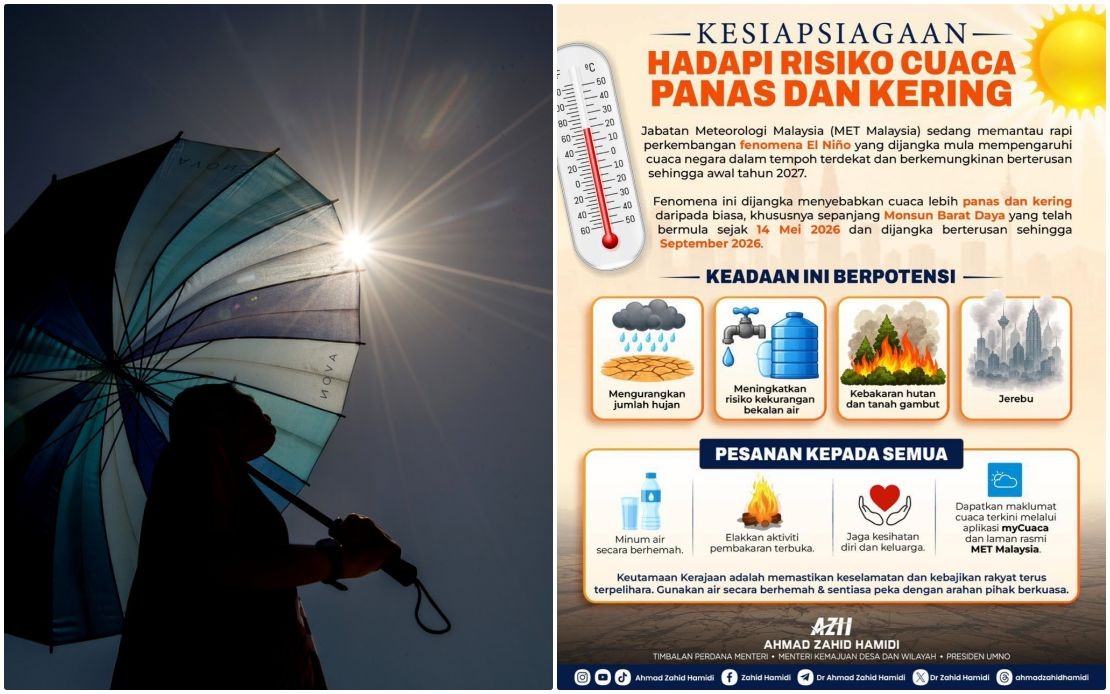
Malaysia's Deputy Prime Minister Datuk Seri Dr Ahmad Zahid Hamidi has sounded an alert for the nation to prepare for an extended period of hotter and drier weather as the El Niño phenomenon is anticipated to take hold across the country in the coming months and potentially linger until the opening months of 2027. The warning, delivered through an official statement, underscores government concern about the atmospheric pattern's compounding effects during a critical period that will coincide with the Southwest Monsoon season.
As chairman of the Central Disaster Management Committee, Ahmad Zahid emphasised that the climatic shift represents a significant challenge requiring coordinated national preparedness. The El Niño pattern, a naturally occurring warming of ocean temperatures in the central and eastern Pacific, typically disrupts normal rainfall distribution across Southeast Asia and can intensify heat stress across affected regions. For Malaysia, an archipelago heavily dependent on consistent rainfall for agriculture, water supply, and environmental stability, such an extended dry spell carries serious consequences across multiple sectors of the economy and public welfare.
The Southwest Monsoon, which commenced on May 14 and is projected to continue through September, will be the primary window during which El Niño's most pronounced effects materialise. MetMalaysia's director-general Dr Mohd Hisham Mohd Anip confirmed in an official statement that meteorological models forecast conditions significantly warmer and drier than the seasonal norm. The combination of this monsoon pattern and El Niño amplification creates a compounding risk scenario that authorities view with considerable seriousness.
Among the chief concerns are sharply diminished rainfall across numerous regions, which would tighten water supplies even as demand intensifies during hot months. Ahmad Zahid specifically flagged the elevated probability of forest and peatland fires, disasters that have historically caused transboundary haze affecting not only Malaysia but neighbouring Indonesia and Singapore. The degradation of air quality during such episodes places vulnerable populations—the elderly, children, and those with respiratory conditions—at heightened health risk and can disrupt economic activities including transportation and commerce.
Recognising these multifaceted threats, Ahmad Zahid issued a comprehensive advisory to the public. He urged all Malaysians to exercise prudent water management practices, effectively curtailing non-essential consumption to preserve reserves. He called for a strict avoidance of open burning activities, which pose extreme danger during dry seasons by potentially triggering uncontrolled wildfires. The statement also emphasised personal and family health precautions, particularly for demographic segments more susceptible to heat-related illness and air quality degradation.
The government's messaging strategy includes directing citizens toward the myCuaca application and official MetMalaysia channels for real-time weather intelligence. By channelling the population toward authoritative, up-to-date meteorological information, authorities aim to enable informed decision-making at the household and community levels. The emphasis on information accessibility reflects recognition that public compliance with preventive measures depends partly on understanding the science and severity of approaching conditions.
Ahmad Zahid stressed that early, proactive preparation and collective responsibility form the foundation of effective risk mitigation. Rather than framing El Niño as an inevitable catastrophe, his statement positioned it as a manageable challenge requiring coordinated action from government agencies, the private sector, and individual citizens. This distributed accountability model reflects modern disaster management philosophy, which recognises that centralised government response alone cannot fully mitigate systemic climate-related risks.
The extended timeline through early 2027 heightens the stakes considerably. A sustained dry period of this length could deplete reservoir levels, stress hydroelectric generation capacity, and create acute water security challenges across urban centres and agricultural regions alike. Farmers dependent on seasonal rainfall may face crop failures, threatening food security and rural livelihoods. The economic implications extend to increased costs for emergency water procurement and potential restrictions on industrial water usage.
For Malaysia and the wider Southeast Asian region, El Niño episodes carry historical precedent for severe impacts. Previous manifestations have induced regional droughts, sparked massive transboundary haze episodes costing billions in health and economic damages, and strained diplomatic relations between affected nations. Current forecasts suggesting persistence through early 2027 thus warrant the elevated attention and advance warning now being communicated through official channels.
The government's commitment to close monitoring and adaptive response mechanisms offers some assurance of institutional readiness. Federal and state authorities have had months to evaluate preparedness in water management, fire prevention, and public health systems. However, success ultimately depends on the degree to which public awareness translates into behavioural change regarding water consumption, burning practices, and health precautions. The coming months will test both the accuracy of meteorological predictions and the efficacy of national preparedness frameworks in managing what could become one of the region's defining climate challenges of the late 2020s.