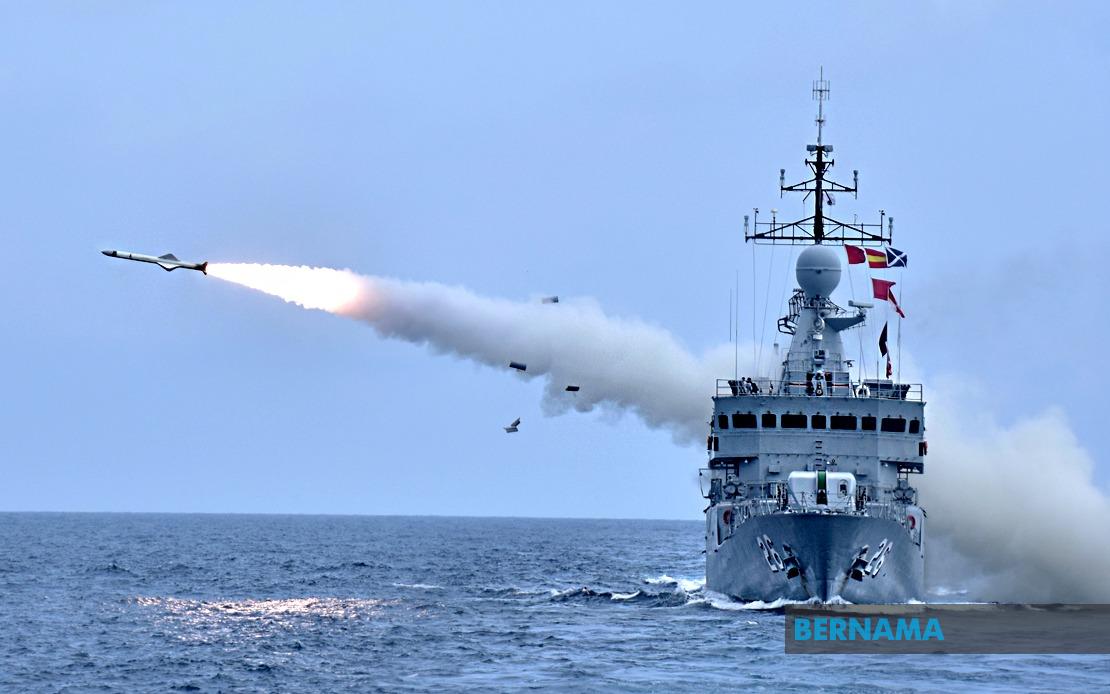
Malaysia's surge in defence expenditure represents a fundamental shift in how the government assesses national security, moving beyond conventional regional concerns to encompass a broader spectrum of modern threats, Defence Minister Datuk Seri Mohamed Khaled Nordin outlined this week. The decision to potentially allocate hundreds of millions to billions of ringgit toward defence capabilities, as announced by Prime Minister Datuk Seri Anwar Ibrahim, reflects recognition that the country faces multifaceted challenges extending far beyond traditional territorial disputes or naval concerns.
Among the most pressing concerns driving the policy reorientation are emerging digital-age vulnerabilities that conventional military planning has historically underestimated. Cyber attacks targeting critical infrastructure, electromagnetic warfare capabilities, and sophisticated disinformation operations represent entirely new frontiers of conflict that demand dedicated resources and technological sophistication. These threats operate across borders with minimal warning and can inflict significant damage to economic systems, government operations, and public confidence without firing a shot. Malaysia's acknowledgement of these dangers suggests strategic planners are adapting doctrine to reflect how modern conflicts increasingly manifest in non-kinetic domains where traditional military superiority offers limited protection.
The regional security environment has become substantially more complex due to intensifying strategic competition among major powers, a transformation that directly influences Malaysia's calculations regarding force structure and capability development. As the United States and China expand their military footprint across the Indo-Pacific, other nations inevitably respond with their own deployments and exercises, creating what defence analysts describe as an action-reaction cycle. Malaysia, positioned geographically at the intersection of multiple spheres of influence, finds itself navigating an increasingly congested security landscape where miscalculation carries elevated risks. The presence of additional military assets within confined geographical spaces naturally increases the likelihood that minor incidents could spiral into larger confrontations, particularly when communication channels remain underdeveloped or tensions run elevated.
Developments in the southern Philippines territory, including areas in proximity to Sabah, exemplify the interconnected nature of regional security challenges. Although Malaysia has not been directly involved in incidents along the Philippine coastline, Mohamed Khaled recognised that any significant escalation in that zone reverberates across the broader South China Sea ecosystem, potentially triggering security responses that affect Malaysian interests. This acknowledgment reflects sophisticated understanding that regional stability operates as a collective responsibility, where instability in one location inevitably constrains the options available to neighbouring states. The Defence Minister's emphasis on maintaining open communication channels with the Philippines demonstrates awareness that bilateral relationships require active management, particularly when external actors encourage polarisation.
The government has deliberately positioned its defence modernisation agenda as non-aligned positioning that does not target any specific country while simultaneously protecting Malaysian sovereignty and interests. This diplomatic language reflects a genuine strategic dilemma facing Malaysian planners: how to strengthen military capabilities without inadvertently escalating regional tensions or appearing to choose sides in great power competition. The strengthening of capabilities around Pulau Layang-Layang and other strategically important locations, Mohamed Khaled stressed, represents standard national defence practice rather than provocative posturing. This distinction matters significantly in regional relations, where perceptions of threat often prove as influential as objective capabilities in shaping state behaviour and strategic calculations.
Malaysia's declared intention to increase defence spending gradually to 1.5 percent of Gross Domestic Product by 2030 anchors the modernisation programme within long-term planning frameworks rather than reactive responses to immediate crises. This measured approach suggests confidence that the threat environment, while serious, does not demand emergency mobilisation. The timeline also allows for budgetary planning that does not overwhelm other government priorities such as infrastructure development, education, and social programmes. For Malaysian policymakers, balancing security imperatives against fiscal constraints and competing demands for government resources represents an ongoing challenge that lacks straightforward solutions. The gradual increase to 1.5 percent of GDP represents a significant expansion compared to historical spending levels while remaining modest relative to regional peers and global standards.
The government's two-track approach—simultaneously strengthening defence capabilities while championing dialogue and restraint—reflects recognition that military power alone provides insufficient foundation for regional security in an era of interconnected challenges. Cyber threats, disinformation campaigns, and great power competition cannot be addressed through traditional military deterrence alone. Instead, they demand diplomatic engagement, institutional frameworks for communication, and collaborative approaches to shared challenges. ASEAN's Code of Conduct negotiations regarding the South China Sea exemplify this diplomatic track, though progress has remained frustratingly slow despite rhetorical commitment from all parties. Malaysia's continued advocacy for ASEAN centrality signals commitment to maintaining the regional association's role as primary forum for managing disputes and building confidence.
The emphasis on avoiding escalatory spirals reflects hard-earned lessons from regional conflicts and close calls that nearly erupted into open warfare. The South China Sea has witnessed numerous incidents—collisions, confrontational intercepts, and dangerous close encounters—that could have triggered unintended consequences under different circumstances. Malaysia's insistence that all parties exercise restraint and refrain from actions that could precipitate escalation represents practical wisdom forged through observation of how quickly events can spiral beyond any actor's control once military forces actively oppose each other in confined spaces. The Defence Minister's repeated references to dialogue and stability reflect conviction that regional actors retain capacity to manage competition without resorting to kinetic conflict, provided sufficient communication and mutual restraint characterise their interactions.
For Malaysian readers and policymakers, the significance of these defence spending discussions extends beyond mere budget allocations to encompass fundamental questions about Malaysia's role in an increasingly fractious regional order. As great powers compete for influence and position in Southeast Asia, smaller nations like Malaysia occupy strategically important but inherently vulnerable positions. The country's prosperity depends fundamentally on maintaining open sea lanes for trade, ensuring regional stability permits continued economic integration, and preserving the diplomatic space necessary to pursue national interests without forced alignment with any particular power. Defence spending and military modernisation represent essential tools for protecting these vital interests, but they function most effectively when paired with diplomatic engagement and institutional frameworks that reduce misunderstanding.
The Defence Minister's measured language regarding Philippine defence arrangements and partnerships reflects understanding that Malaysia cannot control other nations' security decisions but can influence the broader environment through its own conduct and diplomatic engagement. Respecting the Philippines' right to determine its own defence requirements while maintaining open communication channels represents practical acknowledgment of both national sovereignty and mutual interdependence. In a region where alliance patterns remain fluid and security partnerships increasingly take non-traditional forms, maintaining good relations with neighbours requires continuous diplomatic attention even as military capabilities expand. The challenge for Malaysia involves strengthening defence posture without unnecessarily provoking security dilemmas that might accelerate regional arms competition and reduce overall stability.

