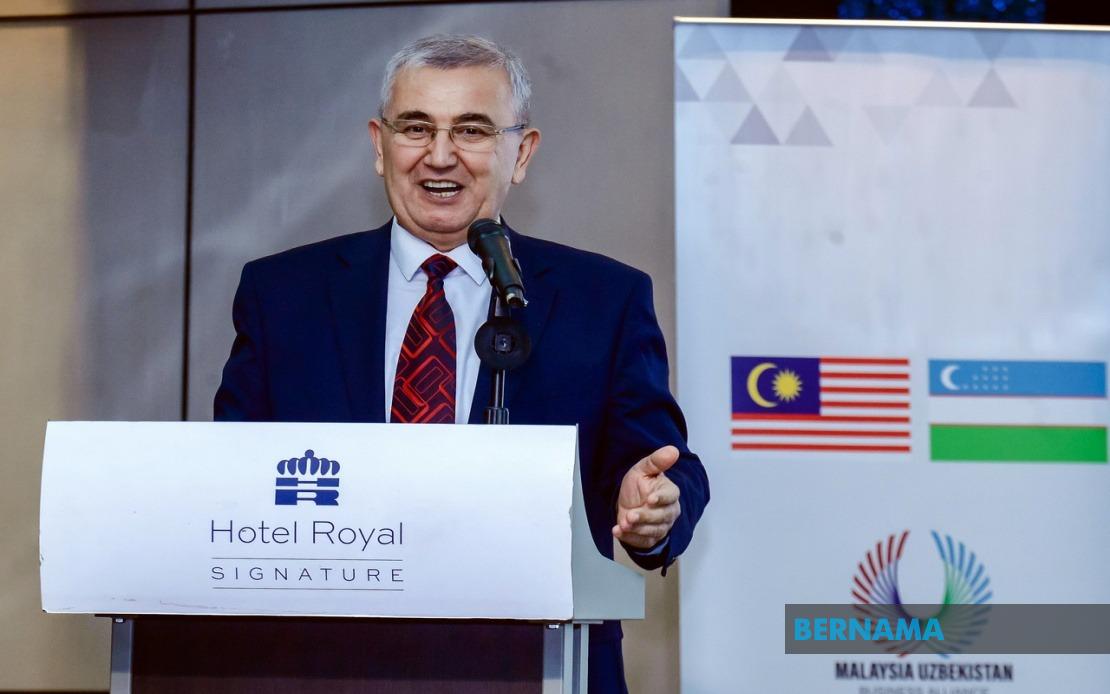
Malaysia and Uzbekistan are positioning themselves to forge a more robust agricultural alliance that capitalises on their complementary expertise and technological capabilities. The partnership marks a significant shift toward addressing food security challenges in Central and Southeast Asia through innovation, with both nations recognising the strategic importance of the agricultural sector in their bilateral relationship.
Uzbek Ambassador to Malaysia Dr Karomidin Gadoyev emphasised that agriculture has consistently remained at the forefront of high-level discussions between the two countries. The momentum gathered pace following Malaysian Prime Minister Datuk Seri Anwar Ibrahim's visit to Uzbekistan in May 2024, followed by President Shavkat Mirziyoyev's trip to Malaysia in February 2023, during which agricultural cooperation featured prominently on the agenda. Most recently, Agriculture and Food Security Minister Datuk Seri Mohamad Sabu's official visit to Uzbekistan has catalysed fresh momentum, establishing what the ambassador termed a new chapter in the bilateral agricultural relationship.
The two nations possess distinctly different but mutually reinforcing agricultural strengths. Malaysia brings considerable expertise in paddy cultivation, aquaculture operations, fisheries management, and cutting-edge smart farming techniques, alongside robust agricultural research and development infrastructure. Uzbekistan, conversely, commands advanced knowledge in energy-efficient irrigation systems, horticultural production, and agri-food processing, capabilities honed through managing vast agricultural landscapes in Central Asia. This complementary positioning creates substantial scope for technology transfer and knowledge exchange that could benefit farmers and agribusinesses across both nations.
The role of digital innovation in agriculture has emerged as a central pillar of the emerging partnership. Both countries acknowledge that artificial intelligence and smart agricultural technologies represent critical tools for enhancing productivity and building resilience against disruptions to global food supplies. Gadoyev highlighted that Uzbekistan intends to integrate Malaysian experience and expertise in digitisation to achieve measurable agricultural improvements. The adoption of such technologies carries particular significance for Uzbekistan, where irrigation efficiency directly impacts agricultural output across vast territories dependent on managing water resources carefully.
Practical collaboration is already taking root at ground level. The Malaysian Agricultural Research and Development Institute (MARDI) is actively partnering with Uzbek counterparts to identify and pilot agricultural innovations suited to Uzbek conditions. Malaysian agricultural technology company Miracule has established its inaugural agricultural drone showroom in Uzbekistan, representing a tangible entry point for technology adoption. The ambassador indicated that scaling drone usage in Uzbek agricultural fields and potentially assembling advanced agricultural drones locally represents the next logical progression, suggesting potential manufacturing partnerships that could create regional capacity.
Aquaculture has been identified as a particularly promising domain for collaboration. Uzbekistan's population, approaching 40 million people, generates substantial domestic demand for aquatic protein sources. More significantly, Uzbekistan's geographic position as a double-landlocked country creates structural challenges in accessing seafood products, making domestic aquaculture development economically compelling. Malaysia's expertise in biofloc technology, which reduces feed costs by approximately 30 percent whilst simultaneously boosting productivity and lowering overall production expenses, offers practical solutions to Uzbek farmers. Malaysian companies have already commenced preliminary investigations into establishing shrimp farming and fisheries ventures in Uzbekistan, signalling confidence in the commercial viability of such projects.
The bilateral trade picture reveals both current engagement and substantial untapped potential. Agri-food commerce between Malaysia and Uzbekistan reached over RM338 million in 2025, with Malaysian palm oil and derivative products dominating the export composition. However, Gadoyev projected ambitious expansion, suggesting that total agri-food trade could potentially double or even triple over the coming five to ten years. This expansion would hinge on structural initiatives such as establishing Malaysia as a regional processing hub for crude palm oil destined for Central Asian markets, whilst enabling Uzbek enterprises to significantly expand exports of premium fresh fruits, dried fruits, and processed food commodities throughout Southeast Asia and beyond.
The strategic utility of Uzbekistan as a regional pivot point in Central Asia warrants particular attention for Malaysian businesses and policymakers. The nation's geographic position, coupled with its substantial domestic market and regional trade connections, positions it as a logical distribution hub for Malaysian agricultural products seeking penetration into Central Asian markets. Conversely, Uzbekistan's horticultural abundance offers Malaysian importers and food processors opportunities to source premium regional products that could serve domestic consumption and regional re-export markets. This hub-and-spoke arrangement could generate efficiencies and cost advantages unavailable through bilateral arrangements alone.
The invitation extended to Uzbekistan to participate in the Malaysia Agriculture, Horticulture and Agrotourism Exhibition (MAHA) 2026 represents a deliberate effort to elevate the partnership's profile and create networking opportunities. The ambassador characterised the exhibition as a critical platform for introducing Uzbekistan's agricultural sector, premium fruit offerings, and processed food innovations to Malaysian business stakeholders and consumers. Such visibility could catalyse new commercial relationships and investor interest, extending beyond government-level cooperation to generate private sector engagement.
The underlying rationale for deepening this partnership extends beyond bilateral commercial interest. Both nations confront shared challenges of ensuring food security for growing and concentrated populations within a region increasingly vulnerable to climate variability and global supply chain disruptions. By pooling technological capabilities and agricultural knowledge, Malaysia and Uzbekistan position themselves to develop more resilient and productive food systems. The emphasis on smart farming, efficient resource utilisation, and advanced aquaculture techniques reflects a recognition that traditional agricultural approaches will prove insufficient to meet future demand.
For Malaysian stakeholders, the Uzbek partnership presents diversification opportunities at a time when regional agricultural markets face evolving competitive pressures. Technology companies, agricultural equipment manufacturers, and farming enterprises gain access to an emerging market of nearly 40 million people with demonstrated appetite for innovation and productivity improvements. Simultaneously, Malaysian consumers and processors benefit from assured access to premium agricultural products from Central Asia, potentially reducing import dependency on other regions whilst supporting long-term food security objectives.
The bilateral momentum suggests that agriculture may increasingly feature in Malaysia-Uzbekistan relations as a driver of broader economic integration. Unlike trade relationships that depend solely on commodity exchange, agricultural partnerships rooted in technology transfer and joint innovation create sustained institutional linkages, human capital exchange, and mutual investment interests. These deeper connections often generate spillover benefits across other economic sectors, including finance, logistics, and manufacturing. As both nations continue implementing agreed cooperation frameworks, the agricultural sector may evolve into a flagship dimension of their strategic partnership.

