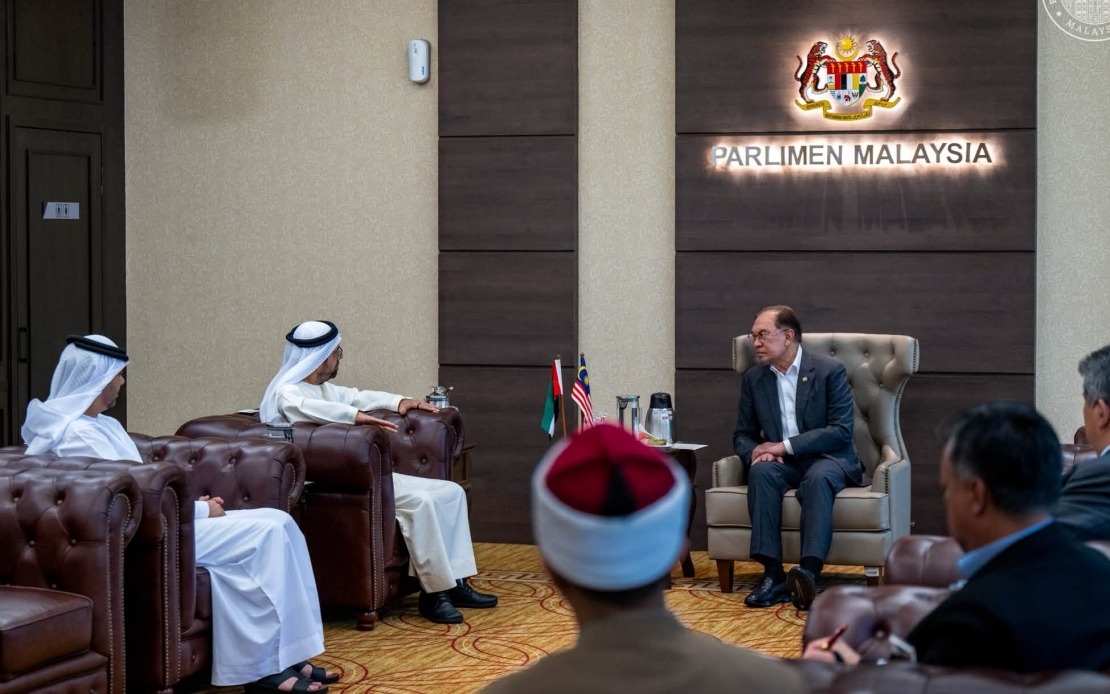
Malaysia and the United Arab Emirates have recommitted themselves to deepening bilateral relations through expanded strategic cooperation that promises tangible benefits for both nations, according to Prime Minister Datuk Seri Anwar Ibrahim. The reassurance came during a formal engagement at Parliament with Dr Ali Rashid Al Nuaimi, who chairs the Defence, Interior and Foreign Affairs Committee of the UAE's Federal National Council, emphasising the substance and continuity of Malaysia-UAE diplomatic engagement at senior levels.
The timing of this high-level exchange underscores a deliberate diplomatic strategy by Malaysia to cultivate stronger partnerships across the Gulf region, an area of growing geopolitical and economic significance for Southeast Asia. The UAE represents one of the most advanced and strategically positioned nations in the Middle East, offering Malaysia opportunities for knowledge transfer, investment, and collaborative governance frameworks. Beyond ceremonial courtesy, such meetings signal serious intent to operationalise cooperation across multiple domains that extend far beyond traditional trade relationships.
During their discussion, both sides turned their attention to the shifting geopolitical landscape affecting the broader region. The conversation specifically addressed the escalating tensions between the United States and Iran, recognising how such conflicts ripple across regional stability and maritime commerce. For Malaysia, as a nation with significant maritime interests and a growing role in international diplomacy, understanding these dynamics and positioning itself constructively remains paramount. The acknowledgment of these tensions reflects a pragmatic assessment that regional partners must maintain dialogue and coordination to mitigate destabilising spillover effects.
A particularly significant dimension of the engagement involved artificial intelligence, with both nations recognising its transformative potential across multiple sectors. The UAE has positioned itself as a regional leader in AI adoption and implementation, particularly in governance and defence applications where technological sophistication increasingly determines strategic advantage. Malaysia's interest in learning from the UAE's experience reflects a broader regional imperative to harness AI capabilities while managing associated risks and ensuring inclusive development.
The Prime Minister specifically welcomed the UAE's innovative approach to ensuring technological literacy among its leadership cadre. By mandating AI training for ministers and senior government officials, the UAE has created a systemic mechanism to keep its decision-making apparatus attuned to rapid technological change. This model holds particular relevance for Malaysia, where bridging the digital capability gap between government leadership and technological realities remains an ongoing challenge. The institutionalisation of continuous learning reflects recognition that governing in the modern era demands sustained engagement with transformative technologies, not merely superficial awareness.
The implications for Malaysia's own governance framework are substantial. As artificial intelligence increasingly influences policy formulation, defence capabilities, and citizen services, ensuring that senior officials possess functional understanding rather than peripheral knowledge becomes critical to effective implementation. The UAE model suggests that formalised training programmes can inculcate not just technical competency but also strategic thinking about AI's societal implications, including risks related to cybersecurity, data privacy, and algorithmic bias.
Beyond the immediate bilateral context, Malaysia-UAE cooperation carries significance for Southeast Asian positioning in global affairs. The UAE's diplomatic influence, financial resources, and technological advancement make it a valuable partner for nations seeking to navigate complex international relationships. For Malaysia, which balances relationships with various global powers while advocating for ASEAN cohesion, deepening ties with the UAE provides additional diplomatic leverage and access to Gulf-based capital and expertise.
The Prime Minister's reiteration of Malaysia's commitment to regional peace and stability through enhanced UAE cooperation represents a calculated engagement strategy. Rather than viewing partnerships in zero-sum terms, the emphasis on mutual benefit and collective regional prosperity suggests a framework where cooperation enhances rather than diminishes Malaysia's autonomy or regional relationships. This approach aligns with Malaysia's broader foreign policy orientation of maintaining equidistance while building substantive partnerships across different regions and ideological orientations.
Looking ahead, the concrete manifestation of these commitments will likely emerge through targeted cooperation initiatives in defence sector exchanges, governance technology adoption, and potentially joint ventures in emerging sectors. The groundwork laid through such high-level engagements typically precedes more substantive institutional arrangements, joint working groups, and capacity-building programmes. For Malaysian policymakers and stakeholders, the trajectory of this relationship merits close monitoring, particularly regarding how AI integration might reshape government operations and defence capabilities in the coming years.

