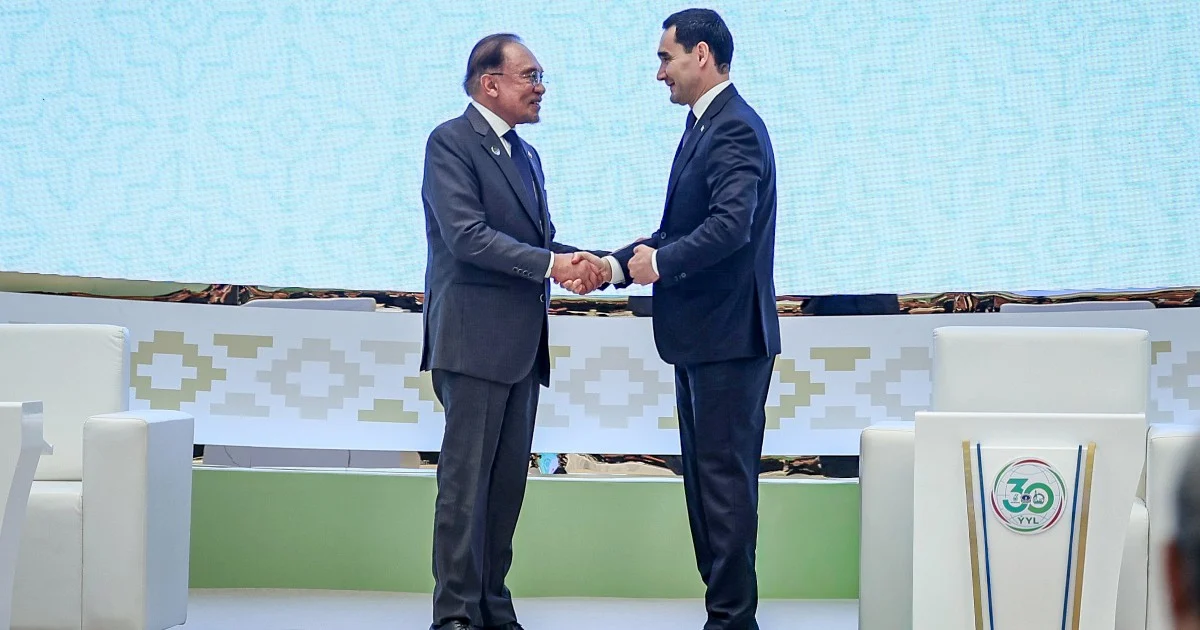
Malaysia and Turkmenistan have committed to strengthening cooperation across energy infrastructure and economic sectors, following Prime Minister Datuk Seri Anwar Ibrahim's official visit to the Central Asian nation. The agreement signals Malaysia's continued efforts to diversify its international partnerships and secure new avenues for growth beyond traditional markets, while positioning itself as an influential player in the broader Asian economic landscape.
The energy sector forms the cornerstone of this emerging partnership. Turkmenistan possesses substantial natural gas reserves and has long been a significant energy producer in Central Asia, while Malaysia continues to pursue energy security and infrastructure development as key priorities. Through this collaboration, both nations aim to explore joint ventures and technical expertise sharing that could benefit Malaysia's energy transition strategy. The agreement opens possibilities for Malaysian firms to engage in energy projects within Turkmenistan's territory, potentially creating new business opportunities for companies operating in oil and gas services, renewable energy, and related infrastructure sectors.
Beyond energy, the two countries have identified trade and investment as critical areas for expansion. Malaysia's established financial services, manufacturing, and logistics sectors present attractive opportunities for Turkmen investors seeking entry into Southeast Asian markets. Conversely, Malaysian companies are increasingly looking toward Central Asia as a frontier for diversification, particularly given the region's geographic position bridging Europe and Asia. Enhanced bilateral investment frameworks could facilitate smoother capital flows and reduce barriers to market entry for entrepreneurs and corporations from both nations.
Transportation infrastructure emerged as another priority in the expanded cooperation framework. Improved connectivity between Malaysia and Turkmenistan would strengthen supply chain networks and facilitate trade movement across multiple regions. This aligns with broader Asian development initiatives aimed at enhancing cross-continental logistics. Malaysian expertise in port operations, maritime services, and modern transportation systems could complement Turkmenistan's efforts to modernise its infrastructure while simultaneously creating opportunities for Malaysian service providers.
Educational collaboration represents a significant dimension of this partnership, reflecting both nations' commitment to human capital development. Malaysian universities have increasingly attracted international students from Central Asia, and formalising educational exchanges could deepen this trend. Scholarship programmes, student mobility initiatives, and institutional partnerships would enable knowledge transfer between academic communities while fostering goodwill and cultural understanding. Technical and vocational training programmes could also benefit workers from both countries, particularly in sectors aligned with energy production, transportation, and technology implementation.
Technology transfer and digital innovation form emerging pillars of this relationship. Malaysia's growing profile as a technology hub within Southeast Asia positions it favourably to share expertise with Turkmenistan, which seeks modernisation across governmental and commercial sectors. Collaborations in telecommunications, digital commerce platforms, and smart city initiatives could create mutual benefits while establishing Malaysia as a trusted technology partner for Central Asian nations exploring digitalisation pathways.
Prime Minister Anwar Ibrahim's visit underscores Malaysia's strategic pivot toward broadening diplomatic and economic reach beyond traditional spheres of influence. This engagement with Turkmenistan reflects a wider Malaysian foreign policy approach emphasising constructive relations with nations across different regions and development stages. By cultivating partnerships with resource-rich Central Asian countries, Malaysia demonstrates commitment to creating diversified economic opportunities for its citizens and businesses.
The timing of this agreement coincides with Malaysia's broader economic diversification efforts. As the nation navigates global economic uncertainties and changing trade dynamics, partnerships with emerging markets in Central Asia provide alternative markets and supply sources. Turkmenistan, similarly, benefits from Malaysia's access to Southeast Asian networks and established market entry mechanisms.
For Malaysian businesses, this partnership creates tangible opportunities across multiple sectors. Energy firms can explore participation in Turkmenistan's oil and gas projects, logistics companies can benefit from improved transportation corridors, and technology providers can tap into growing digitalisation demand. Small and medium enterprises may particularly benefit from government-facilitated business matching and networking platforms that typically accompany such bilateral agreements.
The agreement also carries regional implications for Southeast Asia and Central Asia. Enhanced Malaysia-Turkmenistan ties strengthen connectivity between these regions and potentially serve as a foundation for broader multilateral engagement. Other Southeast Asian nations may similarly pursue partnerships with Central Asian counterparts, creating a more integrated Asian economic ecosystem.
Implementing these commitments will require establishing concrete mechanisms and institutional frameworks. Joint committees focused on energy, trade, investment, and technology will likely be formed to oversee progress and resolve emerging challenges. Regular high-level visits and ministerial dialogues will help maintain momentum and address diplomatic matters requiring strategic decision-making.
Both nations face the challenge of converting goodwill and agreements into tangible outcomes. Successful execution depends on identifying quick wins that demonstrate partnership value while building foundations for longer-term cooperation. For Malaysian investors, understanding Turkmenistan's regulatory environment and business culture will prove essential. Similarly, Turkmen enterprises must familiarise themselves with Malaysian market conditions and operational practices.
Looking forward, this Malaysia-Turkmenistan partnership exemplifies how nations can identify complementary strengths and mutual interests despite geographic distance. As Malaysia continues positioning itself as a key economic actor within Asia, such diversified international engagements strengthen its influence while creating sustainable growth pathways for its economy and workforce.

