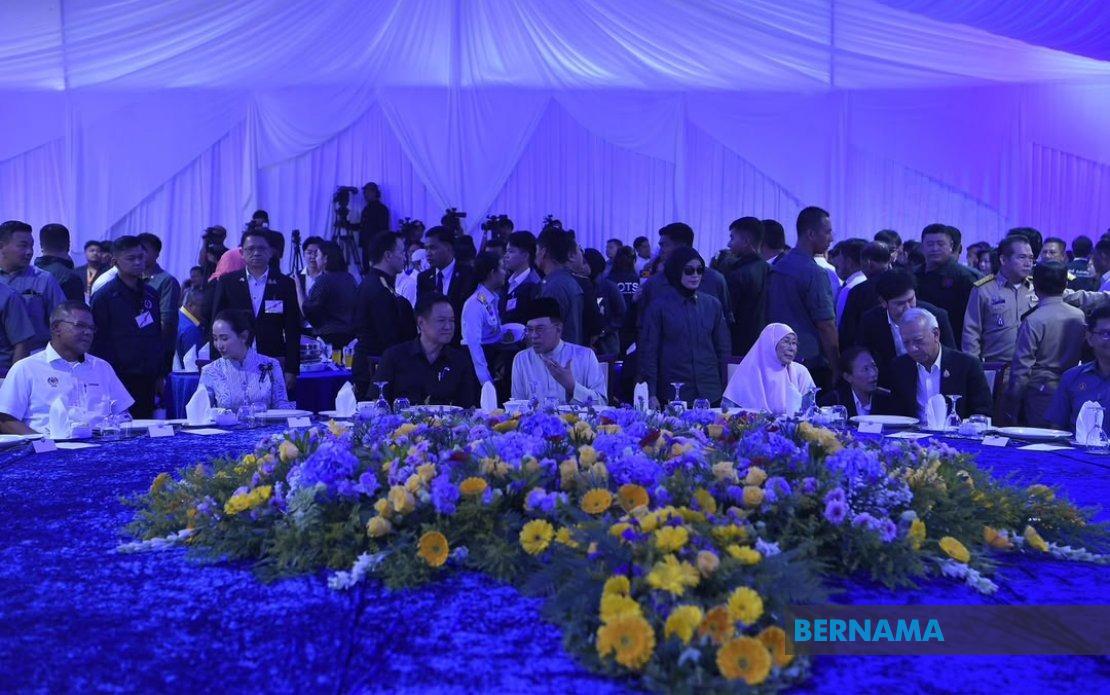
Prime Minister Datuk Seri Anwar Ibrahim and Thai Prime Minister Anutin Charnvirakul jointly opened a strategically significant new road on July 10 linking Malaysia's Bukit Kayu Hitam Immigration, Customs, Quarantine and Security complex with Thailand's corresponding Sadao facility. The inauguration ceremony underscores deepening bilateral cooperation between the neighbouring nations and reflects their shared commitment to modernising critical cross-border infrastructure that has long facilitated millions of journeys and substantial trade flows across the Malaysia-Thailand frontier.
The new thoroughfare commences operations at 6 am Malaysian time on July 11, simultaneously rendering the existing Bukit Kayu Hitam-Danok border passage permanently inactive from midnight the same day. This carefully coordinated transition represents the culmination of substantial planning and investment by both governments to ensure seamless continuity of cross-border movement whilst upgrading the quality and efficiency of checkpoint facilities. The infrastructure overhaul demonstrates how regional partners can align their modernisation efforts to mutual advantage, particularly in eliminating bottlenecks that previously constrained people and cargo movements.
Both nations have positioned this development as emblematic of their enduring friendship and strategic partnership. The Home Ministry characterised the project as a milestone achievement reflecting successful bilateral cooperation in constructing border infrastructure that is more contemporary, comprehensively integrated and resilient to future pressures. This framing carries significance beyond mere ceremonial language—it signals to both domestic constituencies and the international community that Malaysia and Thailand remain committed to deepening institutional ties despite occasional diplomatic friction that periodically surfaces between neighbours.
The new road alignment directly supports Malaysia's participation in the ASEAN North-South Economic Corridor, a multilateral initiative designed to enhance connectivity, trade facilitation and economic integration across Southeast Asia. By providing modern, efficient crossing infrastructure, the project reduces friction in supply chains, lowers transaction costs for businesses operating across the border and facilitates the seamless movement of goods destined for markets throughout the region and beyond. For Malaysian exporters particularly, improved border efficiency translates into competitive advantages in time-sensitive sectors including fresh produce, automotive components and electronics manufacturing.
The facility incorporates integrated control systems and modern checkpoint infrastructure intended to streamline immigration, customs and quarantine procedures that previously consumed considerable time at congested crossing points. These technological improvements promise to enhance border security whilst simultaneously accelerating legitimate traffic flows—a balance that authorities across Southeast Asia continue seeking as they navigate competing imperatives of national security and commercial facilitation. Integrated systems allow authorities from both nations to share intelligence and coordinate enforcement activities more effectively, theoretically reducing opportunities for smuggling and trafficking whilst maintaining smooth passage for compliant travellers and traders.
Both governments anticipate substantial economic benefits accruing to border communities and broader national economies. Enhanced corridor efficiency should stimulate development in peripheral areas historically disadvantaged by geographical remoteness from major population centres and commercial hubs. Malaysian towns in Kedah state may benefit from increased cross-border investment, tourism and consumer spending as improved accessibility makes these regions more attractive to both Thai visitors and regional traders. Similarly, the investment in modern infrastructure signals to private sector actors that governments remain committed to creating conditions conducive to sustained economic activity along the frontier.
The project also embodies Malaysia's Malaysia MADANI development vision, which emphasises sustainable growth benefiting all segments of society. The Home Ministry explicitly linked the border infrastructure upgrade to this broader policy framework, suggesting that improved border management serves Malaysia MADANI objectives by enhancing operational efficiency, adopting contemporary technology solutions and facilitating international strategic cooperation. This positioning reflects how infrastructure development, when properly conceived, simultaneously advances national development agendas and strengthens regional integration efforts.
For Southeast Asian observers, this infrastructure upgrade carries implications extending beyond bilateral Malaysia-Thailand relations. The successful completion of a complex, cross-border infrastructure project demonstrates that ASEAN members can surmount practical challenges in implementing the Connectivity agenda despite divergent development levels and institutional capacities. The visible commitment of both prime ministers to the project's inauguration signals political importance, potentially encouraging similar initiatives elsewhere within the region where border infrastructure remains outdated or constrained.
The transition from the Bukit Kayu Hitam-Danok crossing to the new facility represents more than routine infrastructure replacement. It acknowledges that previous crossing points, whilst historically adequate, had become insufficient for contemporary volumes and compositions of cross-border traffic. As trade intensifies and tourism expands throughout Southeast Asia, border infrastructure must evolve accordingly. The Malaysian-Thai example demonstrates how neighbours can proactively upgrade facilities rather than waiting for congestion to reach crisis proportions, potentially offering a template for other ASEAN border partnerships seeking similar modernisation.
Both governments expressed gratitude to multiple ministries, departments and enforcement agencies across both nations whose contributions proved essential to successful project completion. This acknowledgment highlights the complexity of cross-border infrastructure projects, which necessarily involve coordination among numerous institutions managing immigration, customs, quarantine, security and transportation functions. Successful coordination across national jurisdictions requires sustained diplomatic engagement, technical cooperation and mutual commitment to shared objectives—qualities apparently demonstrated throughout this project's development and execution phases.
Looking forward, the Home Ministry committed to continuing border management improvements through additional infrastructure investments, technology adoption and international strategic partnerships aimed simultaneously at safeguarding national security and promoting shared prosperity. This dual commitment—security and prosperity—reflects the fundamental tension inherent in border management within an integrated regional system. The new crossing exemplifies how properly designed infrastructure can serve both objectives, enabling beneficial exchange whilst maintaining protective capacity against threats and unwanted flows.

