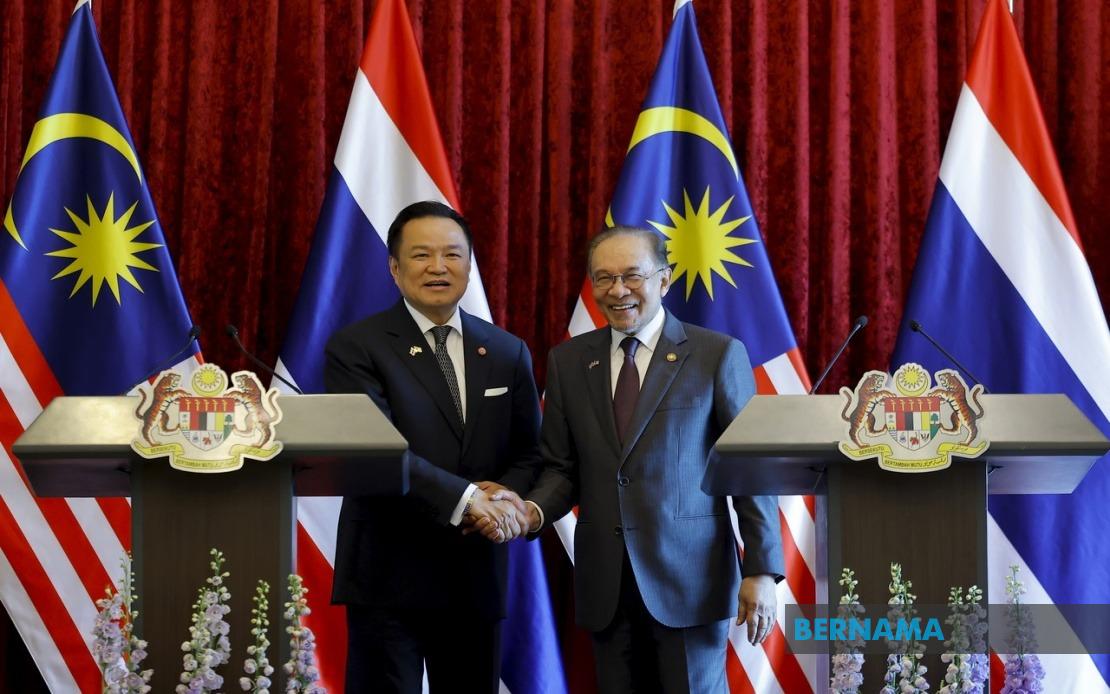
Prime Minister Datuk Seri Anwar Ibrahim and his Thai counterpart Anutin Charnvirakul have committed to accelerating cross-border development initiatives during high-level talks in Putrajaya, marking a significant shift in how the two neighbouring nations approach regional integration. The bilateral discussions yielded concrete agreements on infrastructure connectivity, special border economic zones, and simplified immigration and customs protocols—all designed to remove friction from trade and investment flows between Malaysia and Thailand by 2027.
The ambitious target of US$30 billion in annual bilateral trade represents a substantial increase from current levels and reflects both governments' determination to deepen economic interdependence. This figure carries particular significance for Malaysia's economic strategy, as Thailand remains a crucial regional partner in ASEAN and a gateway to wider Southeast Asian markets. The trade objective underscores recognition that historical ties alone are insufficient to drive modern prosperity; concrete infrastructure investments and policy harmonisation are essential.
During his remarks at the joint press conference, Anwar emphasised that the two nations share deep cultural, historical, and economic bonds that have remained underutilised relative to their potential. He highlighted that despite longstanding relationships, Malaysia and Thailand have scope to expand collaboration across multiple sectors beyond trade, including investment flows, tourism, and people-to-people exchanges. This framing suggests that the current partnership, while friendly, has operated below capacity for many years.
The agreement to develop special border economic zones represents a particularly strategic component of the partnership. These designated areas would allow preferential tariffs, simplified regulatory environments, and coordinated development on both sides of the border, potentially transforming regions like Bukit Kayu Hitam in Kedah and Sadao in Songkhla into thriving cross-border hubs. Such zones have proven effective elsewhere in Asia and could catalyse both foreign investment and regional growth, benefiting peripheral areas that have historically lagged behind capital city economies.
Improvement of customs and immigration procedures addresses a fundamental bottleneck affecting trade efficiency. By streamlining border crossing protocols—potentially through digital integration, pre-clearance arrangements, or harmonised documentation standards—Malaysia and Thailand can significantly reduce transit times and logistics costs for businesses operating on both sides of the frontier. For Malaysian manufacturers seeking to access Thai supply chains or market their products throughout Thailand, such efficiencies translate directly into competitive advantage.
The planned joint visit to Bukit Kayu Hitam and Sadao carries symbolic and practical importance. Rather than confining discussions to capital cities, the Prime Ministers will witness border conditions firsthand and consult local stakeholders directly affected by cross-border policies. This approach signals genuine commitment to addressing ground-level concerns and demonstrates that border development is not merely a Putrajaya or Bangkok priority but reflects regional aspirations. Local communities and businesses in these border areas have long advocated for improved infrastructure and trading conditions.
Thailand's willingness to invest leadership time and political capital in strengthening ties with Malaysia reflects Bangkok's broader strategic calculations. Thailand views Malaysia as essential to ASEAN cohesion and sees enhanced Malaysian prosperity as beneficial for regional stability and economic dynamism. Anutin's personal involvement in the initiative underscores that these developments carry top-level commitment rather than remaining trapped in bureaucratic channels, where grand agreements often languish without implementation.
For Malaysian stakeholders, the initiatives open pathways for businesses to access Thailand's 70 million consumers and its established manufacturing ecosystem. Malaysian investors in sectors ranging from automotive components to agricultural products stand to benefit from reduced trade friction. Simultaneously, Thai investors eyeing Malaysia's developing sectors and strategic location within ASEAN will find smoother pathways to market entry and operations.
The timeline extending to 2027 provides sufficient window for implementation of the substantive infrastructure projects required to support the US$30 billion trade target. However, success will depend on both governments following through with concrete investments, regulatory reforms, and institutional coordination. Past bilateral agreements have occasionally stalled during implementation phases, making political commitment crucial.
Regional observers will monitor whether this initiative influences broader ASEAN integration efforts and whether Malaysia-Thailand cooperation becomes a model for other Southeast Asian bilateral partnerships. If successful, the border economic zones and streamlined procedures could demonstrate how neighbouring nations can balance sovereignty concerns with pragmatic economic integration, potentially offering a template that other ASEAN members might emulate.
The agreement also carries implications for Malaysia's position within wider geopolitical currents affecting Southeast Asia. As powers like China, India, and external actors compete for influence in the region, deepened Malaysia-Thailand ties strengthen ASEAN's internal cohesion and reduce space for external leverage. A more prosperous and integrated border region contributes to regional stability and demonstrates that Southeast Asian nations can chart their own cooperative path independent of great power dynamics.
Both governments will need to address implementation mechanisms, financing arrangements, and institutional frameworks to translate current political will into tangible progress. Creating dedicated task forces, establishing regular review mechanisms, and securing necessary budgetary allocations will determine whether the 2027 target proves achievable. The coming months will reveal how seriously both capitals treat these commitments and whether supporting bureaucracies receive mandates to expedite approval processes for border-related projects.

