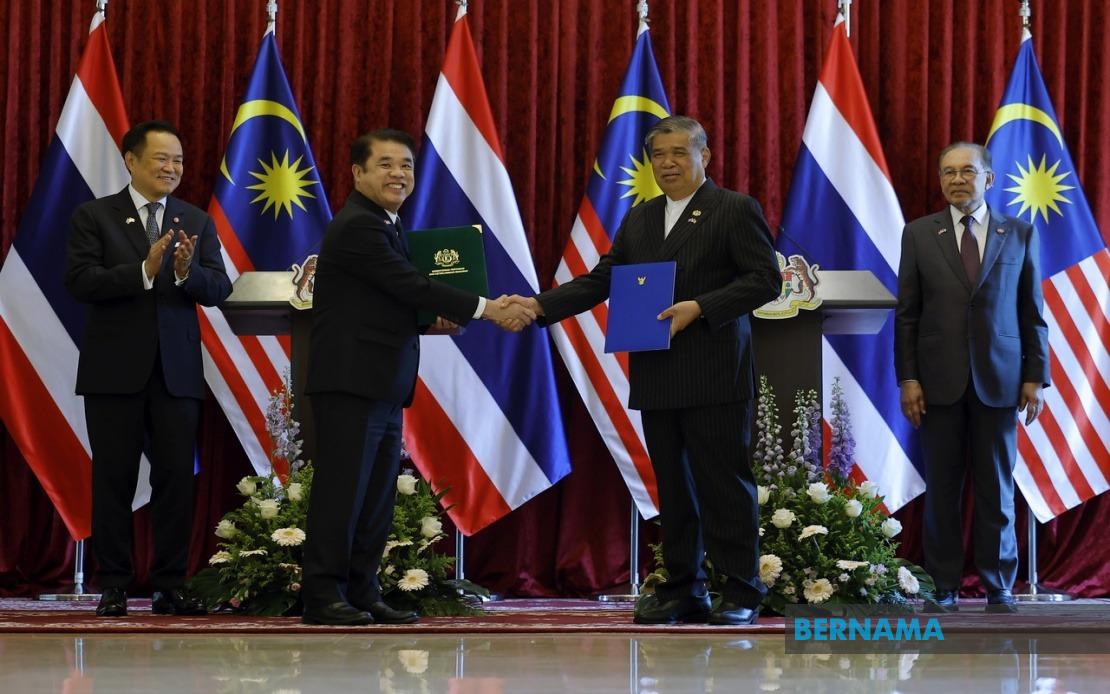
Malaysia and Thailand have moved decisively to clear a backlog of trade frictions that had complicated their agricultural relationship, with both nations pledging to activate a comprehensive cooperation framework within seven days. The breakthrough came during Thai Prime Minister Anutin Charnvirakul's inaugural official visit to Malaysia on July 9, when he and Prime Minister Datuk Seri Anwar Ibrahim jointly witnessed the signing of a Memorandum of Understanding that sets out ambitious goals for expanded food security cooperation and bilateral commerce. The pace of implementation represents a substantial acceleration from Thailand's original proposal to bring the agreement into force within one and a half months, reflecting both governments' eagerness to deepen ties in an increasingly competitive regional food economy.
The fisheries market access dispute, which had festered beneath the surface of Malaysia-Thailand relations, centred on technical and regulatory obstacles that were impeding trade flows for key protein sources. Malaysia had implemented stricter import controls on Thai fisheries products effective June 1, requiring Certificates of Analysis for barramundi shipments and imposing temporary restrictions on five specific shrimp species, measures that signalled Bangkok's practices did not meet Kuala Lumpur's safety standards. The resolution of these particular tensions demonstrates how focused bilateral dialogue at the ministerial level, amplified by prime ministerial backing, can transform technical disputes into opportunities for harmonised standards and enhanced market integration. Agriculture and Food Security Minister Datuk Seri Mohamad Sabu and Thai Agriculture Minister Suriya Juangroongruangkit led the technical negotiations that produced mutually acceptable pathways forward, underscoring the critical role of specialised expertise in resolving complex cross-border commerce challenges.
The new Memorandum of Understanding provides a substantially broader institutional framework than existed previously, establishing mechanisms for coordinated action across multiple dimensions of the agricultural supply chain. Crop production cooperation, livestock trade facilitation, fisheries market development, and the coordinated marketing of processed agricultural products form the backbone of the agreement's commercial focus. Equally important are provisions covering research and development initiatives, capacity building programmes, biosecurity protocols, and sanitary and phytosanitary measures—technical domains where regulatory misalignment had previously created friction and predictability gaps for traders. The MoU establishes a more formalised governance structure through which Malaysian and Thai agricultural authorities can maintain continuous dialogue, resolve emerging issues before they escalate into trade barriers, and proactively identify new cooperation opportunities. This structural transparency and regular communication channel should reduce the likelihood of future disputes emerging from regulatory changes implemented unilaterally or without consultation.
The expansion of agricultural trade between Malaysia and Thailand reflects the fundamental importance of regional food systems in an era of supply chain vulnerability and climate uncertainty. Bilateral agri-food commerce reached RM20.33 billion over the twelve months through December 2025, a volume that underscores mutual economic dependence in this sector and explains both nations' motivation to smooth trading relationships. Malaysia's agricultural exports to Thailand—principally coffee, cocoa, tea, spices, and processed food products—represent important market outlets for Malaysian producers, while Thai supplies of meat and meat-based products constitute critical protein sourcing for the Malaysian market. Disruptions in either direction carry implications for consumer prices, food inflation dynamics, and domestic agricultural competitiveness, making frictionless bilateral trade a matter of national economic interest rather than merely commercial convenience.
For Malaysian readers and policymakers, the accelerated MoU implementation carries several practical implications that extend beyond the immediate bilateral relationship. The agreement signals Malaysia's commitment to building resilient regional food security architectures at a moment when supply chain disruptions, climate variability, and protectionist pressures are reshaping global agricultural trade. By establishing stable, predictable frameworks with a major neighbouring supplier and customer, Malaysia reduces its vulnerability to sudden market shocks or arbitrary trade restrictions. The emphasis on research collaboration, capacity building, and technical harmonisation creates pathways for Malaysian agricultural enterprises to upgrade their competitiveness and meet international standards, potentially expanding market access beyond Thailand into other Southeast Asian nations and beyond.
Thailand's motivation in expediting the arrangement reflects Bangkok's own food security concerns and its strategic positioning as a regional agricultural powerhouse. Thailand ranks among the world's leading exporters of rice, cassava, tropical fruits, and seafood products, yet remains vulnerable to market access restrictions imposed by trading partners citing safety or environmental concerns. By deepening cooperation with Malaysia and harmonising technical standards through the new MoU, Thailand gains greater certainty over market access for its signature agricultural exports. The willingness to compress the implementation timeline from forty-five days to seven days suggests Thai leadership recognises that delayed implementation would have meant extended commercial friction at a time when regional supply chains require stability.
Prime Ministers Anwar and Anutin had previously held bilateral talks focused on broadening cooperation across trade, investment, agriculture, food security, and regional policy matters, establishing the senior-level political foundation upon which the agricultural ministers then constructed their technical agreement. This two-level approach—strategic political guidance followed by expert-level implementation—represents best practice in resolving complex bilateral issues that involve multiple agencies and require technical precision. The visible personal endorsement of both prime ministers at the signing ceremony sends a powerful signal to commercial actors on both sides that their governments are genuinely committed to reducing barriers and rewarding trade participation.
The timing of this agreement also reflects broader regional dynamics in Southeast Asia, where agricultural cooperation increasingly intersects with food security imperatives and climate adaptation challenges. As extreme weather events become more frequent and agricultural productivity faces mounting pressures, bilateral arrangements like the Malaysia-Thailand MoU represent practical hedging strategies through which nations pool resources, share knowledge, and develop complementary production systems. Malaysian farmers and agribusinesses gain access to Thai agricultural research capabilities and market intelligence, while Thai producers benefit from exposure to Malaysian processing technologies and regional distribution networks. These multiplicative gains from cooperation compound over time, creating deepening interdependencies that reinforce peaceful, mutually beneficial relations.
Looking forward, the success of this agricultural cooperation framework may serve as a template for addressing trade frictions in other sectors of the Malaysia-Thailand economic relationship. The demonstrated capacity to move from dispute resolution to forward-looking institutional frameworks suggests both nations have the political will and technical capability to address other outstanding trade issues through similar accelerated pathways. Regional observers will be watching whether the seven-day implementation target is actually achieved and whether the new governance mechanisms generate the efficiency improvements and commercial benefits both governments have projected. Should the MoU prove successful in its initial phase, it may well catalyse deeper integration across the broader Malaysia-Thailand economic relationship and influence how other ASEAN nations approach bilateral agricultural cooperation.

