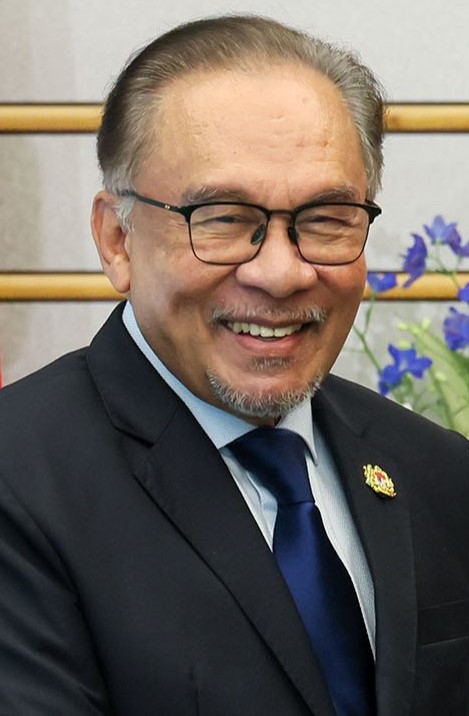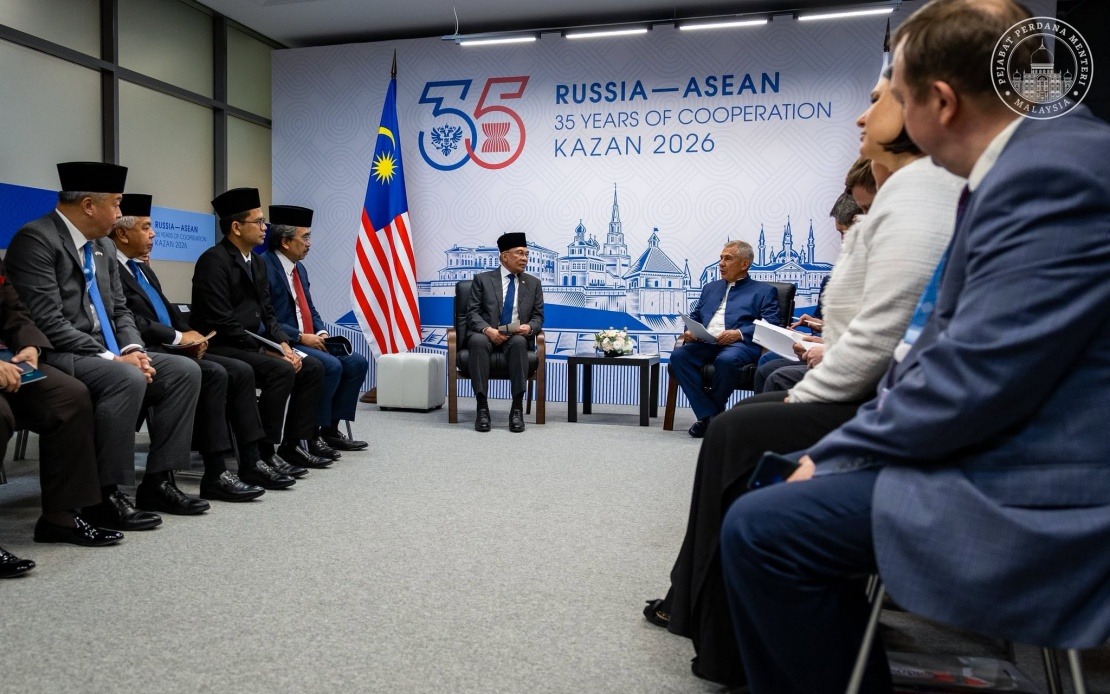
Prime Minister Datuk Seri Anwar Ibrahim has signalled Malaysia's readiness to deepen institutional and commercial ties with the Republic of Tatarstan, identifying multiple sectors ripe for collaborative growth. The Malaysian leader met with Rustam Minnikhanov, the Rais (Head) of Tatarstan, shortly after arriving in Kazan on Tuesday for the ASEAN-Russia Commemorative Summit. The bilateral engagement reflected both governments' recognition that substantial untapped potential exists across diverse domains including trade infrastructure, foreign direct investment, tertiary education partnerships, visitor arrivals, halal certification frameworks, cutting-edge technologies and workforce capacity building.
Energy cooperation emerged as a centrepiece of discussions between Anwar and Minnikhanov, a logical priority given Tatarstan's standing as one of Russia's premier oil-producing jurisdictions. The Prime Minister outlined Malaysia's specific interest in collaborating along the entire hydrocarbon value chain, extending beyond upstream extraction to encompass downstream refining operations and petrochemical manufacturing. Such partnerships would allow Malaysian enterprises to access technical expertise and investment capital from a region with decades of operational experience in complex energy projects, whilst simultaneously offering Tatarstan pathways into Southeast Asian markets and downstream processing capabilities.
The conversation also touched upon the Kazan Forum's potential as a platform for strengthening business relationships and catalysing fresh opportunities in innovation-driven sectors. Both leaders recognised that the digital economy and strategic investments represent frontier areas where Malaysia's technology-literate workforce and entrepreneurial ecosystem could combine productively with Russia's scientific capabilities and resource wealth. Anwar underscored his optimism that these discussions would translate into tangible mutual benefits flowing to citizens and economic stakeholders across both territories.
Anwar took the opportunity to acknowledge Kazan's recent designation as the Islamic World Cultural Capital 2026 by the Islamic World Educational, Scientific and Cultural Organisation, a recognition that positions the city as a significant intellectual and cultural hub within the global Muslim community. This accolade reflects Kazan's centuries-long tradition as a centre of Islamic scholarship, artistic expression and technological advancement. The designation carries symbolic weight for Malaysia, which has itself cultivated a brand as a moderate Islamic nation capable of bridging diverse civilisational perspectives. The two countries' mutual embrace of Islamic values alongside progressive development creates natural common ground for cooperation.
Anwar additionally expressed appreciation for Russian President Vladimir Putin's vision in establishing the Strategic Vision Group, which functions as a critical dialogue mechanism between Russia and Islamic-majority nations. This institutional framework has proven instrumental in fostering substantive engagement on matters of mutual concern and in building confidence between Moscow and the wider Islamic world. For Malaysia, participation in such structures offers avenues to advance Southeast Asian interests and to articulate the region's distinctive approach to balancing Islamic identity with secular governance principles.
The Prime Minister's two-day working visit underscores Malaysia's sustained commitment to the ASEAN-Russia relationship, which has evolved markedly over three decades. Since establishing dialogue relations in 1991, the partnership has gained formal momentum through Russia's elevation to full ASEAN Dialogue Partner status in 1996 and the subsequent designation as a Strategic Partnership in 2018. These progressive upgrades testify to both parties' determination to broaden cooperation spanning political security frameworks, economic integration and socio-cultural exchanges.
Anwar travelled to Kazan accompanied by a delegation reflecting Malaysia's multisectoral engagement strategy. Investment, Trade and Industry Minister Datuk Seri Johari Abdul Ghani's presence signalled focus on commercial dimensions, whilst Economy Minister Akmal Nasrullah Mohd Nasir represented macroeconomic policy perspectives. Supporting officials from the Prime Minister's Office and Foreign Ministry rounded out the team, enabling coordinated diplomacy across institutional boundaries.
Kazan itself presents an intriguing backdrop for such high-level diplomatic engagement. Situated approximately 800 kilometres east of Moscow at the confluence of the Volga and Kazanka rivers, the city commands a population exceeding 1.3 million inhabitants and frequently attracts the informal designation of Russia's "third capital" after Moscow and Saint Petersburg. Its significance extends well beyond demographic metrics; the city boasts a history spanning more than a millennium and functions as one of Russia's paramount repositories of Islamic cultural and architectural heritage, making it a natural venue for discussions emphasising Muslim-majority nations' partnerships.
The ASEAN-Russia Commemorative Summit, which commenced following Anwar's arrival, constitutes the highest-level diplomatic platform binding the ten-nation Southeast Asian bloc with Moscow. The convening of such summits reflects the deepening maturity of relations that have transcended Cold War-era compartmentalisation to encompass multidimensional cooperation frameworks. For Malaysia specifically, engagement at this summit level offers opportunities to advocate for ASEAN's collective interests whilst simultaneously pursuing bilateral advancement with major powers.
The timing of Malaysia's overtures toward Tatarstan carries strategic significance within the contemporary geopolitical landscape. As global energy transitions accelerate and supply chain resilience becomes increasingly critical, diversifying partnerships with hydrocarbon-producing regions provides insurance against concentration risk. Simultaneously, Malaysia's positioning as a gateway to Southeast Asian markets and Islamic world audiences renders it an attractive partner for Russian regional interests, potentially unlocking reciprocal commercial opportunities that benefit Malaysian enterprises seeking upstream financing or technology transfer arrangements.
From a Southeast Asian perspective, Malaysia's proactive diplomatic engagement with Russia and its constituent regions reinforces ASEAN's non-aligned orientation and multi-vectored foreign policy approach. By cultivating substantive relationships across traditional geopolitical divides, Malaysia demonstrates the region's capacity to navigate contemporary great power competition whilst preserving autonomy and pursuing development imperatives. The emphasis on halal industries, Islamic cultural frameworks and technology partnerships further reflects how Malaysia articulates a distinctly Southeast Asian brand of engagement, grounded in local values yet globally competitive.
The discussions between Anwar and Minnikhanov ultimately exemplify the pragmatic diplomacy increasingly characteristic of Malaysian statecraft. Rather than abstract solidarity, both leaders identified concrete sectoral opportunities where institutional capacity, resource endowments and market access align to generate sustainable mutual advantage. Whether culminating in formal trade agreements, joint ventures in petrochemicals, or educational exchange programmes, such engagement expands Malaysia's strategic options whilst positioning Kazan as more than a distant Russian city—rather, as an emerging node within Malaysia's expanding global economic and cultural networks.