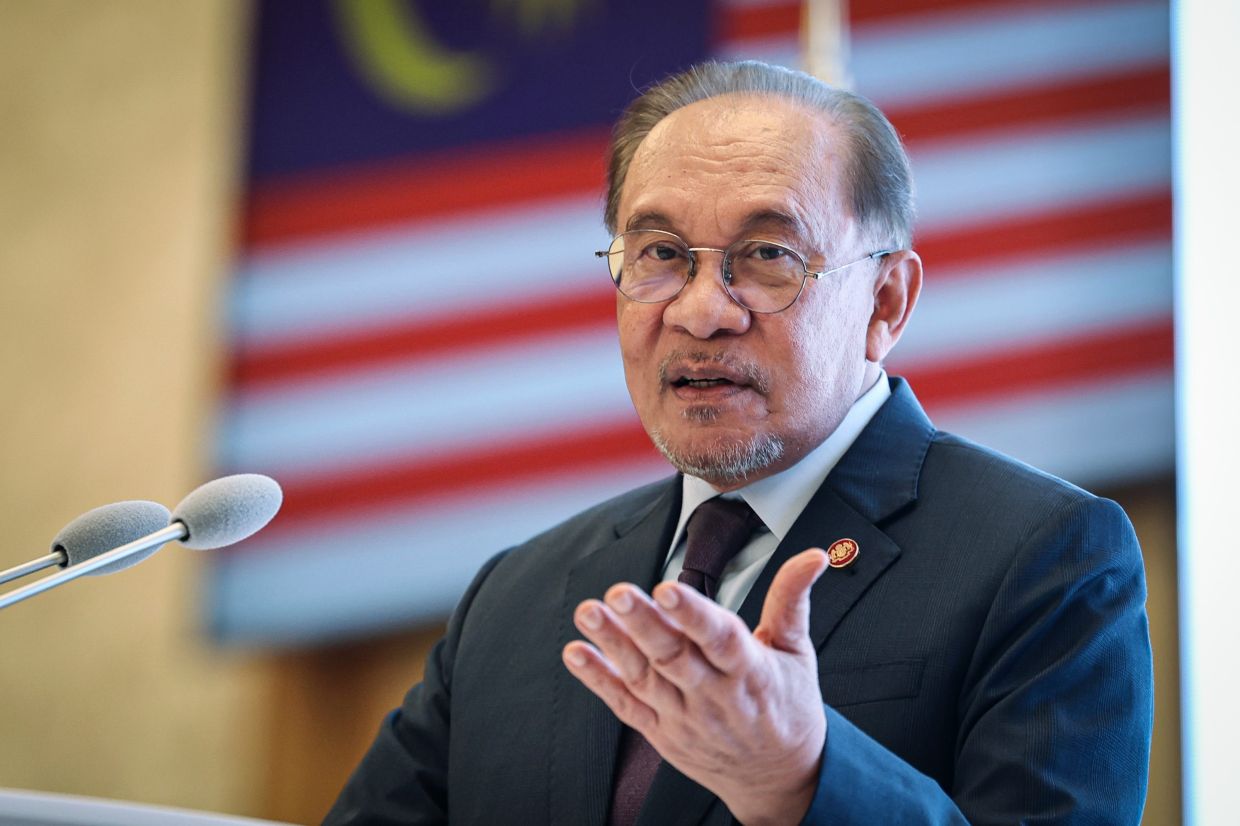
Prime Minister Datuk Seri Anwar Ibrahim has signalled that Malaysia and Singapore are moving toward completing the master plan for the Johor-Singapore Special Economic Zone (JS-SEZ) in the coming months. The announcement came after Anwar held discussions with Singapore President Tharman Shanmugaratnam during the latter's three-day state visit to Malaysia from July 13 to 15, an engagement that underscored the strategic importance both nations place on deepening their economic cooperation.
The JS-SEZ represents one of the most significant bilateral infrastructure and economic initiatives between Malaysia and Singapore in recent years, designed to create a competitive regional hub that leverages the complementary strengths of both economies. By combining Singapore's financial expertise, advanced logistics capabilities, and technological infrastructure with Johor's land availability and lower operational costs, the zone aims to attract multinational corporations and generate substantial employment opportunities across the border region. The completion of a comprehensive master plan is essential to translating this vision into actionable development frameworks that can guide investment decisions and resource allocation.
Anwar, who concurrently serves as Malaysia's finance minister, indicated that substantive progress has already been achieved on the initiative, suggesting that the foundational groundwork and technical negotiations are advancing smoothly. The timing of this announcement during a presidential state visit—an event of considerable diplomatic weight in Southeast Asia—reflects the seriousness both governments accord to the project. Such high-level engagement typically signals that outstanding contentious issues may have been resolved or are within reach of compromise.
Beyond the JS-SEZ specifically, Anwar emphasised that the courtesy call provided an opportunity to discuss the broader Malaysia-Singapore bilateral relationship and regional developments affecting both nations. The two leaders exchanged perspectives on matters of mutual concern, including trade dynamics, security cooperation, and the evolving geopolitical landscape in Southeast Asia. This comprehensive dialogue approach indicates that both countries view their relationship not in isolation but as interconnected across multiple domains.
The Prime Minister noted that discussions touched on positive movement in resolving several long-standing issues between the two countries. Malaysia and Singapore have faced periodic tensions over maritime boundaries, water agreements, and other historical disputes. The emphasis on progress in addressing these matters suggests that a climate of constructive engagement may be taking root, creating space for breakthrough outcomes. Anwar's framing of these developments in terms of "outstanding matters" rather than persistent grievances indicates a solution-oriented approach to bilateral problem-solving.
Both leaders reaffirmed their commitment to continue addressing remaining issues through negotiation rather than confrontation, guided by principles of mutual respect and shared understanding that the two nations have jointly endorsed. This language reflects a deliberate diplomatic strategy emphasising process over ultimatums—a recognition that sustainable bilateral relations require patience, compromise, and consistent engagement. For Malaysia and Singapore, which are deeply interdependent economically and geographically, such an approach is essential to maintaining stability in one of Asia's busiest maritime and trading corridors.
Anwar expressed hope that the Malaysia-Singapore relationship will continue strengthening, anchored in trust, mutual respect, and tangible benefits for ordinary citizens on both sides. This focus on shared prosperity represents an evolution in how bilateral relationships in Southeast Asia are framed—moving beyond traditional security concerns to emphasise economic wellbeing and quality of life for populations. The reference to the "wellbeing of the people of both countries" suggests that development initiatives like the JS-SEZ are ultimately intended to create jobs, improve incomes, and enhance living standards across the Johor-Singapore border region.
For Malaysia, the JS-SEZ represents a critical opportunity to boost Johor's economic profile and attract capital investment that might otherwise gravitate toward other regional hubs. Johor has substantial demographic advantages—a young, relatively skilled workforce—but has historically struggled to compete with Singapore's established reputation as a financial and trading centre. A well-designed special economic zone could help bridge this gap by offering investors a hybrid proposition: lower costs and operational flexibility within a framework of strong governance and infrastructure.
Singapore, for its part, sees value in developing its immediate hinterland. Space constraints and rising costs have made Singapore increasingly interested in spreading certain economic functions into surrounding territories, particularly in labour-intensive sectors. The JS-SEZ offers Singapore an outlet for manufacturing and processing activities while maintaining quality controls and supply chain efficiency. This symbiotic arrangement has proven successful in other cross-border zones globally, from the China-Hong Kong nexus to the Shenzhen experiments.
The finalisation of a master plan will likely include provisions for governance structures, regulatory frameworks, infrastructure investment timelines, and dispute resolution mechanisms. Such documents typically specify which government agency holds authority over specific functions, how customs procedures will operate, what incentive schemes will apply to investors, and how disputes between the two nations regarding zone operations will be arbitrated. These granular details are essential for instilling investor confidence and ensuring the zone operates efficiently once launched.
Regionally, the JS-SEZ's progress reflects the broader trend toward closer economic integration among ASEAN members and their dialogue partners. As global supply chains reconfigure in response to geopolitical tensions and climate considerations, Southeast Asian nations are positioning themselves as alternative manufacturing and logistics hubs. A robust JS-SEZ could enhance Malaysia and Singapore's collective competitiveness in attracting these flows of investment and commerce.
The next phase will likely involve more detailed design work, infrastructure assessments, and consultations with relevant state and national authorities in Malaysia. Singapore's government structures are more centralised, making decision-making potentially swifter, but Malaysia must navigate federal and state considerations given that Johor is the site. This complexity, while potentially slowing the process, ensures that local stakeholders have adequate voice in shaping outcomes that will fundamentally affect their communities. The finalisation timeline, while described as "near future," likely spans several more months to account for these necessary deliberations.

