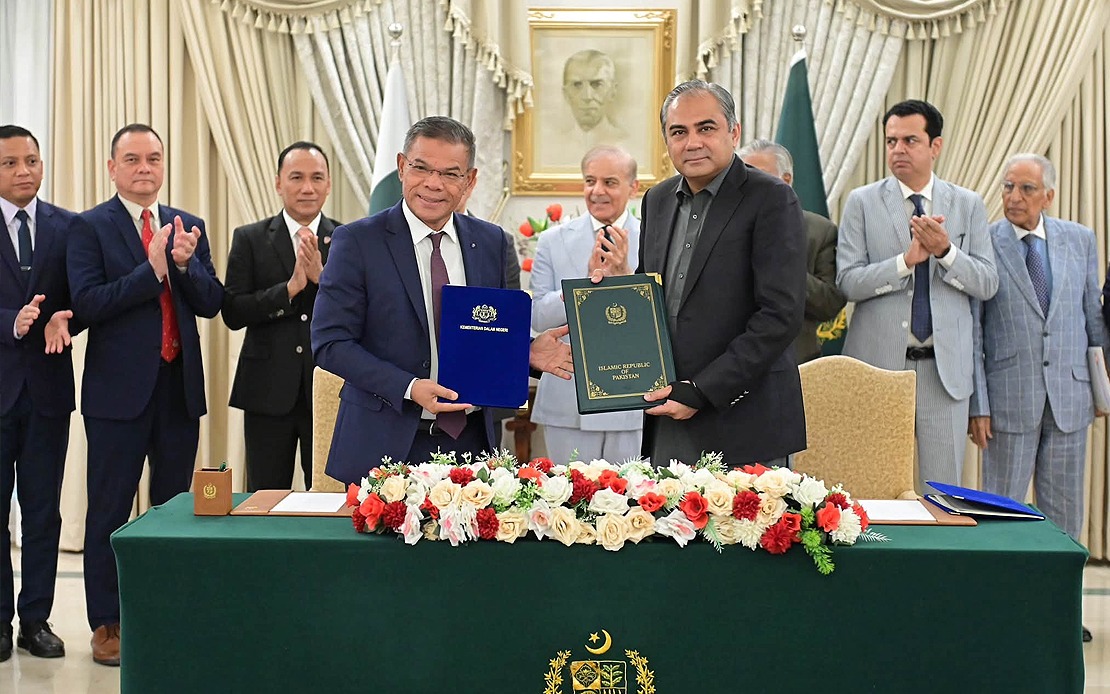
Malaysia and Pakistan have taken a major step in deepening their security and legal partnership by signing the International Transfer of Prisoners Treaty, with Home Minister Datuk Seri Saifuddin Nasution Ismail and Pakistan's Interior and Narcotics Control Minister Syed Mohsin Raza Naqvi executing the agreement at Pakistan's Prime Minister's Office. The formal signing, witnessed by Pakistan Prime Minister Muhammad Shehbaz Sharif, represents a culmination of intensive diplomatic efforts and reflects the commitment both nations have demonstrated towards expanding their cooperation framework in matters affecting their citizens abroad.
The treaty represents the fruits of a lengthy negotiation process that commenced in September 2025, involving multiple Malaysian government agencies working in concert to finalise the agreement's terms. The Home Ministry, Foreign Ministry, Attorney General's Chambers, Malaysian Prisons Department, and Royal Malaysia Police all contributed to the five rounds of discussions that ultimately produced the final text. Malaysia's Cabinet formally endorsed the treaty on May 13, clearing the way for its international signing and subsequent implementation.
At its core, the treaty addresses a longstanding challenge facing both nations: the situation of nationals imprisoned abroad who lack ready access to their home country's support systems and cultural environment. Under the ITOP framework, Malaysian citizens currently serving prison sentences in Pakistan will now have the option to be transferred back to Malaysia to complete their remaining sentence duration. Similarly, Pakistani nationals imprisoned in Malaysia may request repatriation to serve out their sentences in their home country.
Saifuddin Nasution emphasised that this bilateral arrangement extends beyond mere prisoner logistics, offering substantive benefits to incarcerated individuals seeking rehabilitation. By enabling prisoners to serve their sentences within their native country, the treaty creates conditions more conducive to personal reformation and reintegration into society. Access to rehabilitation programmes tailored to each nation's correctional philosophy and cultural context becomes more feasible, potentially improving outcomes for both the prisoners themselves and their eventual return to their communities.
The signing ceremony carried particular symbolic weight given Pakistan's geopolitical significance to Malaysia's regional strategy. Prime Minister Shehbaz Sharif's presence at the ceremony underscored the high-level political importance both nations attach to deepening their relationship. For Malaysia, the agreement demonstrates its willingness to engage constructively with key South Asian partners on issues of mutual concern, contributing to Malaysia's broader positioning within regional security frameworks that extend beyond Southeast Asia.
From Malaysia's perspective, the treaty addresses practical concerns about citizen welfare and consular protection obligations. Malaysian authorities have long grappled with cases of nationals detained in various countries, often facing challenges in ensuring appropriate treatment and access to legal assistance. By establishing reciprocal transfer mechanisms with Pakistan, Malaysia gains a structured pathway for addressing such cases, while simultaneously honouring international norms regarding humane treatment of prisoners.
The bilateral relationship between Malaysia and Pakistan has historically been marked by strong cultural and religious ties, with substantial Malaysian diaspora communities and investment links connecting the two nations. This treaty extends that foundational relationship into the realm of criminal justice cooperation, treating it as a natural extension of their broader partnership. Both countries recognise that managing the welfare of their respective citizens abroad forms an integral part of modern diplomatic relations.
For Malaysian readers with family members or professional connections in Pakistan, or vice versa, the treaty provides important assurances about the treatment of any nationals who might face legal difficulties. The framework ensures that incarceration abroad need not mean permanent isolation from home country support systems and rehabilitation resources. This reflects evolving international standards regarding prisoners' rights and the recognition that successful rehabilitation often depends on cultural and familial connections.
The treaty also signals Malaysia's commitment to developing comprehensive bilateral agreements that address contemporary transnational challenges. Beyond prisoner transfers, such agreements typically create institutional frameworks for sharing best practices in corrections management, judicial cooperation, and law enforcement coordination. These ancillary benefits often prove as valuable as the primary mechanism outlined in the treaty text.
Implementation of the treaty will require coordination between Malaysia's Prisons Department and its Pakistani counterpart, establishing protocols for evaluating transfer requests, managing the physical movement of prisoners, and ensuring continuity of judicial oversight. Both nations will need to develop administrative procedures that respect each other's sovereignty while facilitating the intended transfers. Saifuddin Nasution's engagement with Pakistan's Interior Minister suggests that such implementation machinery is already receiving high-level attention.
The timing of this treaty also reflects broader regional trends toward comprehensive bilateral cooperation. Southeast Asian nations increasingly recognise that security partnership extends beyond traditional military and intelligence domains into areas like judicial cooperation, prisoner welfare, and law enforcement coordination. Malaysia's move with Pakistan exemplifies this expanding conception of security cooperation that characterises contemporary international relations.
Looking forward, this treaty may serve as a template for similar arrangements Malaysia might pursue with other nations hosting significant Malaysian populations or where Malaysian citizens have faced imprisonment. The successful conclusion of negotiations with Pakistan demonstrates that Malaysia possesses the diplomatic capability and institutional capacity to manage such complex negotiations involving multiple agencies and legal frameworks.
Saifuddin Nasution characterised the treaty as another legal instrument strengthening the decades-long Malaysia-Pakistan relationship, emphasising its reflection of both nations' commitment to expanding cooperation that delivers tangible benefits to their peoples. This framing positions prisoner transfers not as a peripheral concern but as an integral component of comprehensive bilateral partnership, setting expectations for continued deepening of ties across multiple governance domains in the years ahead.

