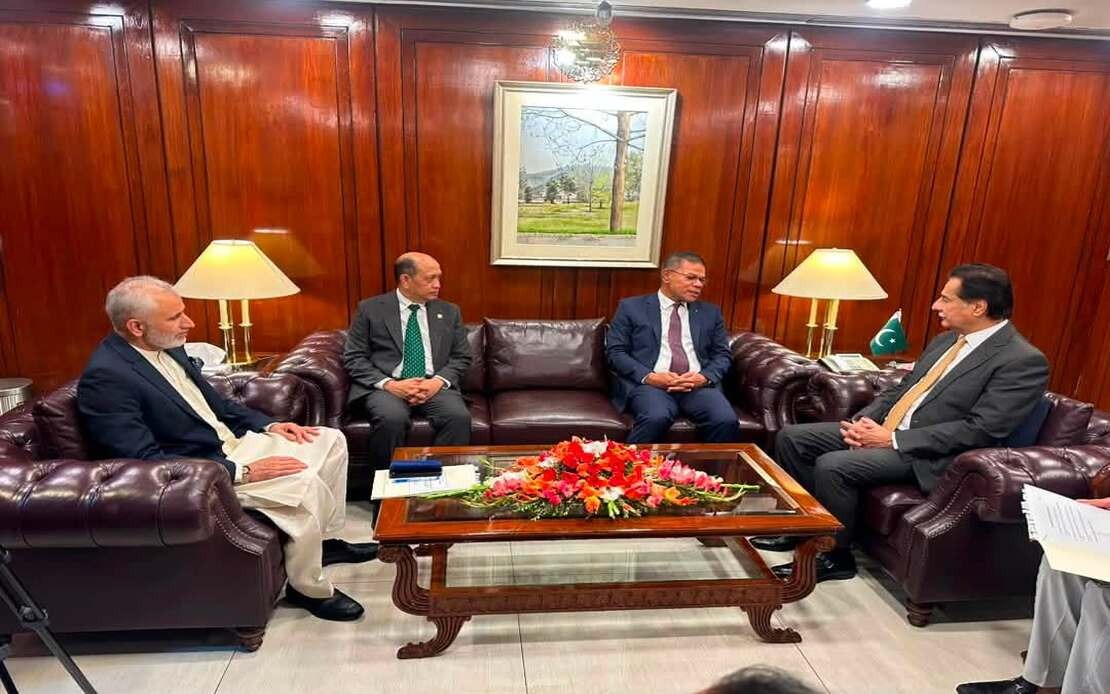
Malaysia and Pakistan have reaffirmed their mutual dedication to resolving contemporary geopolitical tensions and security concerns through sustained dialogue and peaceful engagement, according to discussions held during Home Minister Datuk Seri Saifuddin Nasution Ismail's official visit to Islamabad. The commitment reflects a broader strategic alignment between the two nations as they navigate an increasingly complex regional landscape marked by competing interests and territorial disputes across Asia.
During the second day of his diplomatic mission to the Pakistani capital, Saifuddin Nasution held substantive conversations with Sardar Ayaz Sadiq, Speaker of Pakistan's National Assembly, and separately with Syed Yousaf Raza Gilan, Chairman of the Senate. These high-level interactions provided a platform for both nations to articulate their respective approaches to managing regional stability and addressing emerging security concerns that threaten prosperity across South and Southeast Asia.
The Malaysian Home Minister drew particular attention to how ASEAN has successfully employed constructive engagement and multilateral dialogue frameworks to maintain peace within the region. This reference carries significance for Pakistan, which has grappled with its own internal conflicts and cross-border tensions. By showcasing ASEAN's model of regional cooperation, Malaysia implicitly offered insights into how institutional frameworks can transform potential conflicts into managed relationships that prioritise economic development and shared prosperity over zero-sum competition.
Beyond security concerns, the discussions encompassed the deeper bilateral relationship between Kuala Lumpur and Islamabad, which rests on foundational elements of mutual respect, historical trust, and enduring cultural bonds linking the populations of both nations. These people-to-people connections serve as vital anchors for official relations, particularly during periods when international circumstances become turbulent. The emphasis on these human dimensions underscores that Malaysia-Pakistan ties extend well beyond transactional political and economic interests.
Parliamentary diplomacy emerged as a central theme during Saifuddin Nasution's engagement with Pakistan's legislative institutions. The discussions highlighted the potential for expanded cooperation between the parliamentary bodies of both countries, recognising that legislators and institutional representatives often function as quiet architects of bilateral understanding. Such parliamentary exchanges can facilitate greater transparency, cultural awareness, and people-to-people familiarity that sometimes exceed what traditional diplomatic channels achieve.
The Home Minister's visit to Pakistan's Parliament Museum provided symbolic and substantive value to his mission. Examining the evolution of Pakistan's constitutional framework and parliamentary institutions offered Malaysia's delegation tangible insight into how democratic institutions have developed in the South Asian context. This educational component reflects a recognition that understanding each nation's political history and institutional development strengthens contemporary diplomatic engagement by building informed mutual respect.
Saifuddin Nasution's characterisation of Malaysia-Pakistan relations as a "strong and longstanding friendship" encapsulates a relationship that has weathered multiple regional transformations since both nations' independence. The relationship encompasses shared Islamic heritage, overlapping strategic interests in maritime security, and mutual concerns about terrorism and transnational crime. For Malaysia, Pakistan represents a significant partner in Islamic affairs and represents a bridge to broader Muslim-majority nations and organisations.
The timing of this diplomatic engagement assumes particular relevance given the current global environment, where traditional multilateral frameworks face strain and regional actors increasingly pursue unilateral approaches to security challenges. By emphasising dialogue and diplomatic solutions, both Malaysia and Pakistan position themselves as voices advocating for measured, institutionalised responses to geopolitical competition rather than militarised confrontation.
For Malaysian observers, Saifuddin Nasution's mission signals that ASEAN's principles of non-interference, peaceful resolution of disputes, and dialogue-based problem-solving retain currency beyond Southeast Asia. The message to regional and international partners is that Malaysia continues championing institutional frameworks and cooperative mechanisms as superior alternatives to escalation. This stance aligns with Malaysia's broader foreign policy orientation and its commitment to the ASEAN Way, even as that approach faces criticism from some quarters for being insufficiently assertive.
The exchanges also underscore the importance of leadership-level engagement in maintaining and deepening bilateral relationships. Such visits, though sometimes overshadowed by high-profile international summits, provide crucial opportunities for officials to develop personal relationships, clarify strategic intentions, and identify areas for expanded cooperation. For Pakistan, engagement with a respected ASEAN voice like Malaysia reinforces its own commitment to regional stability and dialogue-based solutions.
The discussions reflected an implicit acknowledgment that geopolitical challenges require sustained, patient diplomacy rather than quick fixes. Both nations recognised that parliamentary institutions, when engaged in international dialogue, can contribute to building societies with deeper mutual understanding and reduced susceptibility to nationalist rhetoric that might otherwise derail diplomatic progress.
Moving forward, the expansion of parliamentary exchanges and continued high-level visits between Malaysian and Pakistani officials promise to deepen institutional connections and broaden the foundation of bilateral cooperation. Such engagement creates multiple channels for communication that can prove invaluable if bilateral issues arise, ensuring that differences are addressed through established relationships rather than through the media or public confrontation.
Ultimately, Malaysia and Pakistan's emphasis on dialogue amid geopolitical turbulence represents a conscious choice to resist pressures toward militarisation and confrontation. For Malaysia, this approach validates the ASEAN model globally while simultaneously strengthening strategic relationships with key partners beyond Southeast Asia. The mutual commitment to peaceful solutions and institutional engagement offers a template that other regional actors might usefully consider as they navigate an increasingly multipolar international system.

