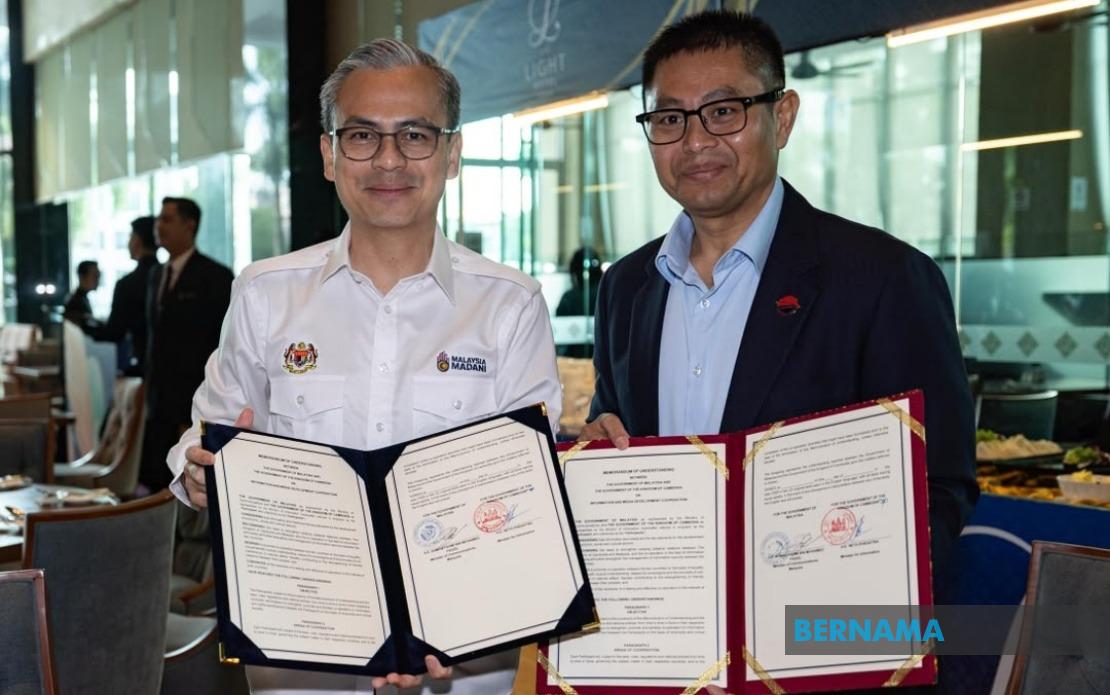
Malaysia and Cambodia have taken a significant step to deepen their bilateral relationship through a formal memorandum of understanding focused on media and information development. Communications Minister Datuk Fahmi Fadzil signed the agreement on behalf of Malaysia in Butterworth on June 20, while Cambodian Information Ministry's Under Secretary of State, Prak Thaveak Amida, executed the document for Cambodia's Information Minister Neth Pheaktra. The signing represents a deliberate effort by both governments to foster closer institutional ties within their respective media ecosystems and to create structured mechanisms for sustained collaboration.
The scope of the partnership encompasses an ambitious range of cooperation areas that reflect the complexity and breadth of modern media operations. The two nations have committed to facilitating the exchange of news and information, coordinating radio and television broadcasting initiatives, and collaborating on printing and publishing ventures. Beyond traditional media formats, the agreement specifically addresses contemporary challenges including media cybersecurity, the development of information policy frameworks, and the harmonisation of regulatory practices. The inclusion of film and documentary production alongside digital security considerations demonstrates recognition that media development in Southeast Asia must balance cultural expression with technological protection.
Human capital development forms a crucial pillar of the partnership, highlighting both countries' understanding that sustainable media transformation depends on investing in professional expertise. The agreement creates pathways for journalists, broadcasters, technicians, and media managers from Malaysia and Cambodia to exchange knowledge and best practices, fostering cross-border professional networks. This dimension carries particular significance for Cambodia, where the media sector has undergone substantial evolution in recent years, and where engagement with established Southeast Asian media institutions can accelerate institutional capacity-building. Malaysian expertise in broadcast regulation, news standards, and digital media operations can inform Cambodia's ongoing sectoral development.
The timing of this agreement, announced during the National Journalists' Day celebrations at the PICCA convention centre, underscores both governments' commitment to elevating the profile of professional journalism within their societies. The event, themed around media integrity and credibility, attracted approximately one thousand local and foreign media practitioners and provided a prominent platform for showcasing the bilateral accord. Prime Minister Datuk Seri Anwar Ibrahim's scheduled presence at the proceedings, alongside Penang Chief Minister Chow Kon Yeow and senior officials from Malaysia's National News Agency, demonstrated the governmental priority attached to media development as a cornerstone of democratic and economic stability.
From a Southeast Asian perspective, this partnership reflects broader regional trends toward institutionalising media cooperation within the Association of Southeast Asian Nations framework. Media literacy, information security, and journalistic standards have become increasingly important in an era of digital misinformation and geopolitical competition over information narratives. Malaysia, as a regional media hub with established broadcasting infrastructure and publishing traditions, brings institutional capacity that benefits emerging media markets in the region. Simultaneously, Cambodia's engagement offers Malaysian media organisations insights into developing market dynamics and cross-cultural storytelling approaches that enhance regional content diversity.
The agreement's emphasis on innovation in media and broadcasting positioning both nations at the forefront of technological adoption within ASEAN's communications landscape. As streaming platforms, artificial intelligence, and digital distribution channels reshape global media consumption, bilateral frameworks enabling joint research, technology transfer, and innovation sharing become strategically valuable. Malaysian expertise in digital platform regulation and Cambodia's experience navigating rapid technological adoption create complementary strengths that can generate practical solutions applicable across Southeast Asia.
The partnership also addresses information policy coordination, a dimension increasingly critical as governments worldwide grapple with fake news, disinformation campaigns, and the tension between media freedom and national security concerns. By establishing dialogue mechanisms around information policy development, Malaysia and Cambodia create opportunities to align their regulatory approaches where beneficial while respecting each nation's sovereign policy choices. This collaborative approach to information governance differs markedly from unilateral regulatory imposition and suggests both governments value consensual frameworks over coercive measures.
For Malaysian media organisations, the agreement opens commercial and editorial opportunities in the Cambodian market, a nation of approximately seventeen million people undergoing rapid economic development and digital infrastructure expansion. Cambodian audiences increasingly consume diverse content sources, and Malaysian broadcasters and publishers bring established production capabilities and editorial standards that appeal to growing middle-class demographics. Conversely, Malaysian outlets gain exposure to Southeast Asian storytelling approaches and regional perspectives that enrich domestic editorial offerings.
The memorandum's establishment of a formal cooperation platform suggests both nations anticipate ongoing engagement beyond the initial signing ceremony. Such frameworks typically include regular ministerial consultations, working group meetings focused on specific sectors, and mechanisms for addressing implementation challenges. The inclusion of Bernama, Malaysia's national news agency, and presumably equivalent Cambodian institutions within the operational structure indicates these agreements will translate into concrete institutional relationships rather than remaining purely aspirational diplomatic gestures.
This development carries implications for Southeast Asian media pluralism and professional standards more broadly. When established media systems extend cooperation to neighbouring nations experiencing media sector transitions, opportunities emerge for strengthening journalism ethics, promoting investigative reporting capabilities, and supporting editorial independence. The agreement's framing around media integrity aligns with international efforts to combat journalistic decline and professionalise media operations across developing economies.
Looking forward, the Malaysia-Cambodia media partnership may serve as a template for similar bilateral arrangements within ASEAN, particularly involving nations with more developed media infrastructure engaging with those undergoing sectoral transformation. The agreement demonstrates that media cooperation need not compete with national security concerns or governmental information priorities but rather can complement them through structured, transparent mechanisms respecting both parties' interests and sovereignty.

