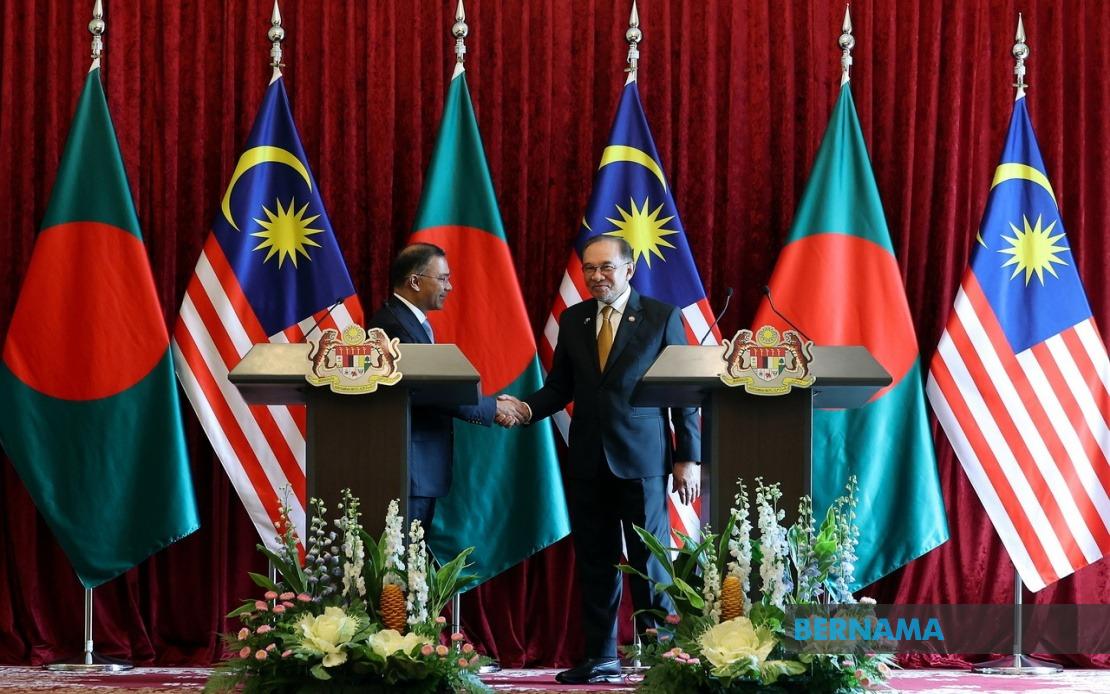
Prime Minister Datuk Seri Anwar Ibrahim and visiting Bangladesh Prime Minister Tarique Rahman have reaffirmed their governments' commitment to eliminating the exploitation and mistreatment of migrant workers, signalling a fresh push to address longstanding humanitarian concerns in the region's labour market. The two leaders made the declaration during a joint press conference in Putrajaya on June 22, underscoring that despite foreign workers remaining economically vital to Malaysia's development, their safety and dignity must be non-negotiable priorities.
Anwar highlighted that while human resource cooperation has been essential to Malaysia's economic survival, the labour migration system has simultaneously generated considerable scandal and humanitarian concern. He acknowledged that both nations have privately discussed the urgent need to curtail abuses within the system and implement reforms that meet rigorous standards for transparency and fairness. The Prime Minister stressed that Malaysia and Bangladesh must lead regional efforts to prevent such excesses, ensuring that recruitment processes are conducted openly and comply with the requirements of both countries.
The emphasis on protecting workers and their families reflects growing international pressure on Malaysia to address documented cases of abuse, wage theft, and poor working conditions that have long plagued its migrant labour sector. Foreign workers, predominantly from Bangladesh, Indonesia, Myanmar, and other South Asian countries, form a critical pillar of Malaysia's manufacturing, construction, agriculture, and domestic service industries. Yet their vulnerability to exploitation has attracted criticism from international human rights organisations, labour unions, and governments seeking to tighten oversight of recruitment and employment practices.
Tarique, on his part, presented Bangladesh's strategic interests, requesting that Malaysia consider expanding recruitment quotas for Bangladeshi workers. The Bangladesh Prime Minister also called for Malaysia to reopen its labour market to Bangladeshi citizens at the earliest opportunity, reflecting Dhaka's concerns about maintaining strong remittance flows from Malaysian-based workers. Bangladesh depends significantly on remittances from overseas workers, with millions of citizens employed abroad sending vital funds home that support families and contribute to national economic stability.
The bilateral discussion highlights a delicate balance that both nations must navigate. Malaysia requires substantial numbers of migrant workers to sustain its competitive edge in labour-intensive sectors, yet faces mounting international scrutiny over worker treatment. Bangladesh, conversely, has a powerful incentive to secure more opportunities for its citizens abroad, knowing that employment in Malaysia provides superior wages compared to domestic opportunities. This creates a shared interest in developing recruitment systems that genuinely protect workers while remaining economically viable for employers.
Recent years have seen multiple investigative reports documenting systemic abuses within Malaysia's migrant worker ecosystem. Complaints range from recruitment agents charging excessive fees that trap workers in debt bondage, to employers confiscating identification documents, restricting movement, and withholding wages. These practices have prompted action from labour-sending countries, with India and Myanmar at various points implementing recruitment restrictions or bans. Bangladesh has also expressed frustration over cases involving its nationals, making the timing of this high-level agreement significant.
Anwar's call for a more transparent and fair recruitment system aligns with Malaysia's stated policy direction under his administration. The government has previously pledged to strengthen labour law enforcement, enhance inspections of worksites, and improve access to grievance mechanisms for migrant workers. Implementation, however, remains inconsistent, with enforcement agencies often hampered by limited resources and the complexity of addressing violations across multiple sectors and states. The involvement of private recruitment agents further complicates oversight, as many operate in grey areas of regulation.
For Malaysia's economy, maintaining a stable and ethical labour migration system carries substantial strategic weight. The manufacturing sector, which depends heavily on foreign workers for assembly and production lines, faces potential disruptions if labour-sending countries impose restrictions. Similarly, the construction industry's ability to meet project timelines and the domestic care sector's capacity to serve elderly Malaysians both rest on sustained migrant worker availability. Conversely, reputational damage from labour abuses can trigger diplomatic tensions and create uncertainty for businesses reliant on foreign labour.
The agreement between Malaysia and Bangladesh also carries broader implications for Southeast Asia's labour migration framework. As the region's largest economies navigate the complexities of labour mobility, their approach influences smaller nations and sets precedents for bilateral labour agreements. A genuine commitment to worker protection in the Malaysia-Bangladesh relationship could establish a model that other countries in the region might emulate, potentially lifting standards across borders.
Moving forward, the real test of this commitment will lie in concrete measures and sustained political will. Both governments must translate their statements into enforceable regulations, effective monitoring mechanisms, and adequate resources for labour inspectorates. This includes addressing the role of recruitment agents, establishing clearer pathways for workers to lodge complaints without fear of retaliation, and ensuring that wages and working conditions meet agreed standards. Additionally, Bangladesh may need to strengthen its own pre-departure orientation programmes to better prepare workers for the Malaysian employment environment.
The timing of this declaration also reflects broader shifts in Malaysia's labour market. As automation advances and domestic wage pressures mount, Malaysia faces pressures to rely less on low-skill migrant workers in some sectors while potentially increasing demand in others. This structural shift underscores why a transparent and fair system is increasingly important—it allows for better planning and ensures that migration serves genuine economic needs rather than simply undercutting local wages or enabling exploitation.
For Malaysian employers and workers alike, clearer recruitment standards and stronger oversight could paradoxically prove beneficial. Reputable companies gain competitive advantages when operating in transparent, regulated environments where labour conditions are comparable across competitors. Malaysian workers, meanwhile, face pressure from migrant labour competition; improving migrant worker conditions narrows incentives for employers to substitute local workers with vulnerable foreign labour willing to accept below-standard terms.
Ultimately, the Malaysia-Bangladesh agreement represents a diplomatic acknowledgement of shared responsibility for labour rights in an economically interdependent relationship. Its success will depend on whether both governments can follow through with institutional reforms, adequate funding, and sustained commitment beyond rhetoric. For the hundreds of thousands of Bangladeshi workers currently in Malaysia, and the potentially many more who may arrive, the difference between promise and practice will determine whether this agreement meaningfully improves their working lives.

