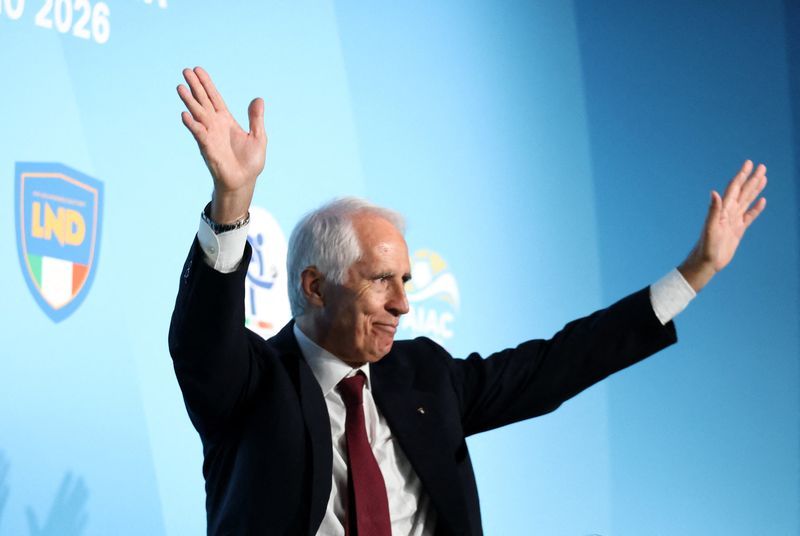
Giovanni Malago has assumed control of Italian football at perhaps its lowest point in four decades, winning election as president of the Federazione Italiana Giuoco Calcio on Monday with 68.58% of the vote. The 67-year-old businessman enters the role amid unprecedented turmoil following Italy's shock playoff elimination by Bosnia & Herzegovina in April, marking the nation's third consecutive failure to reach the World Cup—a sequence of disappointments that has sent shockwaves through a sporting culture built on four world championships and decades of excellence.
Malago brings managerial credentials from his recent stewardship of the Milano Cortina Winter Olympics organising committee, where he oversaw the February games with widespread appreciation for operational efficiency. His background as a former futsal player and previous tenure as head of the Italian National Olympic Committee position him as a figurehead capable of understanding the bureaucratic complexities facing Italian sport. Yet these accomplishments in winter sports administration pale against the magnitude of resurrecting a football federation that has become a source of national embarrassment rather than pride.
The outgoing federation chief, Gabriele Gravina, departed following a wave of fury from supporters and political leaders that transcended typical sports discourse. During the assembly meeting, the 72-year-old acknowledged his miscalculation, telling reporters he should have resigned considerably earlier. Gravina's six-year tenure, which began in 2018, coincided with Italy's European Championship victory in 2020, a moment that papered over deeper structural cracks emerging throughout the country's football infrastructure.
The collapse extends well beyond the men's national team. Italian clubs have simultaneously exited European competitions, creating a perfect storm of failure that has left the federation scrambling for legitimacy. This dual catastrophe underscores a systemic breakdown rather than isolated mismanagement. Youth development pipelines have deteriorated significantly, leaving the national team bereft of emerging talent capable of competing at the highest level. Former striker Roberto Baggio and other prominent figures within Italian football have publicly warned that the academy system designed decades ago no longer produces the quality of players necessary for contemporary international competition.
Malago's immediate agenda requires addressing several critical areas. Most pressing is appointing a successor to Gennaro Gattuso, who resigned following the playoff defeat. The selection of the next national team coach will serve as an early barometer of whether Malago intends genuine transformation or merely cosmetic changes. Beyond coaching, comprehensive reconstruction of youth pathways demands urgent attention, potentially requiring painful decisions about how academies operate and which young players receive development resources. These structural reforms typically take years to yield results, meaning Italian football faces an extended transition period before competitiveness can be reasonably expected.
The federation also must prepare for co-hosting the 2032 European Championship alongside Turkey, providing both an opportunity and a deadline for demonstrating progress. This tournament could serve as a proving ground for Malago's vision, though hosting capabilities matter less than fielding a competitive squad. The psychological challenge of rebuilding confidence among supporters, politicians, and federation staff simultaneously requires exceptional leadership. Malago acknowledged this burden during his election, stating he is not fearful but deeply conscious of responsibilities and the unreasonably elevated expectations surrounding the position.
For Malaysian and Southeast Asian observers, Italy's crisis offers instructive lessons about how quickly football infrastructure can deteriorate despite historical pedigree. Nations throughout the region investing in academy systems and youth development can study what went wrong in Italy—where reliance on legacy structures and failure to adapt to evolving tactical and physical demands in global football precipitated decline. The Asian context differs markedly, yet the principle remains constant: football excellence requires continuous investment and strategic evolution rather than resting on past achievements.
Malago's election statement emphasised that the federation "must not just administer; it must be a source of inspiration," positioning football as Italy's largest social institution beyond mere numerical terms. This framing reflects his understanding that Italian football transcends sport, embodying national identity and cultural values. Positioning roots and historical legacy not as nostalgia but as catalysts for ambitious future vision suggests Malago recognises the psychological dimension of reconstruction. Italian supporters must believe the federation's leadership can translate history into contemporary success rather than allowing past glory to become an anchor preventing progress.
The political dimension cannot be overlooked. Italy's failure to qualify for the World Cup generated rare consensus among competing political factions, all condemning the federation. This political pressure, while uncomfortable for administrators, creates both motivation and accountability. Malago must deliver tangible improvements in competitive results and administrative reform within a timeframe acceptable to an impatient nation and increasingly critical media landscape.
Central to Malago's strategy will be encouraging cooperation across fractious football constituencies. His post-election statement—"Alone I can do nothing, together we can do everything"—explicitly called for unity, recognising that federation authority alone cannot solve systemic problems. This requires buy-in from club directors, academy administrators, coaching staff, and regional football authorities throughout Italy's complex federation structure. Without broad-based commitment to reform, even decisive leadership from the presidency will struggle to reverse entrenched patterns.
Malago's task represents far more than resolving immediate crises. He must fundamentally reconceive Italian football's relationship with development, competition, and international standing. This transformation extends beyond hiring decisions or rule changes; it demands cultural recalibration within Italian sports institutions that have operated according to inherited models. Whether a 67-year-old administrator from outside traditional football circles can orchestrate such comprehensive change remains uncertain, but the federation's desperation suggests willingness to embrace unconventional approaches that more cautious leadership might have rejected.

