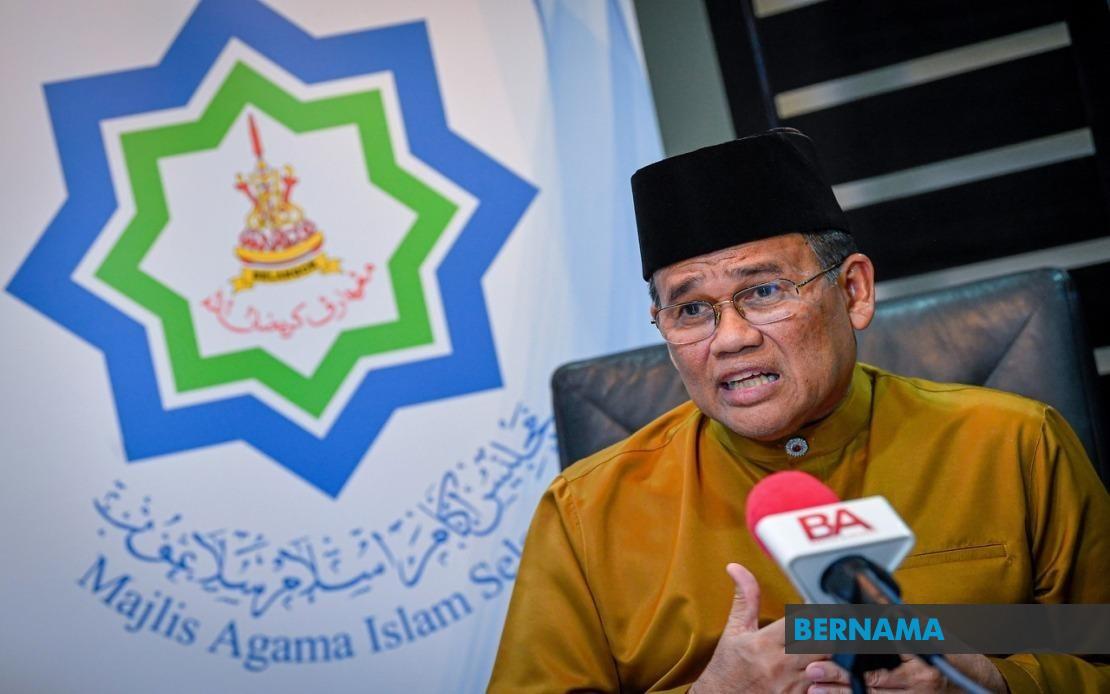
The Selangor Islamic Religious Council (MAIS) has called for an immediate assembly of key stakeholders to address escalating concerns over a burial delay incident at Ukay Perdana Muslim Cemetery in Hulu Kelang. The gathering will bring together the deceased's next of kin, officials from Masjid Nurul Hidayah in Kampung Pandan Dalam, the Salatulrahim Welfare Organisation (BKS), and representatives from the Selangor Islamic Religious Department (JAIS) to seek resolution and prevent similar occurrences.
MAIS chairman Datuk Salehuddin Saidin emphasised that the meeting represents a comprehensive effort to identify workable solutions for all parties while establishing safeguards against future incidents of this nature. The council extended formal condolences to the grieving family, acknowledging the additional distress caused during an already difficult period. He stressed that MAIS recognises the gravity of the situation and the emotional toll such delays inflict on families observing Islamic burial rites.
The council has committed to implementing consequences for any party determined to bear responsibility, whether through deliberate misconduct, oversight, or breakdown in communication between organisations. This commitment follows preliminary investigation findings disclosed by JAIS director Datuk Mohd Shahzihan Ahmad, which drew upon information supplied by the mosque's administrative personnel. The transparency of these findings underscores the institutional acknowledgment that procedural failures occurred.
Multiple police reports have been lodged by the mosque management, the bereaved family, and the BKS, indicating the severity of concerns and the desire for formal accountability. Salehuddin called upon all parties to permit law enforcement to conduct their inquiry without interference or bias, recognising that independent investigation remains essential for establishing facts and determining culpability. This measured approach reflects institutional awareness that premature conclusions could undermine justice and public confidence.
Beyond the immediate incident, MAIS has flagged the need for systematic review of how mosques manage Islamic funeral and burial operations across the state. This broader examination seeks to identify procedural weaknesses and modernisation opportunities that could enhance efficiency while maintaining religious compliance. The review signals recognition that institutional processes require periodic evaluation to meet contemporary standards and community expectations.
The council's commitment extends to ensuring that management of deceased Muslim individuals occurs with rigorous adherence to both organisational standards and Islamic jurisprudential requirements. This dual focus reflects the tension inherent in balancing administrative efficiency with spiritual and legal obligations. For Malaysian families navigating the burial process, such institutional assurances carry particular weight, as funeral rites form a critical component of Islamic observance.
Salehuddin also invoked broader religious values, appealing to the Muslim community to maintain unity and brotherhood (ukhuwah) rather than allowing differing perspectives to fragment relationships. This appeal acknowledges that the incident has generated friction between parties and threatens broader social cohesion within religious institutions. By framing the resolution process as an opportunity for reinforcing mutual respect, MAIS attempts to reposition the crisis as a moment for institutional strengthening rather than lasting division.
The burial delay controversy carries significant implications for Malaysian Islamic institutional governance. Funeral arrangements remain deeply personal matters where procedural failures can inflict compounded trauma during moments of maximum vulnerability. The incident highlights potential vulnerabilities in coordination between multiple organisations responsible for different aspects of the burial process.
For Southeast Asian Muslim communities more broadly, this situation underscores the challenge of maintaining traditional religious observances within increasingly complex administrative frameworks. As societies modernise and urban populations expand, funeral management requires coordination between multiple stakeholders—religious authorities, cemetery administrators, welfare organisations, and families—creating opportunities for miscommunication or organisational failures that would not occur in more traditional settings.
The involvement of police investigation adds another layer of institutional complexity, as criminal inquiries can complicate religious resolution efforts. The MAIS statement's emphasis on allowing transparent police investigation while simultaneously convening religious and community stakeholders reflects an attempt to navigate dual accountability systems—the formal criminal justice apparatus and informal community accountability mechanisms.
The promised review of mosque-based funeral procedures across Selangor positions this incident as a catalyst for institutional reform rather than merely an isolated failure requiring damage control. Such reviews, if implemented rigorously, could establish standardised protocols that clarify responsibilities, establish communication chains, and create contingency procedures for identifying and resolving bottlenecks. For families, clearer procedures would reduce anxiety during already stressful periods.
This situation also illuminates the broader challenge facing religious institutions navigating modern governance expectations. Communities increasingly demand not just religious correctness but also procedural transparency, accountability mechanisms, and evidence of continuous improvement. MAIS's proactive response—convening stakeholders, committing to investigations, promising systemic review—reflects recognition that institutional legitimacy now depends on demonstrating modern governance standards alongside traditional religious authority.

