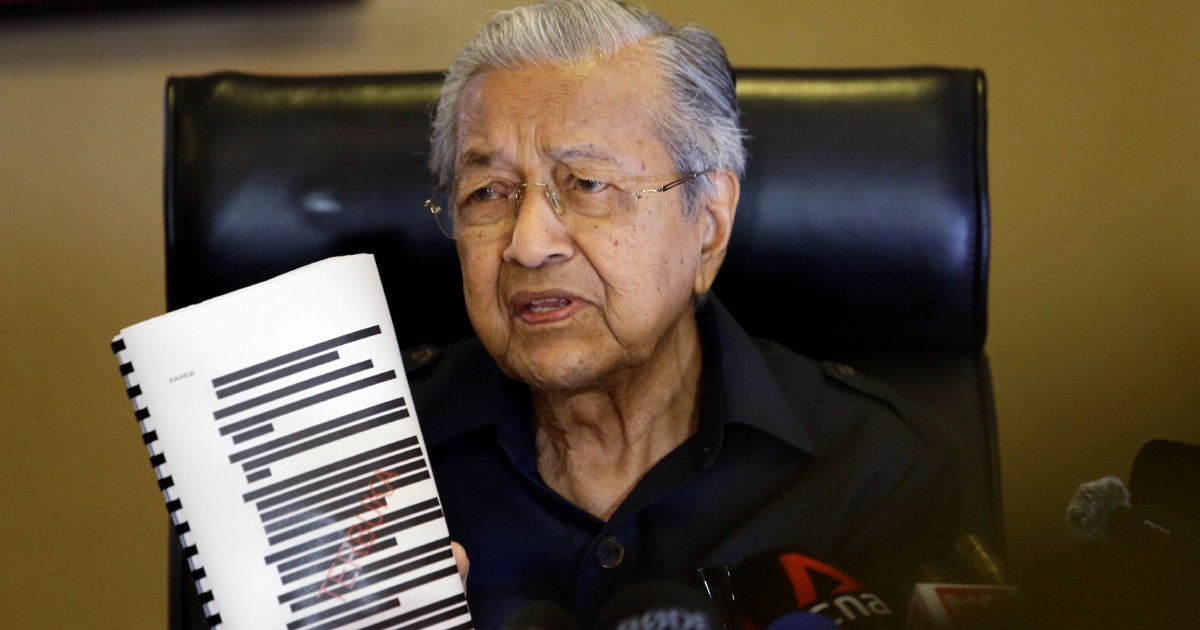
The Court of Appeal in Putrajaya handed down directions on Monday requiring Tun Dr Mahathir Mohamad to take formal steps to introduce the Royal Commission of Inquiry report concerning Batu Puteh as fresh evidence in his pending appeal. The ruling represents a procedural development in the ongoing legal matter involving the sovereignty of the small island, which sits at the intersection of Malaysia and Singapore's maritime boundaries and has long been a point of contention between the two neighbours.
The RCI was established to investigate and produce findings on matters relating to Batu Puteh, and the report emerging from that inquiry now stands to become part of the court record in Tun Dr Mahathir's appeal. For appellate courts to consider new evidence that was not presented in the original proceedings, strict legal criteria must typically be met, including demonstration that the evidence is genuinely new, that it could not have been obtained with reasonable diligence earlier, and that it is significant enough to have potentially influenced the original decision.
Tun Dr Mahathir's involvement in this matter reflects the complexity surrounding Batu Puteh, an issue that extends beyond typical commercial or administrative disputes to touch on questions of national territory and regional relations. The former Prime Minister's appeal indicates that legal disputes connected to the island continue to generate court proceedings, suggesting ongoing disagreement about decisions or positions taken regarding its status and administration.
The directive from the appellate court signals judicial willingness to examine additional documentation that may illuminate the factual basis underlying Batu Puteh-related claims or counterclaims. By requiring a formal application rather than simply admitting the RCI report, the court maintains procedural rigour while creating a clear pathway for the evidence to be considered. This approach allows both parties to present arguments about whether the report genuinely qualifies as fresh evidence and what weight it should carry in the appeal.
For Malaysian legal observers and those following regional maritime disputes, the decision underscores how historical commissions of inquiry can influence ongoing litigation. The RCI's findings may address questions that were previously contested or clarify matters that only emerged during the inquiry process. Whether the report ultimately strengthens or complicates Tun Dr Mahathir's position will depend on its actual contents and how the appellate bench evaluates its relevance and credibility.
Batu Puteh occupies distinctive significance in Malaysia-Singapore relations, representing a microcosm of the precise demarcation issues that have periodically strained ties between Kuala Lumpur and Singapore. Though modest in size and population, the island carries symbolic weight as a question of sovereign authority. Previous disputes over maritime boundaries, territorial waters, and rights to maritime resources have demonstrated how even small geographic features can generate substantial diplomatic and legal engagement between neighbouring states.
The court's procedural direction means that Tun Dr Mahathir must now file a formal application setting out his case for why the RCI report qualifies as fresh evidence deserving consideration. This application will require careful drafting to address the legal tests that appellate courts apply when evaluating such requests. Both timing and materiality will likely feature prominently in the arguments, as the court will need to understand why this evidence was not available when the original case was heard and why its inclusion might reasonably alter the appeal's outcome.
The timing of this development is noteworthy, arriving at a moment when Malaysia's courts continue managing various high-profile appeals and constitutional questions. The Court of Appeal's directive demonstrates its engagement with complex factual matters and willingness to allow parties reasonable latitude in presenting comprehensive evidence, provided proper procedures are followed. This stands in contrast to some jurisdictions where appellate courts maintain stricter gates on introducing fresh evidence.
The Malaysian legal system's treatment of this matter may also influence how future cases involving RCI reports proceed through the courts. If the RCI report ultimately proves material to the appeal's resolution, it could establish precedent for recognising such inquiry documents as legitimate bases for rehearing or reconsidering earlier determinations. For government institutions, this suggests that RCI findings warrant careful preservation and potential introduction in related litigation.
Observers in the region will likely watch how this appeal develops, particularly given Malaysia's ongoing engagement with questions of maritime rights and territorial integrity throughout Southeast Asia. The Batu Puteh matter, though specific to the Malaysia-Singapore context, occurs within a broader regional environment where countries are increasingly assertive about protecting maritime interests and clarifying boundary positions. How Malaysian courts handle evidence and arguments in such cases may signal broader approaches to territorial questions.
The next phase requires Tun Dr Mahathir's legal team to prepare and submit the fresh evidence application with supporting arguments and documentation. The Court of Appeal will then consider whether the application meets established legal requirements before deciding whether to permit the RCI report's introduction. Depending on the court's determination, the appeal proceedings may be significantly influenced by the commission's findings and conclusions regarding Batu Puteh's sovereignty dimensions.

