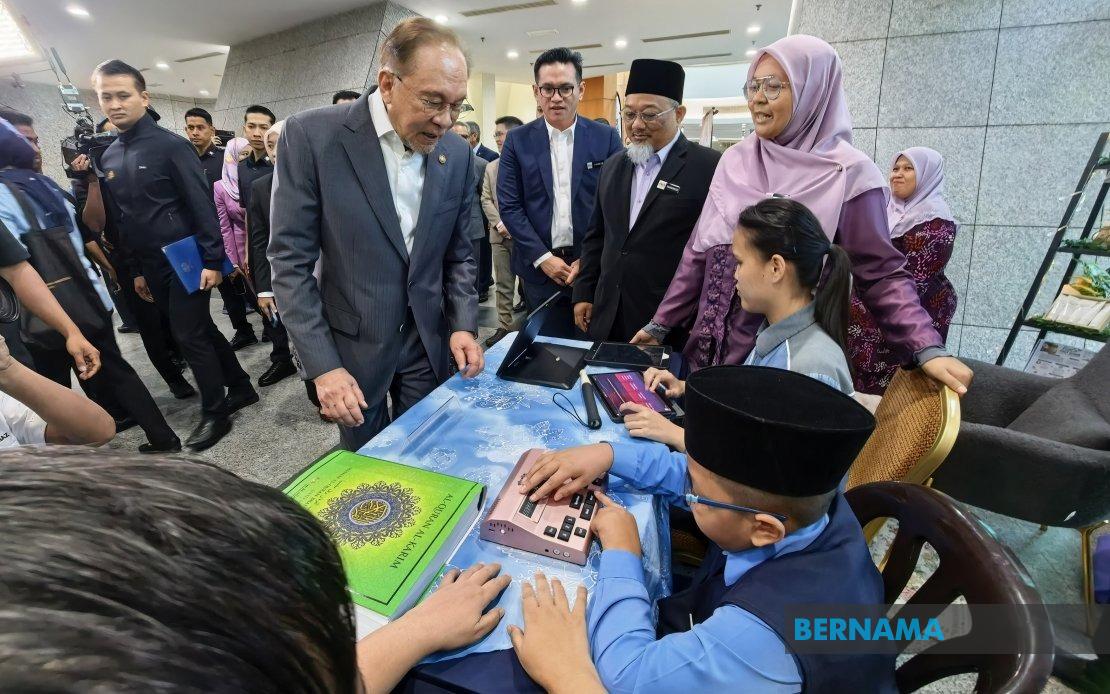
Prime Minister Datuk Seri Anwar Ibrahim has reiterated the MADANI administration's unwavering commitment to enhancing the welfare and professional development of Malaysia's teaching workforce, positioning education as a cornerstone of the nation's long-term development strategy. Speaking during a gathering with Ministry of Education staff in Putrajaya on July 28, the Premier underscored how sustained investment in educator support directly underpins the country's capacity to achieve its broader aspirations in economic growth, artificial intelligence adoption, and technological innovation. The statement comes at a time when many nations across the region grapple with teacher shortages and declining interest in the education profession, making Malaysia's explicit focus on educator welfare particularly significant for maintaining educational standards.
Since assuming office, the MADANI Government has made education a central plank of its developmental agenda, with Anwar emphasising that no strategic discussion or budgetary consideration has overlooked the sector's fundamental importance. The administration has channelled particular attention toward improving the conditions under which teachers work, recognising that professional satisfaction and career prospects are essential for retaining experienced educators and attracting new talent into the profession. By placing the Ministry of Education at the forefront of governmental deliberations, the Prime Minister signalled that education policy extends beyond classroom management to encompass the holistic wellbeing of those responsible for shaping future generations of Malaysian citizens and workers.
A key initiative emerging from this commitment involves expanding opportunities for salary enhancements and career advancement pathways that do not require teachers to abandon classroom instruction for administrative roles. This approach addresses a persistent challenge in education systems across Southeast Asia, where talented educators have historically felt compelled to transition into management positions to achieve professional recognition and financial security. By creating meaningful advancement routes within the teaching profession itself, the government aims to retain experienced practitioners in schools while simultaneously improving their financial and professional standing. Such structural reforms have implications beyond education, potentially enhancing the overall quality of human capital development in Malaysia at a time when regional competition for skilled workers intensifies.
The government's statistical positioning on education spending carries particular weight in regional discourse. Malaysia ranks as the sole nation in its peer group allocating the highest proportion of its national budget to education according to UNESCO metrics, a distinction that Anwar highlighted as evidence of Malaysia's prioritisation of human development over shorter-term expenditures. This budgetary commitment requires sustained political will, especially given competing demands from infrastructure, healthcare, and defence sectors. The emphasis on consistent funding provides educators with some assurance regarding resource availability for school operations, teacher training programmes, and educational infrastructure development, though implementation challenges frequently persist between policy announcement and classroom reality.
The government's modernisation agenda for education encompasses substantial pedagogical and technological transformations that place additional demands on the teaching profession. Plans to strengthen Science, Technology, Engineering and Mathematics education while integrating artificial intelligence systems into curricula represent ambitious reforms that require teachers to continuously upgrade their skills and adapt their instructional methods. These changes cannot succeed without the active commitment and support of educators themselves, who must serve as change agents within their institutions while managing the inherent pressures of curriculum transition. The Prime Minister's acknowledgement of this dependency reflects an understanding that top-down educational reform initiatives succeed only when classroom practitioners embrace and effectively implement new approaches.
Anwar's remarks about societal expectations of educators illuminated a persistent asymmetry in how success and failure in education are perceived and reported. When isolated incidents of student misconduct or educational underperformance occur, they attract widespread media coverage and public scrutiny, yet the cumulative achievement of successfully guiding millions of students toward productive adulthood rarely commands equivalent recognition. This observation resonates with Malaysian educators who frequently report feeling undervalued despite their substantial contributions to social stability and national development. The Prime Minister's call for greater public appreciation of the teaching profession carries both symbolic and practical implications, potentially influencing how communities regard educators and how families engage with schools as partners in child development.
The presence of senior government officials including Education Minister Fadhlina Sidek, the Chief Secretary to the Government, and the Public Service Director-General at this gathering underscored the cross-governmental nature of education policy implementation. These collective attendances signal institutional coordination at high levels, suggesting that teacher welfare improvements will not be confined to the Ministry of Education but will integrate considerations from the broader public service apparatus. This integration becomes particularly relevant when discussions address salary structures, pension provisions, and employment conditions that intersect with civil service regulations and broader public sector human resources policies.
For Malaysian educators, these pronouncements offer both encouragement and grounds for scrutiny regarding implementation timelines and resource allocation. While government statements affirming commitment to education carry inherent value in establishing policy direction and institutional priorities, the practical translation of such affirmations into tangible improvements in classroom resources, reduced administrative burdens, and meaningful salary enhancements remains the crucial metric against which such initiatives will ultimately be judged. Teachers across the country will likely view these commitments through the lens of their own experiences with previous government undertakings and the actual pace at which promised reforms materialise in their schools and compensation structures.
The regional context amplifies the significance of Malaysia's education investment strategy. As Southeast Asian nations compete for skilled workforces and seek to develop knowledge-based economies, the quality of their education systems becomes a critical competitive advantage. Countries that successfully attract and retain talented educators, equip them with modern pedagogical tools, and provide them with professional satisfaction create educational ecosystems capable of producing innovative thinkers and skilled workers. Malaysia's explicit commitment to educator welfare positions the country as taking this competition seriously, though sustained implementation across all school types and socioeconomic regions will prove essential for translating policy into measurable improvements in educational outcomes.
Looking forward, the MADANI Government's education agenda faces the challenge of translating rhetorical commitment into sustained budgetary allocation and institutional reform across the complex ecosystem of public schooling. The integration of artificial intelligence into curricula, the strengthening of STEM education, and the maintenance of improved teacher welfare simultaneously represents an ambitious reform agenda that demands coordination across multiple government agencies, effective school leadership, community engagement, and adequate resourcing. Teachers themselves will remain the lynchpin determining whether these aspirations translate into improved learning experiences and outcomes for Malaysian students navigating an increasingly complex global environment.

