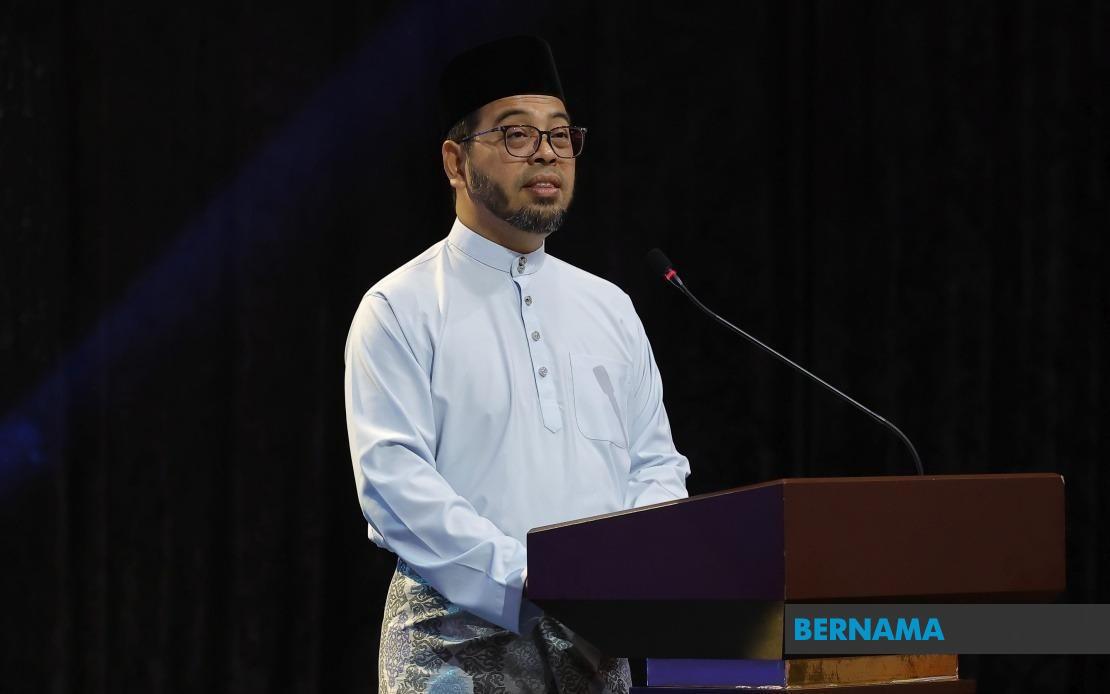
The federal government's commitment to elevating tahfiz education remains unwavering, with the Religious Affairs Ministry signalling that Islamic Quran memorisation programmes will expand in tandem with the nation's conventional schooling framework. Speaking at the 34th convocation ceremony of Darul Quran JAKIM in Kuala Lumpur on July 4, Minister in the Prime Minister's Department (Religious Affairs) Dr Zulkifli Hasan underscored the dual responsibility of contemporary tahfiz institutions: not merely to produce individuals capable of reciting the entire Quran from memory, but to cultivate citizens equipped with academic rigour, moral fortitude and practical expertise suited to serve the broader Malaysian economy and society.
The timing of Zulkifli's remarks coincided with a significant milestone for Darul Quran JAKIM, which celebrated six decades since its 1966 foundation. The institution has emerged as a cornerstone of Malaysia's Islamic educational infrastructure, having graduated 12,633 huffaz—those who have memorised the Quran—who now occupy diverse professional roles spanning education, Islamic jurisprudence, religious outreach, scholarly research, public administration and technical sectors. This workforce distribution demonstrates that tahfiz training no longer confines graduates to purely religious vocations but has successfully integrated them into the mainstream economy, addressing long-standing perceptions that Islamic memorisation education limits career pathways.
Darul Quran's six-decade trajectory reflects a deliberate institutional evolution. Originally established to preserve and transmit Quranic knowledge while training Islamic leaders and community guides, the institution has progressively aligned its curriculum with contemporary national development priorities. The milestone presents an opportunity, Zulkifli suggested, not merely to celebrate historical accomplishment but to catalyse a fresh phase of educational innovation. His reference to "building the next 60 years with greater excellence" signals governmental intent to invest in modernising tahfiz pedagogy, infrastructure and accreditation standards to maintain relevance amid Malaysia's digital transformation and knowledge economy expansion.
The convocation itself processed 700 graduates across multiple qualification tiers, illustrating the broadening scope of tahfiz education delivery. Thirty-seven recipients earned Bachelor's degrees through a collaborative arrangement with Universiti Sains Islam Malaysia (USIM), indicating institutional partnerships designed to elevate tahfiz studies to university-level standards and academic rigour. A substantially larger cohort of 454 students completed Diploma qualifications in Quranic studies and qiraat—the art of Quranic recitation with proper pronunciation and intonation. An additional 204 participants achieved tahfiz certification, while five obtained basic-level certificates, collectively spanning an educational continuum from foundational to advanced tertiary qualifications.
This stratified credentialling approach addresses a longstanding challenge within Islamic education systems: establishing consistent, nationally-recognised standards that command respect across government agencies and private employers. By aligning tahfiz qualifications with formal tertiary education structures through USIM partnerships, Darul Quran JAKIM effectively legitimises Quranic memorisation as an academic discipline worthy of degree-level recognition. For Malaysian employers seeking to hire graduates with Islamic credentials, such formal qualifications provide transparent benchmarks unavailable within traditionally unregulated tahfiz networks.
The integration of tahfiz pathways within mainstream educational architecture carries particular significance for Malaysia, where competing narratives about Islam's role in national development have periodically generated policy uncertainty. By positioning tahfiz education as complementary to rather than competing with secular schooling, the MADANI administration signals a pluralistic educational vision. This approach acknowledges that Quranic scholarship and technical expertise need not be mutually exclusive, and that individuals trained in Islamic disciplines can simultaneously acquire competencies demanded by contemporary labour markets.
For Southeast Asian context, Malaysia's experience offers instructive lessons. Across the region, Islamic education systems struggle to balance religious preservation with economic relevance. Thailand's Islamic institutions, Indonesian pesantren networks and Brunei's madrasahs all grapple with similar tensions between tradition and modernisation. Malaysia's deliberate effort to professionalise tahfiz training through formal qualifications and university partnerships provides a working model for how regional Islamic education can evolve without abandoning its spiritual and doctrinal foundations. Such institutional innovation may increasingly influence neighbouring countries' own educational policy trajectories.
Darul Quran's prominence within Malaysia's Islamic infrastructure also reflects the institution's strategic location within Kuala Lumpur, the nation's administrative and cultural centre. As a federal-level facility under JAKIM—the Department of Islamic Development—it enjoys closer integration with national policymaking mechanisms than regionally-dispersed private tahfiz schools. This proximity to government structures enables more rapid curriculum adaptation, clearer career pathways for graduates into civil service positions requiring Islamic expertise, and easier coordination between tahfiz training and broader religious affairs administration.
The government's framing of tahfiz education as contributing to "national development" represents a subtle but significant rhetorical shift. Historically, such language might have triggered anxieties among Malaysia's non-Muslim communities or secular constituencies regarding religious education's expansionism. The current formulation, however, explicitly defines tahfiz's utility through secular metrics: economic contribution, professional competence and institutional stability. This reframing may gradually reshape public perception of Islamic education from a communal or sectarian concern toward a legitimate component of national human capital development.
For students and families considering tahfiz pathways, the government's renewed commitment carries practical implications. Enhanced institutional support typically translates to improved facilities, instructor compensation, course development and graduate employment networks. The emphasis on producing "well-rounded individuals" suggests curriculum expansion beyond pure memorisation to encompass Islamic jurisprudence, comparative religious studies, educational pedagogy and research methodology—disciplines increasingly necessary for graduates aspiring to roles in higher education, policy development or international Islamic affairs.
The 60-year retrospective also illuminates institutional resilience. Darul Quran JAKIM maintained continuous operation and graduate production across Malaysia's transformative decades, from the post-independence period through the 1970s Islamisation movement, the 1990s Asian financial crisis, the early 2000s security challenges and subsequent political transitions. This longevity positions the institution as a tested vehicle for state Islamic education policy, suggesting the government views it as a stable platform for scaling tahfiz education alongside evolving national priorities.
Looking forward, the MADANI government's tahfiz strategy will likely emphasise quantitative expansion—increasing enrollments and facilities—alongside qualitative improvements in curriculum alignment with tertiary education standards. International accreditation of Quranic studies qualifications may emerge as a secondary priority, enabling graduate mobility across Muslim-majority nations and potentially creating export markets for Malaysian Islamic educational expertise. Such internationalisation would represent further evolution from tahfiz's traditional role as community-serving religious instruction toward a knowledge economy sector with commercial potential and geopolitical influence.

