Malaysia's government is doubling down on its partnership with Bank Negara Malaysia and the country's banking sector to safeguard financial stability while pursuing a more inclusive and people-focused approach to financial services. The Ministry of Finance announced on Wednesday that these coordinated efforts underscore the administration's commitment to building a banking system that serves both individual consumers and the broader business community with greater accessibility and affordability.
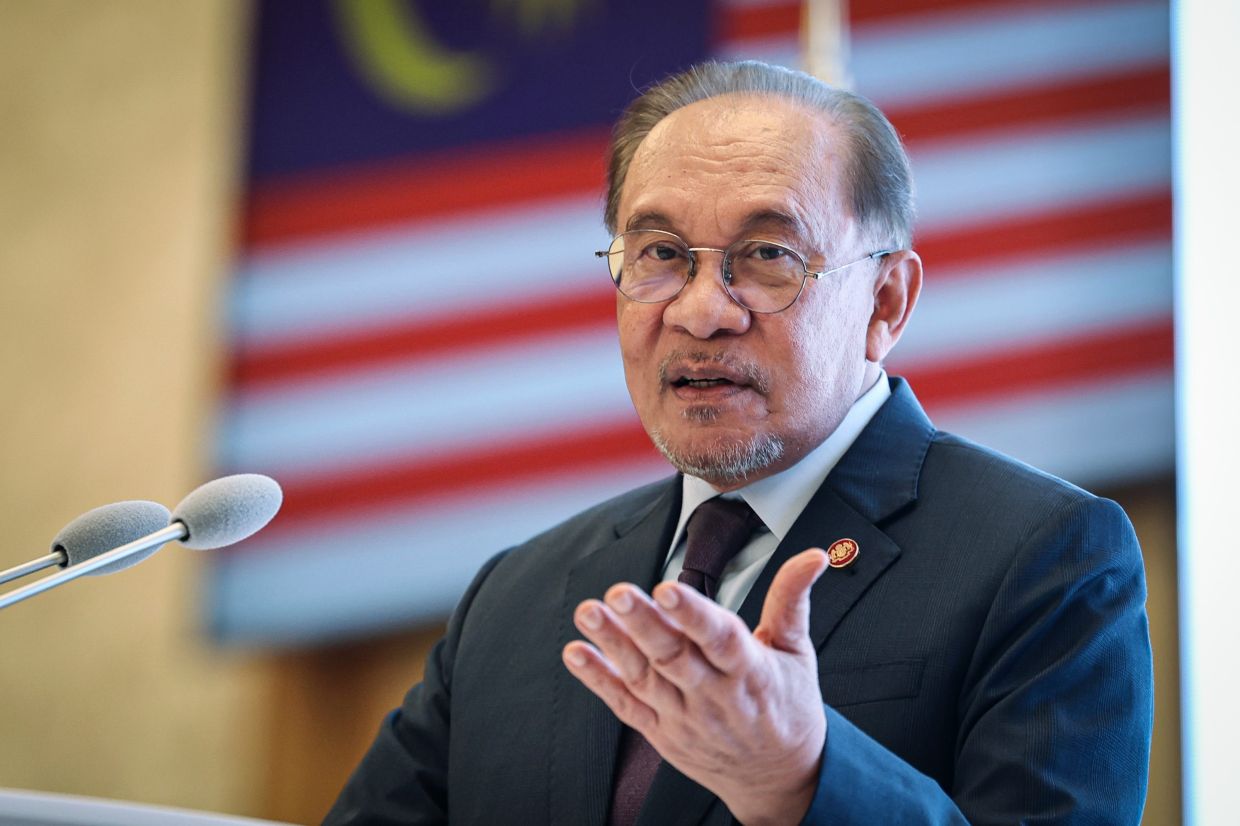
Prime Minister and Finance Minister Datuk Seri Anwar Ibrahim has publicly commended the banking industry for responding to the government's push toward what officials describe as a more humane financial system. In remarks accompanying the statement, Anwar acknowledged that households and micro, small and medium enterprises are navigating mounting cost pressures and cash flow difficulties, positioning financial institutions as essential partners in delivering practical, compassionate solutions to these challenges.
At the centre of this initiative is the introduction of basic credit cards, a product category designed to democratise access to formal credit for Malaysians who currently lack affordable borrowing options. These cards prioritise lower financing costs over the lifestyle benefits and rewards commonly packaged into traditional credit products. The financing rate on basic credit cards will be capped at 14 per cent per annum, a meaningful reduction from the current maximum of 18 per cent, making formal credit materially more accessible to price-sensitive borrowers. Credit limits are also being set conservatively to encourage responsible usage patterns, while existing credit cardholders can migrate outstanding balances to basic accounts without incurring transfer fees, a structural change that removes friction from the transition.
Eliminating the RM1 automated teller machine withdrawal fee represents another tangible step toward broader financial inclusion. Effective July 1, 2026, Malaysians will be able to withdraw cash at any of the country's 14,000-plus bank-operated ATMs without charges, a move that banking experts say particularly benefits lower-income households and rural populations who rely heavily on cash transactions and face frequent withdrawal needs. This policy change reflects a recognition that basic financial services infrastructure should not impose incremental costs on ordinary users.
The timing of these reforms is shaped by external economic pressures that have rippled through Malaysia's business ecosystem. Borrowers and enterprises facing disruptions from global supply chain instability and the conflict in West Asia have become eligible for a suite of targeted banking assistance measures. Since late April 2026, Malaysian banks have processed restructuring and rescheduling applications worth more than RM4.7 billion, benefiting over 1,100 borrowers navigating cash flow strain. Available relief options include temporary payment breaks, reduced monthly instalments, and extended loan tenures—tools designed to prevent distressed borrowers from defaulting while maintaining productive economic relationships.
For the small and medium enterprise sector specifically, government support mechanisms are operating in parallel with bank-based relief. The RM5 billion SME Stabilisation Relief Facility has approved approximately RM1 billion in financing for roughly 1,500 enterprises significantly impacted by West Asian instability, with around RM4 billion in allocations remaining available as of late June 2026. This targeted programme aims to prevent viable enterprises from collapsing due to exogenous shocks beyond their control, a logic that extends Malaysia's implicit commitment to treating SMEs as crucial engines of employment and economic dynamism.
Banking data suggests that the broader SME financing environment remains supportive despite regional turbulence. Outstanding small and medium enterprise credit grew 5.3 per cent in May 2026, indicating that banks are maintaining their commitment to disbursing new capital to this sector even as some borrowers experience payment difficulties. Banks have also committed to processing applications under relief programmes within seven working days, a structural improvement aimed at ensuring that support reaches struggling businesses quickly enough to prevent cascading defaults.
Beyond direct bank assistance, the Ministry of Finance points to complementary safety-net institutions that borrowers can access. The Syarikat Jaminan Pembiayaan Perniagaan and the Credit Guarantee Corporation offer guarantee schemes that can ease credit access for qualifying applicants, while the Credit Counselling and Management Agency provides advisory services and financial literacy support to borrowers navigating restructuring options. These institutions represent the infrastructure of Malaysia's social banking approach, attempting to ensure that formal financial services remain available to borrowers across the income and credit-score spectrum.
For Malaysian observers, these developments reveal both continuity and evolution in how authorities conceptualise the relationship between financial stability and social responsibility. The traditional view holds that sound banking requires stringent credit standards and market discipline; the emerging view, evident in these reforms, suggests that financial stability depends partly on preventing socially destabilising defaults through proactive relief mechanisms and broader access to affordable credit at the entry level. By calibrating both the carrot—easier, cheaper credit for new users—and the stick—restructuring programs for those in distress—the government and banking sector are attempting to maintain system resilience while reducing the human costs of financial exclusion and cyclical economic stress.
The regional context also matters for Malaysia's financial stability equation. With economies across Southeast Asia exposed to the same global supply disruptions and geopolitical uncertainties that are straining Malaysian borrowers, Malaysia's approach to bank-led relief and credit expansion may offer a template for neighbouring countries wrestling with similar pressures. The emphasis on rapid application processing and the combination of bank relief with government-backed guarantee schemes suggests a pragmatic model for maintaining financial inclusion during periods of elevated economic uncertainty.

