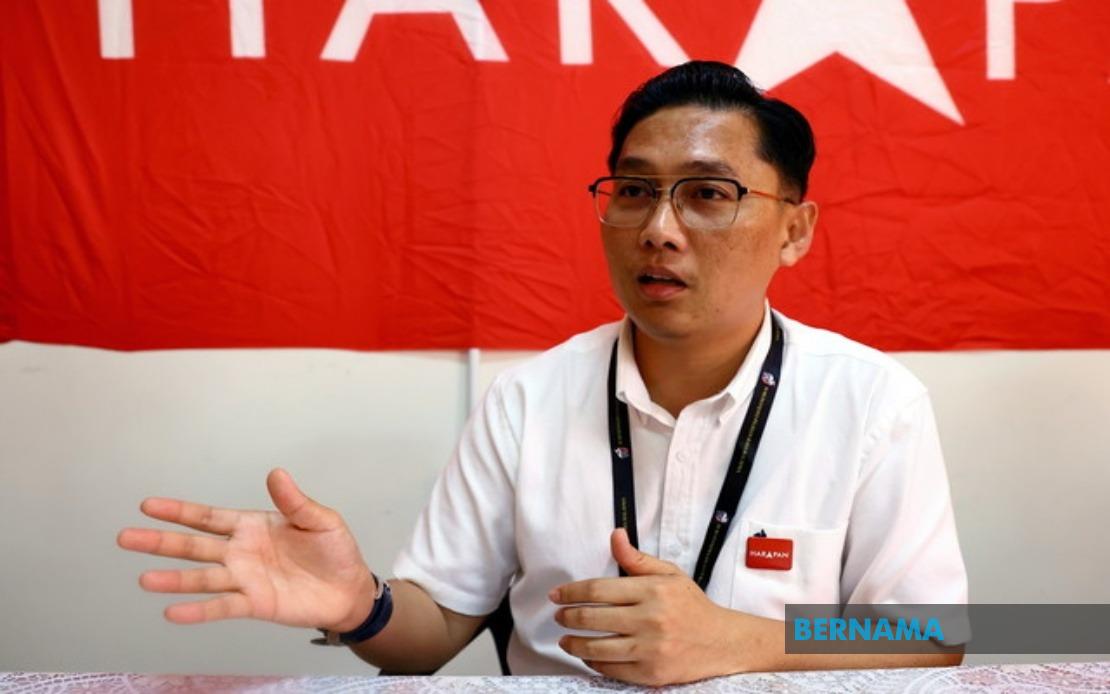
Pakatan Harapan's candidate for the Machap state seat, Nur Hafiz Roslan, has dismissed concerns about taking on the incumbent Johor Menteri Besar in what shapes as a high-profile electoral contest. Speaking at the PH operations centre in Simpang Renggam, Nur Hafiz expressed resolve to contest the seat vigorously despite its historical status as a Barisan Nasional bastion, drawing confidence from his background as a legal professional spanning nearly two decades.
The Machap constituency has long been regarded as difficult terrain for opposition parties, with the sitting Menteri Besar, Datuk Onn Hafiz Ghazi, having secured the seat with a commanding majority of 6,543 votes in the 2022 election. This context makes Nur Hafiz's candidacy a noteworthy test of Pakatan Harapan's electoral fortunes in Johor ahead of the July 11 state polls. The lawyer's willingness to contest a seat widely seen as strongly entrenched under BN control suggests the coalition is committed to challenging ruling party dominance across multiple constituencies, not merely defending existing strongholds.
Nur Hafiz grounded his optimism in historical precedent, noting that Malaysian political history has repeatedly demonstrated the fallibility of conventional wisdom regarding impregnable constituencies. He referenced the political defeats suffered by former Johor Menteri Besars Tan Sri Abdul Ghani Othman and Datuk Seri Khaled Nordin, both prominent figures whose loss of office illustrated that even senior political figures and sitting chief ministers can be dislodged by electoral shifts. This invocation of historical reversals serves a strategic purpose: it frames the Machap contest not as a quixotic venture but as part of a broader pattern of political renewal and accountability.
The candidate articulated confidence in Pakatan Harapan's organisational readiness for the contest. According to Nur Hafiz, the coalition's election machinery has operated with cohesion and internal stability throughout the nomination process, presenting a unified front without the internal discord that sometimes characterises opposition campaigns. Such organisational strength, if genuine, could provide material advantage in ground mobilisation, particularly in a state where Johor BN has historically maintained sophisticated electoral structures honed over decades of governance.
A central pillar of Nur Hafiz's campaign messaging involves a deliberate pivot away from what he characterises as outdated political approaches. He explicitly rejected the deployment of divisive rhetoric centred on race, religion, and royalty—the so-called 3R sentiments—arguing these tools reflect political frameworks unsuited to contemporary Malaysia. His criticism extended to politics predicated on fear-mongering directed at different ethnic communities, describing such approaches as counterproductive to genuine inclusive governance. This positioning attempts to occupy a higher moral and intellectual ground in the campaign narrative, distinguishing his candidacy through commitment to substantive policy discourse rather than emotional appeals.
Nur Hafiz emphasised his vision for what he termed mature politics, one that prioritises tangible solutions addressing daily concerns of constituents rather than abstract appeals to identity or sentiment. This framing carries particular resonance for urban and semi-urban constituencies where younger voters and diverse communities have shown increasing impatience with traditional identity-based campaigning. By articulating a politics focused on delivery—infrastructure, public services, economic opportunity—Nur Hafiz attempts to shift the contest terrain from the cultural and social domains where BN and UMNO have traditionally held advantages, to practical governance where competence becomes the measuring stick.
The candidate further outlined his intended role as a liaison between state and federal governments, promising to represent Machap constituents' interests regardless of their background or presumed political affiliation. This message implicitly acknowledges that Machap, like many Malaysian constituencies, contains diverse communities with heterogeneous needs and priorities. It also reflects a broader opposition strategy of transcending the ethnic and religious fault lines that have long structured Malaysian electoral competition, suggesting that effective governance and responsive representation constitute universally valued goods that transcend communal boundaries.
The Machap contest itself represents a direct confrontation between an entrenched incumbent and a challenger from a resurgent opposition coalition. Datuk Onn Hafiz's position as Menteri Besar adds considerable weight to his candidacy, as the office carries substantial patronage resources and administrative machinery that sitting chief ministers conventionally deploy in defence of their constituencies. The straight fight between Nur Hafiz and Onn Hafiz eliminates the complication of a three-cornered contest, potentially clarifying voter choice though also limiting options for those dissatisfied with both camps.
For Malaysian observers, the Machap contest offers a microcosm of broader dynamics reshaping Johor politics. The state has been integral to Barisan Nasional's electoral dominance since federation, yet recent years have witnessed gradual erosion of its hold in certain constituencies and demographic shifts that complicate traditional support matrices. Nur Hafiz's candidacy tests whether Pakatan Harapan can translate rhetorical appeals for mature, policy-driven politics into tangible electoral gains in constituencies once considered safely held by the ruling coalition.
The July 11 election, with early voting scheduled for July 7, arrives at a moment of significant political flux in Malaysia. Johor's direction carries implications extending beyond state boundaries, as the state's political complexion influences both national coalition arithmetic and the broader competitive balance between UMNO-BN and its rivals. Nur Hafiz's campaign, centred on rejecting divisive rhetoric whilst stressing competence and effective governance, reflects broader opposition evolution towards messaging more palatable to swing voters and younger constituencies dissatisfied with traditional political frameworks.

